
Nursing practice questions with comprehensive rationales
NurseDive Free Nursing Practice Question
A client arrives to the emergency department after losing consciousness during a soccer game. Which of the following actions should the nurse take first?
A. Prepare the client for an X-Ray.
reason: This is incorrect because preparing the client for an X-ray is not the first action that the nurse should take. An X-ray can help diagnose possible injuries or fractures, but it is not an urgent test. The nurse should first assess the client's level of consciousness and neurological status using a standardized tool such as the Glasgow Coma Scale.
B. Calculate a Glasgow Coma Score.
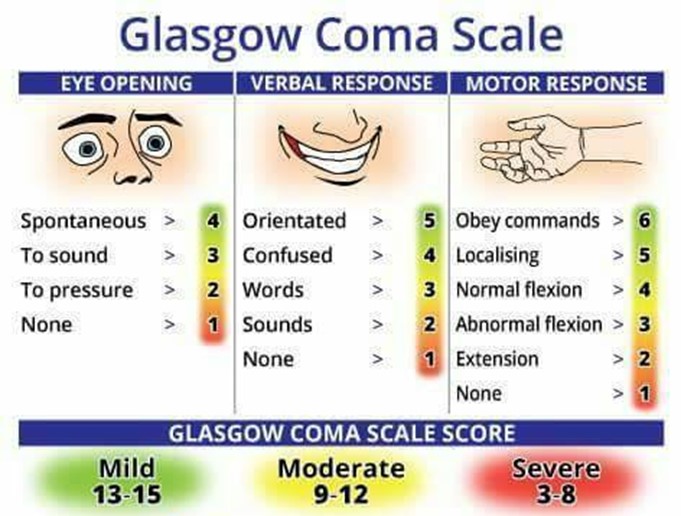
reason: This is the correct answer because calculating a Glasgow Coma Score is the first action that the nurse should take. The Glasgow Coma Scale is a tool that measures the level of consciousness based on the eye-opening, verbal response, and motor responses. It can help determine the severity of brain injury and guide further interventions.
C. Dim the lights and turn off the TV.
reason: This is incorrect because dimming the lights and turning off the TV are not the first actions that the nurse should take. These are environmental modifications that can help reduce sensory stimulation and prevent agitation or seizures, but they are not as important as assessing the level of consciousness and neurological status.
D. Provide analgesics.
reason: This is incorrect because providing analgesics is not the first action that the nurse should take. Analgesics can help relieve pain and discomfort, but they can also alter the level of consciousness and mask neurological signs. The nurse should first assess the level of consciousness and neurological status, and then administer analgesics as prescribed.
This question is an excerpt from Nurse Dive's nursing test bank - ATI Med Surg Proctored Exam 4. Take the full exam now
Full Explanation
Choice A reason: This is incorrect because preparing the client for an X-ray is not the first action that the nurse should take. An X-ray can help diagnose possible injuries or fractures, but it is not an urgent test. The nurse should first assess the client's level of consciousness and neurological status using a standardized tool such as the Glasgow Coma Scale.
Choice B reason: This is the correct answer because calculating a Glasgow Coma Score is the first action that the nurse should take. The Glasgow Coma Scale is a tool that measures the level of consciousness based on the eye-opening, verbal response, and motor responses. It can help determine the severity of brain injury and guide further interventions.
Choice C reason: This is incorrect because dimming the lights and turning off the TV are not the first actions that the nurse should take. These are environmental modifications that can help reduce sensory stimulation and prevent agitation or seizures, but they are not as important as assessing the level of consciousness and neurological status.
Choice D reason: This is incorrect because providing analgesics is not the first action that the nurse should take. Analgesics can help relieve pain and discomfort, but they can also alter the level of consciousness and mask neurological signs. The nurse should first assess the level of consciousness and neurological status, and then administer analgesics as prescribed.
Similar Questions
A client diagnosed with moderate Alzheimer's has been admitted to a long-term care facility. Which of the following are appropriate activities for the nurse to include in the care plan?
A. Drawing with crayons
Reason: This is incorrect because drawing with crayons may be too childish or frustrating for a client with moderate Alzheimer's. Crayons may also pose a choking hazard or cause messes. The nurse should provide activities that are suitable for the client's cognitive and functional level, as well as their interests and preferences.
B. Dangling ribbons or a mobile
Reason: This is incorrect because dangling ribbons or a mobile may be too stimulating or confusing for a client with moderate Alzheimer's. These items may also trigger agitation or wandering behaviors. The nurse should provide activities that are calming and familiar for the client.
C. Listening to music, watching TV, or videos
Reason: This is correct because listening to music, watching TV, or videos can be enjoyable and beneficial for a client with moderate Alzheimer's. Music can evoke memories, emotions, and positive responses. TV or videos can provide entertainment, education, and socialization. The nurse should choose music, TV shows, or videos that are appropriate and meaningful for the client.
D. Board games
Reason: This is incorrect because board games may be too complex or challenging for a client with moderate Alzheimer's. Board games may require memory, concentration, logic, or strategy skills that the client may have lost. The nurse should provide activities that are simple and easy for the client to follow.
Full Explanation
Choice A Reason: This is incorrect because drawing with crayons may be too childish or frustrating for a client with moderate Alzheimer's. Crayons may also pose a choking hazard or cause messes. The nurse should provide activities that are suitable for the client's cognitive and functional level, as well as their interests and preferences.
Choice B Reason: This is incorrect because dangling ribbons or a mobile may be too stimulating or confusing for a client with moderate Alzheimer's. These items may also trigger agitation or wandering behaviors. The nurse should provide activities that are calming and familiar for the client.
Choice C Reason: This is correct because listening to music, watching TV, or videos can be enjoyable and beneficial for a client with moderate Alzheimer's. Music can evoke memories, emotions, and positive responses. TV or videos can provide entertainment, education, and socialization. The nurse should choose music, TV shows, or videos that are appropriate and meaningful for the client.
Choice D Reason: This is incorrect because board games may be too complex or challenging for a client with moderate Alzheimer's. Board games may require memory, concentration, logic, or strategy skills that the client may have lost. The nurse should provide activities that are simple and easy for the client to follow.
A nurse is caring for a client who reports a decrease in central vision. The nurse should identify that this is a manifestation of which of the following visual impairments?
A. Macular degeneration
Reason: This is correct because macular degeneration is a condition that affects the macula, which is the central part of the retina that is responsible for sharp and detailed vision. Macular degeneration can cause blurred or distorted central vision, difficulty reading or recognizing faces, or dark spots in the visual field.
B. Glaucoma
Reason: This is incorrect because glaucoma is a condition that affects the optic nerve, which is the nerve that connects the eye to the brain and carries visual signals. Glaucoma can cause increased pressure inside the eye, damage to the optic nerve, and loss of peripheral vision.
C. Diabetic retinopathy
Reason: This is incorrect because diabetic retinopathy is a condition that affects the blood vessels in the retina, which is the layer of tissue at the back of the eye that converts light into nerve impulses. Diabetic retinopathy can cause bleeding, swelling, or leakage of fluid in the retina, and loss of vision in any part of the visual field.
D. Cataract
Reason: This is incorrect because cataract is a condition that affects the lens, which is the transparent structure behind the pupil that focuses light onto the retina. Cataract can cause clouding or opacity of the lens, and reduced vision in all parts of the visual field.
Full Explanation
Choice A Reason: This is correct because macular degeneration is a condition that affects the macula, which is the central part of the retina that is responsible for sharp and detailed vision. Macular degeneration can cause blurred or distorted central vision, difficulty reading or recognizing faces, or dark spots in the visual field.
Choice B Reason: This is incorrect because glaucoma is a condition that affects the optic nerve, which is the nerve that connects the eye to the brain and carries visual signals. Glaucoma can cause increased pressure inside the eye, damage to the optic nerve, and loss of peripheral vision.
Choice C Reason: This is incorrect because diabetic retinopathy is a condition that affects the blood vessels in the retina, which is the layer of tissue at the back of the eye that converts light into nerve impulses. Diabetic retinopathy can cause bleeding, swelling, or leakage of fluid in the retina, and loss of vision in any part of the visual field.
Choice D Reason: This is incorrect because cataract is a condition that affects the lens, which is the transparent structure behind the pupil that focuses light onto the retina. Cataract can cause clouding or opacity of the lens, and reduced vision in all parts of the visual field.
A nurse is caring for a client who has suffered a stroke involving the left hemisphere. Which of the following alterations in function are consistent with this type of stroke?
A. Slow cautious behaviors.
reason: This is incorrect because slow cautious behaviors are more consistent with a stroke involving the right hemisphere. The right hemisphere controls spatial awareness, creativity, and intuition. A stroke affecting this hemisphere can cause impulsivity, poor judgment, and denial of deficits.
B. Loss of depth perception.
reason: This is incorrect because loss of depth perception is more consistent with a stroke involving the right hemisphere. The right hemisphere controls visual-spatial perception, which includes depth perception, distance estimation, and object recognition. A stroke affecting this hemisphere can cause difficulty in navigating space, judging distances, and identifying objects.
C. Overestimation of abilities.
reason: This is incorrect because the overestimation of abilities is more consistent with a stroke involving the right hemisphere. The right hemisphere controls emotional regulation, self-awareness, and insight. A stroke affecting this hemisphere can cause euphoria, lack of insight, and unrealistic expectations.
D. Hemianopsia.
reason: This is the correct answer because hemianopsia is consistent with a stroke involving the left hemisphere. The left hemisphere controls language, logic, and analysis. A stroke affecting this hemisphere can cause hemianopsia, which is the loss of vision in half of the visual field. This can affect reading, writing, and communication skills.
Full Explanation
Choice A reason: This is incorrect because slow cautious behaviors are more consistent with a stroke involving the right hemisphere. The right hemisphere controls spatial awareness, creativity, and intuition. A stroke affecting this hemisphere can cause impulsivity, poor judgment, and denial of deficits.
Choice B reason: This is incorrect because loss of depth perception is more consistent with a stroke involving
the right hemisphere. The right hemisphere controls visual-spatial perception, which includes depth perception, distance estimation, and object recognition. A stroke affecting this hemisphere can cause difficulty in navigating space, judging distances, and identifying objects.
Choice C reason: This is incorrect because the overestimation of abilities is more consistent with a stroke involving
the right hemisphere. The right hemisphere controls emotional regulation, self-awareness, and insight. A stroke affecting this hemisphere can cause euphoria, lack of insight, and unrealistic expectations.
Choice D reason: This is the correct answer because hemianopsia is consistent with a stroke involving
the left hemisphere. The left hemisphere controls language, logic, and analysis. A stroke affecting this hemisphere can cause hemianopsia, which is the loss of vision in half of the visual field. This can affect reading, writing, and communication skills.