
Nursing practice questions with comprehensive rationales
NurseDive Free Nursing Practice Question
A client with red scaling papules on his elbows, knees, lower back, and scalp arrives to the clinic. Which of the following questions will the nurse include in her assessment?
A. Do the lesions hurt?
reason: This is the correct answer because this question will help the nurse assess the pain level and discomfort of the client with red scaling papules. Red scaling papules are raised skin lesions that are red and covered with scales. They can indicate psoriasis, which is a chronic skin condition that causes inflammation and rapid turnover of skin cells. Psoriasis can cause pain, itching, burning, or stinging sensations in the affected areas. The nurse should ask the client to rate their pain on a numeric or descriptive scale and provide analgesics or topical agents as prescribed.
B. Do the lesions worsen when you eat certain foods?
reason: This is incorrect because this question will not help the nurse assess the condition of the client with red scaling papules. Red scaling papules are not affected by food intake but by other factors such as stress, infection, injury, or medication. Psoriasis is not an allergic or dietary disorder, but an immune-mediated disorder that causes abnormal skin cell growth. The nurse should ask the client about their medical history, current medications, and triggers or aggravating factors for their psoriasis.
C. Have you noticed a decrease in lesions after starting antibiotics?
reason: This is incorrect because this question will not help the nurse assess the condition of the client with red scaling papules. Red scaling papules are not treated with antibiotics but with other medications such as corticosteroids, immunosuppressants, or biologics. Antibiotics are used to treat bacterial infections, which are not the cause of psoriasis. The nurse should ask the client about their treatment regimen, compliance, and effectiveness for their psoriasis.
D. How do you spend your weekends?
reason: This is incorrect because this question will not help the nurse assess the condition of the client with red scaling papules. Red scaling papules are not related to weekend activities but to chronic skin inflammation and abnormal cell turnover. Psoriasis is not a lifestyle disorder, but a genetic disorder that can be influenced by environmental factors. The nurse should ask the client about their family history, exposure to sun or cold, and stress level for their psoriasis.
This question is an excerpt from Nurse Dive's nursing test bank - ATI Med Surg Proctored Exam 4. Take the full exam now
Full Explanation
Choice A reason: This is the correct answer because this question will help the nurse assess the pain level and discomfort of the client with red scaling papules. Red scaling papules are raised skin lesions that are red and covered with scales. They can indicate psoriasis, which is a chronic skin condition that causes inflammation and rapid turnover of skin cells. Psoriasis can cause pain, itching, burning, or stinging sensations in the affected areas. The nurse should ask the client to rate their pain on a numeric or descriptive scale and provide analgesics or topical agents as prescribed.
Choice B reason: This is incorrect because this question will not help the nurse assess the condition of the client with red scaling papules. Red scaling papules are not affected by food intake but by other factors such as stress, infection, injury, or medication. Psoriasis is not an allergic or dietary disorder, but an immune-mediated disorder that causes abnormal skin cell growth. The nurse should ask the client about their medical history, current medications, and triggers or aggravating factors for their psoriasis.
Choice C reason: This is incorrect because this question will not help the nurse assess the condition of the client with red scaling papules. Red scaling papules are not treated with antibiotics but with other medications such as corticosteroids, immunosuppressants, or biologics. Antibiotics are used to treat bacterial infections, which are not the cause of psoriasis. The nurse should ask the client about their treatment regimen, compliance, and effectiveness for their psoriasis.
Choice D reason: This is incorrect because this question will not help the nurse assess the condition of
the client with red scaling papules. Red scaling papules are not related to weekend activities but to chronic skin inflammation and abnormal cell turnover. Psoriasis is not a lifestyle disorder, but a genetic disorder that can be influenced by environmental factors. The nurse should ask the client about their family history, exposure to sun or cold, and stress level for their psoriasis.
Similar Questions
A client with a new diagnosis of trigeminal neuralgia is receiving education to prevent triggering an acute onset. Which of the following will the nurse include in teaching?
A. Massage the affected side multiple times a day.
reason: This is incorrect because the nurse should not include this in teaching. Massaging the affected side multiple times a day can trigger an acute onset of trigeminal neuralgia. Trigeminal neuralgia is a condition that causes severe pain in one or more branches of the trigeminal nerve (cranial nerve V), which innervates the face. The pain can be triggered by touch, pressure, or movement of the face. The nurse should advise the client to avoid touching or stimulating the affected side.
B. Apply ice directly to the skin.
reason: This is incorrect because the nurse should not include this in teaching. Applying ice directly to the skin can trigger an acute onset of trigeminal neuralgia. Trigeminal neuralgia can be triggered by temperature changes or cold stimuli on the face. The nurse should advise the client to avoid exposure to cold air or wind and to protect their face with a scarf or mask.
C. Provide pureed consistency foods.
reason: This is incorrect because the nurse should not include this in teaching. Providing pureed consistency foods can trigger an acute onset of trigeminal neuralgia. Trigeminal neuralgia can be triggered by chewing, swallowing, or talking. The nurse should advise the client to eat soft foods that do not require much chewing and to avoid hot or spicy foods that can irritate the mouth.
D. Consider alternative therapies such as yoga, biofeedback, or meditation.
reason: This is correct because the nurse should include this in teaching. Considering alternative therapies such as yoga, biofeedback or meditation can help prevent triggering an acute onset of trigeminal neural
Full Explanation
Choice A reason: This is incorrect because the nurse should not include this in teaching. Massaging the affected side multiple times a day can trigger an acute onset of trigeminal neuralgia. Trigeminal neuralgia is a condition that causes severe pain in one or more branches of the trigeminal nerve (cranial nerve V), which innervates the face. The pain can be triggered by touch, pressure, or movement of the face. The nurse should advise the client to avoid touching or stimulating the affected side.
Choice B reason: This is incorrect because the nurse should not include this in teaching. Applying ice directly to
the skin can trigger an acute onset of trigeminal neuralgia. Trigeminal neuralgia can be triggered by temperature changes or cold stimuli on the face. The nurse should advise the client to avoid exposure to cold air or wind and to protect their face with a scarf or mask.
Choice C reason: This is incorrect because the nurse should not include this in teaching. Providing pureed consistency foods can trigger an acute onset of trigeminal neuralgia. Trigeminal neuralgia can be triggered by chewing, swallowing, or talking. The nurse should advise the client to eat soft foods that do not require much chewing and to avoid hot or spicy foods that can irritate the mouth.
Choice D reason: This is correct because the nurse should include this in teaching. Considering alternative therapies such as yoga, biofeedback or meditation can help prevent triggering an acute onset of trigeminal neural
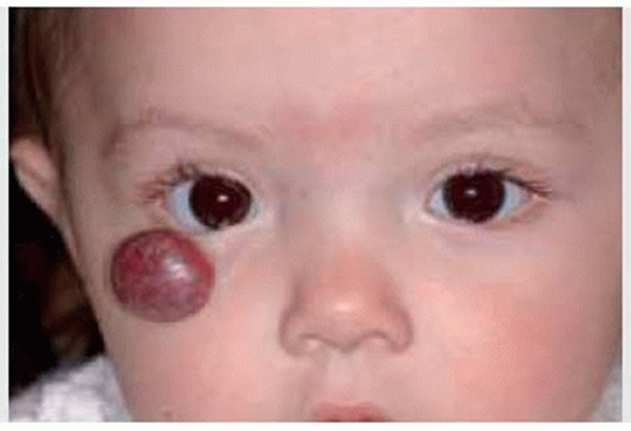
A client with a newborn asks about the lesion on her child's head. After assessing the skin, which response will the nurse offer to the client?
A. This is a vascular tumor that often goes away over time
reason: This is correct because the lesion on the child's head is most likely a hemangioma, which is a benign tumor of blood vessels that appears as a red or purple mark on the skin. Hemangiomas are common in newborns and usually grow during the first year of life, then shrink and fade over several years. The nurse should reassure the client that hemangiomas are harmless and do not require treatment unless they interfere with vision, breathing, or feeding.
B. This lesion will spread
reason: This is incorrect because the lesion on the child's head will not spread, but rather grow and shrink within a limited area. The nurse should not alarm the client by suggesting that the lesion will spread to other parts of the body or become malignant. The nurse should explain that hemangiomas are not contagious or infectious and do not affect the child's overall health or development.
C. This is caused by scarring from the birth process
reason: This is incorrect because the lesion on the child's head is not caused by scarring from the birth process, but rather by abnormal growth of blood vessels in the skin. The nurse should not confuse or misinform the client about the cause of the lesion. The nurse should explain that hemangiomas are not related to trauma, infection, or genetics, but rather to unknown factors that influence blood vessel formation during fetal development.
D. This is a precancerous lesion and your child will need a referral to a dermatologist
reason: This is incorrect because the lesion on the child's head is not a precancerous lesion and does not need a referral to a dermatologist. The nurse should not scare or mislead the client by suggesting that the lesion is a sign of cancer or requires further evaluation or treatment. The nurse should explain that hemangiomas are benign and usually resolve on their own without any complications or sequelae.
Full Explanation
Choice A reason: This is correct because the lesion on the child's head is most likely a hemangioma, which is a benign tumor of blood vessels that appears as a red or purple mark on the skin. Hemangiomas are common in newborns and usually grow during the first year of life, then shrink and fade over several years. The nurse should reassure the client that hemangiomas are harmless and do not require treatment unless they interfere with vision, breathing, or feeding.
Choice B reason: This is incorrect because the lesion on the child's head will not spread, but rather grow and shrink within a limited area. The nurse should not alarm the client by suggesting that the lesion will spread to other parts of the body or become malignant. The nurse should explain that hemangiomas are not contagious or infectious and do not affect the child's overall health or development.
Choice C reason: This is incorrect because the lesion on the child's head is not caused by scarring from the birth process, but rather by abnormal growth of blood vessels in the skin. The nurse should not confuse or misinform the client about the cause of the lesion. The nurse should explain that hemangiomas are not related to trauma, infection, or genetics, but rather to unknown factors that influence blood vessel formation during fetal development.
Choice D reason: This is incorrect because the lesion on the child's head is not a precancerous lesion and does not need a referral to a dermatologist. The nurse should not scare or mislead the client by suggesting that the lesion is a sign of cancer or requires further evaluation or treatment. The nurse should explain that hemangiomas are benign and usually resolve on their own without any complications or sequelae.
A nurse at an ophthalmology clinic is providing medication teaching to a client who has open-angle glaucoma. Which of the following instructions should the nurse provide?
A. Apply the medication when you are experiencing eye pain
reason: This is incorrect because applying the medication when you are experiencing eye pain can be ineffective or harmful for treating open-angle glaucoma. Open-angle glaucoma is a chronic condition that causes increased pressure inside the eye and damage to the optic nerve, which can lead to vision loss. Eye pain is not a common symptom of open-angle glaucoma, but rather an indication of acute angle closure glaucoma, which is a medical emergency that requires immediate treatment. The nurse should instruct the client to apply the medication as prescribed, regardless of pain level, and seek medical attention if they experience severe eye pain, headache, nausea, or blurred vision.
B. Use the medication only until the intraocular pressure returns to normal
reason: This is incorrect because using the medication only until the intraocular pressure returns to normal can cause recurrence or worsening of open-angle glaucoma. Intraocular pressure is the pressure inside the eye that can affect eye health and vision. Normal intraocular pressure ranges from 10 to 21 mmHg, but it can vary depending on age, time of day, or other factors. The nurse should instruct the client to monitor their intraocular pressure regularly and report any changes to their provider, but not to stop using the medication without consulting their provider first.
C. Use the medication for approximately 10 days, then gradually taper off
reason: This is incorrect because using the medication for approximately 10 days, then gradually tapering off can cause rebound or adverse effects of open-angle glaucoma. The medication for open-angle glaucoma can be either beta-blockers, such as timolol, or cholinergic agents, such as pilocarpine, which work by reducing fluid production or increasing fluid drainage in the eye. The nurse should instruct the client to follow their provider's instructions on how long and how much to use the medication and not to change or discontinue it abruptly without their provider's approval.
D. Apply the medication on a regular schedule for the rest of your life
reason: This is correct because applying the medication on a regular schedule for the rest of your life can help control and prevent the progression of open-angle glaucoma. Open-angle glaucoma is a lifelong condition that requires consistent and continuous treatment to maintain normal intraocular pressure and prevent vision loss. The nurse should instruct the client to apply the medication at the same time every day and not to miss or skip any doses. The nurse should also teach the client how to store, handle, and administer the medication properly and safely.
Full Explanation
Choice A reason: This is incorrect because applying the medication when you are experiencing eye pain can be ineffective or harmful for treating open-angle glaucoma. Open-angle glaucoma is a chronic condition that causes increased pressure inside the eye and damage to the optic nerve, which can lead to vision loss. Eye pain is not a common symptom of open-angle glaucoma, but rather an indication of acute angle closure glaucoma, which is a medical emergency that requires immediate treatment. The nurse should instruct the client to apply the medication as prescribed, regardless of pain level, and seek medical attention if they experience severe eye pain, headache, nausea, or blurred vision.
Choice B reason: This is incorrect because using the medication only until the intraocular pressure returns to normal can cause recurrence or worsening of open-angle glaucoma. Intraocular pressure is the pressure inside
the eye that can affect eye health and vision. Normal intraocular pressure ranges from 10 to 21 mmHg, but it can vary depending on age, time of day, or other factors. The nurse should instruct the client to monitor their intraocular pressure regularly and report any changes to their provider, but not to stop using
the medication without consulting their provider first.
Choice C reason: This is incorrect because using the medication for approximately 10 days, then gradually tapering off can cause rebound or adverse effects of open-angle glaucoma. The medication for open-angle glaucoma can be either beta-blockers, such as timolol, or cholinergic agents, such as pilocarpine, which work by reducing fluid production or increasing fluid drainage in the eye. The nurse should instruct the client to follow their provider's instructions on how long and how much to use the medication and not to change or discontinue it abruptly without their provider's approval.
Choice D reason: This is correct because applying the medication on a regular schedule for the rest of your life can help control and prevent the progression of open-angle glaucoma. Open-angle glaucoma is a lifelong condition that requires consistent and continuous treatment to maintain normal intraocular pressure and prevent vision loss. The nurse should instruct the client to apply the medication at the same time every day and not to miss or skip any doses. The nurse should also teach the client how to store, handle, and administer the medication properly and safely.