
Nursing practice questions with comprehensive rationales
NurseDive Free Nursing Practice Question
A male client is seeking help in a mental health clinic for anger management problems. He voices that he is fearful that his wife may divorce him because of his anger problem, and he is willing to do “whatever it takes’ to control his anger. Later in the week, the client’s wife also seeks assistance because she is going to divorce her husband.
The nurse who is caring for both of these clients tries to decide the correct action to take. The nurse is experiencing:
A. An ethical dilemma
The nurse is experiencing an ethical dilemma because there are conflicting values and ethical principles that need to be considered in this situation. On one hand, the nurse has a duty to maintain the confidentiality of the information shared by each client. On the other hand, the nurse also has a duty to promote the well-being of each client, which may require sharing information between them. Additionally, there may be issues of autonomy, justice, and beneficence that need to be considered when deciding on the best course of action. It is important for the nurse to carefully consider all of these factors and make a decision that is in the best interest of both clients while upholding ethical principles.
B. Value clarification
C. A moral conflict
D. A breach of confidentiality
This question is an excerpt from Nurse Dive's nursing test bank - Mental Health Chapter 1 - Proctored Exam 2. Take the full exam now
Full Explanation
The nurse is experiencing an ethical dilemma because there are conflicting values and ethical principles that need to be considered in this situation. On one hand, the nurse has a duty to maintain the confidentiality of the information shared by each client. On the other hand, the nurse also has a duty to promote the well-being of each client, which may require sharing information between them.
Additionally, there may be issues of autonomy, justice, and beneficence that need to be considered when deciding on the best course of action. It is important for the nurse to carefully consider all of these factors and make a decision that is in the best interest of both clients while upholding ethical principles.
Similar Questions
In the Mental Health Status Examination, which of the following focuses on what the person is thinking?
A. Speech and ability to communicate.
Speech and ability to communicate (a) are also assessed in the MSE, but they focus more on how the person expresses themselves, rather than the content of their thoughts.
B. Judgement
Judgment (b) refers to a person's ability to make decisions and solve problems, and memory (c) is the ability to recall past events and information. While both areas are important to assess in a mental health evaluation, they do not specifically focus on what the person is thinking.
C. Memory
Judgment (b) refers to a person's ability to make decisions and solve problems, and memory (c) is the ability to recall past events and information. While both areas are important to assess in a mental health evaluation, they do not specifically focus on what the person is thinking.
D. Thinking/content of thought.
In a Mental Status Examination (MSE), thinking/content of thought is one of the key areas assessed. It refers to the content and process of a person's thoughts. The examiner will evaluate whether the person's thinking is coherent, organized, and logical, or if it is fragmented, disorganized, or delusional. They will also look for evidence of hallucinations, obsessions, or compulsions.
Full Explanation
In a Mental Status Examination (MSE), thinking/content of thought is one of the key areas assessed. It refers to the content and process of a person's thoughts. The examiner will evaluate whether the person's thinking is coherent, organized, and logical, or if it is fragmented, disorganized, or delusional. They will also look for evidence of hallucinations, obsessions, or compulsions.
Speech and ability to communicate (a) are also assessed in the MSE, but they focus more on how the person expresses themselves, rather than the content of their thoughts. Judgment (b) refers to a person's ability to make decisions and solve problems, and memory (c) is the ability to recall past events and information. While both areas are important to assess in a mental health evaluation, they do not specifically focus on what the person is thinking.
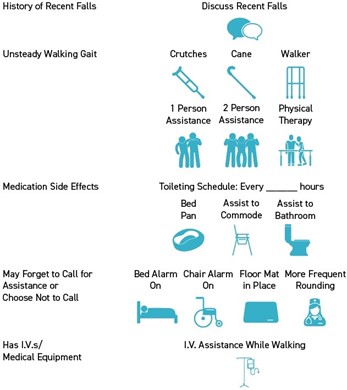
You find a patient on the floor at shift change. She is awake and alert. She is confused now and was not controlled before being found on the floor.
What is your first step in the nursing process in this situation?
A. Leave the patient to get help.
B. Call the patient’s health-care provider from your cell phone.
C. Help the patient get up and then document your findings in the chart.
D. Gather more information by making observations about the patient.
The first step in the nursing process is assessment, which involves gathering information about the patient’s condition. In this situation, the nurse should make observations about the patient’s physical and mental status, including any signs of injury or distress. This information can then be used to determine the appropriate course of action and provide appropriate care. The other The other options do not represent the first step in the nursing process and may not be appropriate in this situation.
Full Explanation
The first step in the nursing process is assessment, which involves gathering information about the patient’s condition. In this situation, the nurse should make observations about the patient’s physical and mental status, including any signs of injury or distress. This information can then be used to determine the appropriate course of action and provide appropriate care. The other
The other options do not represent the first step in the nursing process and may not be appropriate in this situation.
According to Diana Baumrind, there are three types of parenting. A parent who sets up the rules and excludes the rules of the child is known as a:
A. An authoritative parent
An authoritative parent is also strict and establishes rules, but they provide a nurturing and supportive environment. The authoritative parent encourages open communication and sets boundaries with explanations and is willing to consider the child's feelings and opinions. Children raised by authoritative parents tend to be self-disciplined, confident, and socially responsible.
B. An authoritarian parent
Diana Baumrind identified three main types of parenting styles: authoritarian, authoritative, and permissive. An authoritarian parent is a strict, controlling parent who establishes rules and expects obedience without explanation. The authoritarian parent does not encourage open communication and can be harsh in discipline. Children raised by authoritarian parents may become anxious, withdrawn, or rebellious.
C. An administrative parent
An administrative parent is not one of the parenting styles identified by Baumrind.
D. A permissive parent
A permissive parent is a lenient parent who sets few rules and allows the child to make their own decisions. The permissive parent is warm and accepting but may not provide enough structure or guidance. Children raised by permissive parents may struggle with self-control and have difficulty adapting to authority figures.
Full Explanation
Diana Baumrind identified three main types of parenting styles: authoritarian, authoritative, and permissive.
An authoritarian parent is a strict, controlling parent who establishes rules and expects obedience without explanation. The authoritarian parent does not encourage open communication and can be harsh in discipline. Children raised by authoritarian parents may become anxious, withdrawn, or rebellious.
An authoritative parent is also strict and establishes rules, but they provide a nurturing and supportive environment. The authoritative parent encourages open communication and sets boundaries with explanations and is willing to consider the child's feelings and opinions. Children raised by authoritative parents tend to be self-disciplined, confident, and socially responsible.
A permissive parent is a lenient parent who sets few rules and allows the child to make their own decisions. The permissive parent is warm and accepting but may not provide enough structure or guidance. Children raised by permissive parents may struggle with self-control and have difficulty adapting to authority figures.
An administrative parent is not one of the parenting styles identified by Baumrind.