Nursing practice questions with comprehensive rationales
NurseDive Free Nursing Practice Question
A nurse in a clinic is assessing a 7-month-old infant. Which of the following indicates a need for further evaluation?
A. Uses a pincer grasp
Using a pincer grasp indicates a need for further evaluation, as it is a developmental milestone that is usually achieved by 9 to 10 months of age. A pincer grasp is the ability to pick up small objects using the thumb and index finger. A 7-month-old infant should be able to use a raking grasp, which is the ability to scoop up objects using all fingers.
B. Has a fear of strangers
Having a fear of strangers does not indicate a need for further evaluation, as it is a normal and expected behavior for a 7-month-old infant. A fear of strangers is a sign of attachment and recognition of familiar and unfamiliar faces. A 7-month-old infant may cry, cling, or turn away from strangers.
C. Shows preferences towards foods
Showing preferences towards foods does not indicate a need for further evaluation, as it is a normal and expected behavior for a 7-month-old infant. Showing preferences towards foods is a sign of individuality and taste development. A 7-month-old infant may accept or reject certain foods based on their flavor, texture, or appearance.
D. Babbles one-syllable sounds
Babbling one-syllable sounds does not indicate a need for further evaluation, as it is a normal and expected behavior for a 7-month-old infant. Babbling one-syllable sounds is a sign of language and communication development. A 7-month-old infant may make sounds such as "ba", "da", "ga", or "ma".
This question is an excerpt from Nurse Dive's nursing test bank - ATI Pediatric Proctored Exam 3. Take the full exam now
Full Explanation
Choice A: Using a pincer grasp indicates a need for further evaluation, as it is a developmental milestone that is usually achieved by 9 to 10 months of age. A pincer grasp is the ability to pick up small objects using the thumb and index finger. A 7-month-old infant should be able to use a raking grasp, which is the ability to scoop up objects using all fingers.
Choice B: Having a fear of strangers does not indicate a need for further evaluation, as it is a normal and expected behavior for a 7-month-old infant. A fear of strangers is a sign of attachment and recognition of familiar and unfamiliar faces. A 7-month-old infant may cry, cling, or turn away from strangers.
Choice C: Showing preferences towards foods does not indicate a need for further evaluation, as it is a normal and expected behavior for a 7-month-old infant. Showing preferences towards foods is a sign of individuality and taste development. A 7-month-old infant may accept or reject certain foods based on their flavor, texture, or appearance.
Choice D: Babbling one-syllable sounds does not indicate a need for further evaluation, as it is a normal and expected behavior for a 7-month-old infant. Babbling one-syllable sounds is a sign of language and communication development. A 7-month-old infant may make sounds such as "ba", "da", "ga", or "ma".
Similar Questions
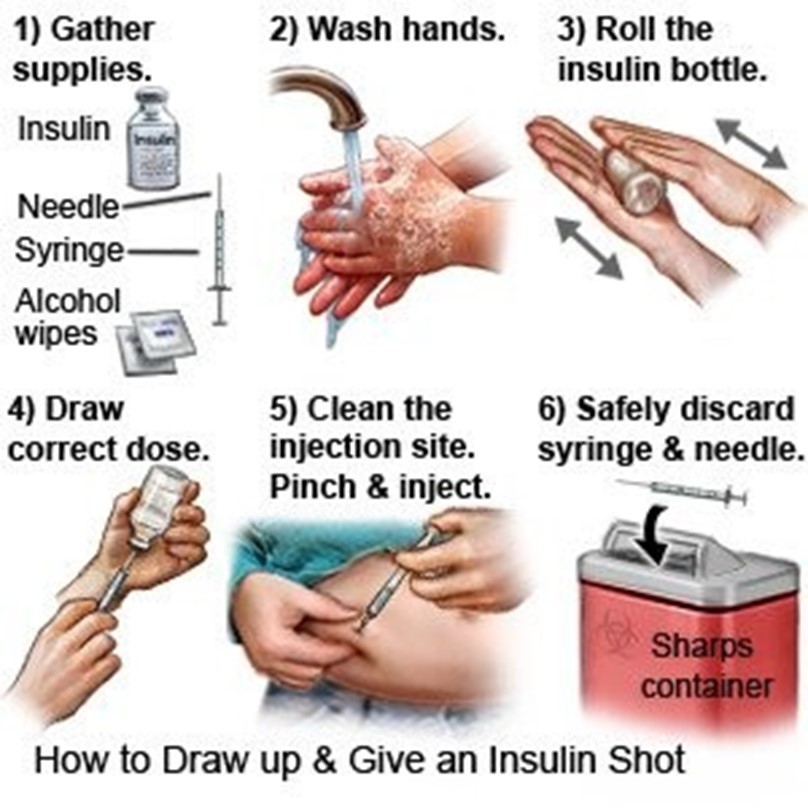
A nurse is providing teaching about self-administration of insulin to the parent of a school-age child who has a new diagnosis of diabetes mellitus. Which of the following statements by the parent indicates a need for further teaching?
A. "The insulin can be injected anywhere there is adipose tissue."
This statement does not indicate a need for further teaching, as it is correct that insulin can be injected anywhere there is adipose tissue. Adipose tissue is the layer of fat under the skin that can absorb insulin and prevent damage to muscles or organs. The common sites for insulin injection are the abdomen, thighs, buttocks, or upper arms.
B. "I will be sure my child rotates sites after 5 injections in one area."
This statement does not indicate a need for further teaching, as it is correct that the child should rotate sites after 5 injections in one area. Rotating sites can prevent lipodystrophy, which is a condition that causes abnormal changes in fat tissue due to repeated injections. Lipodystrophy can affect the appearance and absorption of insulin in the affected area.
C. "I will be sure my child aspirates before injecting the insulin."
This statement indicates a need for further teaching, as it is incorrect that the child should aspirate before injecting the insulin. Aspiration is the process of pulling back on the plunger of the syringe to check for blood before injecting the medication. Aspiration is not recommended for insulin injection, as it can cause pain, bruising, or leakage of insulin from the injection site.
D. "The insulin should be injected at a 90-degree angle."
This statement does not indicate a need for further teaching, as it is correct that insulin should be injected at a 90-degree angle. Injecting insulin at a 90-degree angle can ensure that the medication reaches the adipose tissue and prevents skin irritation or muscle damage. The only exception is if the child has very thin skin or uses very short needles, in which case they may inject at a 45-degree angle.
Full Explanation
Choice A: This statement does not indicate a need for further teaching, as it is correct that insulin can be injected anywhere there is adipose tissue. Adipose tissue is the layer of fat under the skin that can absorb insulin and prevent damage to muscles or organs. The common sites for insulin injection are the abdomen, thighs, buttocks, or upper arms.
Choice B: This statement does not indicate a need for further teaching, as it is correct that the child should rotate sites after 5 injections in one area. Rotating sites can prevent lipodystrophy, which is a condition that causes abnormal changes in fat tissue due to repeated injections. Lipodystrophy can affect the appearance and absorption of insulin in the affected area.
Choice C: This statement indicates a need for further teaching, as it is incorrect that the child should aspirate before injecting the insulin. Aspiration is the process of pulling back on the plunger of the syringe to check for blood before injecting the medication. Aspiration is not recommended for insulin injection, as it can cause pain, bruising, or leakage of insulin from the injection site.
Choice D: This statement does not indicate a need for further teaching, as it is correct that insulin should be injected at a 90-degree angle. Injecting insulin at a 90-degree angle can ensure that the medication reaches the adipose tissue and prevents skin irritation or muscle damage. The only exception is if the child has very thin skin or uses very short needles, in which case they may inject at a 45-degree angle.
A nurse is teaching about neural tube defects to a group of females who are pregnant. Which of the following disease processes should the nurse include as an example of a neural tube defect?
A. Muscular dystrophy
Muscular dystrophy is not an example of a neural tube defect, but rather a group of genetic disorders that cause progressive weakness and loss of muscle mass. Muscular dystrophy affects the skeletal muscles that control movement and may also affect the heart, lungs, or other organs. Muscular dystrophy is caused by mutations in genes that encode proteins that protect muscle fibers from damage.
B. Spina bifida
Spina bifida is an example of a neural tube defect, which is a birth defect that occurs when the neural tube, which is the structure that develops into the brain and spinal cord, does not close completely during the first month of pregnancy. Spina bifida causes an opening in the spine that exposes the spinal cord and nerves and may result in physical and mental disabilities. Spina bifida can be prevented by taking folic acid before and during pregnancy.
C. Hydrocephalus
Hydrocephalus is not an example of a neural tube defect, but rather a condition that causes accumulation of cerebrospinal fluid (CSF) in the brain. Hydrocephalus can increase the pressure inside the skull and damage the brain tissue and function. Hydrocephalus can be caused by congenital defects, infections, injuries, tumors, or bleeding in the brain.
D. Cerebral palsy
Cerebral palsy is not an example of a neural tube defect, but rather a group of disorders that affect movement, balance, and posture. Cerebral palsy is caused by damage to the developing brain before, during, or after birth. Cerebral palsy can affect muscle tone, coordination, reflexes, or speech. Cerebral palsy can be caused by infections, injuries, lack of oxygen, or genetic mutations.
Full Explanation
Choice A: Muscular dystrophy is not an example of a neural tube defect, but rather a group of genetic disorders that cause progressive weakness and loss of muscle mass. Muscular dystrophy affects the skeletal muscles that control movement and may also affect the heart, lungs, or other organs. Muscular dystrophy is caused by mutations in genes that encode proteins that protect muscle fibers from damage.
Choice B: Spina bifida is an example of a neural tube defect, which is a birth defect that occurs when the neural tube, which is the structure that develops into the brain and spinal cord, does not close completely during the first month of pregnancy. Spina bifida causes an opening in the spine that exposes the spinal cord and nerves and may result in physical and mental disabilities. Spina bifida can be prevented by taking folic acid before and during pregnancy.
Choice C: Hydrocephalus is not an example of a neural tube defect, but rather a condition that causes accumulation of cerebrospinal fluid (CSF) in the brain. Hydrocephalus can increase the pressure inside the skull and damage the brain tissue and function. Hydrocephalus can be caused by congenital defects, infections, injuries, tumors, or bleeding in the brain.
Choice D: Cerebral palsy is not an example of a neural tube defect, but rather a group of disorders that affect movement, balance, and posture. Cerebral palsy is caused by damage to the developing brain before, during, or after birth. Cerebral palsy can affect muscle tone, coordination, reflexes, or speech. Cerebral palsy can be caused by infections, injuries, lack of oxygen, or genetic mutations.
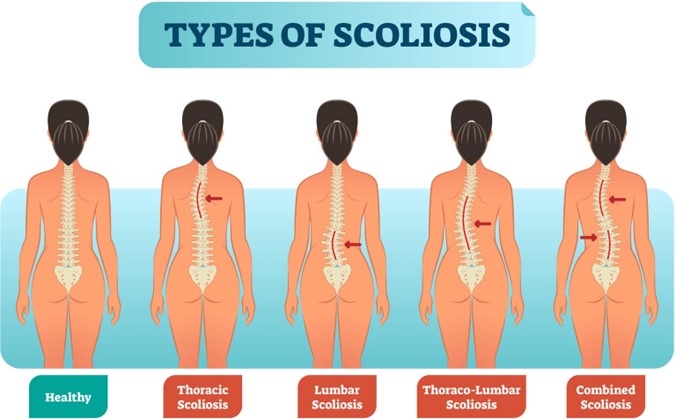
A nurse is assisting with a routine physical examination of an adolescent. The provider observes a lateral curvature of the spine. The nurse should expect the provider to document which of the following disorders?
A. Torticollis
Torticollis is not a disorder that causes lateral curvature of the spine, but rather a condition that causes tilting or twisting of the neck due to contraction or spasm of the sternocleidomastoid muscle. Torticollis can cause pain, stiffness, or limited range of motion in the neck. Torticollis can be congenital or acquired due to injury, infection, or posture.
B. Lordosis
Lordosis is not a disorder that causes lateral curvature of the spine, but rather a condition that causes excessive inward curvature of the lower spine. Lordosis can cause back pain, stiffness, or difficulty in movement. Lordosis can be congenital or acquired due to obesity, pregnancy, osteoporosis, or spondylolisthesis.
C. Kyphosis
Kyphosis is not a disorder that causes lateral curvature of the spine, but rather a condition that causes excessive outward curvature of the upper spine. Kyphosis can cause a hunchback appearance, back pain, stiffness, or breathing problems. Kyphosis can be congenital or acquired due to aging, osteoporosis, arthritis, or spinal injury.
D. Scoliosis
Scoliosis is a disorder that causes lateral curvature of the spine in one or more places. Scoliosis can cause uneven shoulders or hips, back pain, fatigue, or breathing problems. Scoliosis can be congenital or idiopathic (unknown cause). Scoliosis can be diagnosed by physical examination and X-ray and treated by braces or surgery depending on the severity and progression of the curve.
Full Explanation
Choice A: Torticollis is not a disorder that causes lateral curvature of the spine, but rather a condition that causes tilting or twisting of the neck due to contraction or spasm of the sternocleidomastoid muscle. Torticollis can cause pain, stiffness, or limited range of motion in the neck. Torticollis can be congenital or acquired due to injury, infection, or posture.
Choice B: Lordosis is not a disorder that causes lateral curvature of the spine, but rather a condition that causes excessive inward curvature of the lower spine. Lordosis can cause back pain, stiffness, or difficulty in movement. Lordosis can be congenital or acquired due to obesity, pregnancy, osteoporosis, or spondylolisthesis.
Choice C: Kyphosis is not a disorder that causes lateral curvature of the spine, but rather a condition that causes excessive outward curvature of the upper spine. Kyphosis can cause a hunchback appearance, back pain, stiffness, or breathing problems. Kyphosis can be congenital or acquired due to aging, osteoporosis, arthritis, or spinal injury.
Choice D: Scoliosis is a disorder that causes lateral curvature of the spine in one or more places. Scoliosis can cause uneven shoulders or hips, back pain, fatigue, or breathing problems. Scoliosis can be congenital or idiopathic (unknown cause). Scoliosis can be diagnosed by physical examination and X-ray and treated by braces or surgery depending on the severity and progression of the curve.