
Nursing practice questions with comprehensive rationales
NurseDive Free Nursing Practice Question
A nurse in a pediatric clinic is reviewing the urine laboratory results for an adolescent.
For which of the following results should the nurse notify the provider?
A. Specific gravity 1.020
A specific gravity of 1.020 is within the normal range and indicates appropriate urine concentration.
B. Uric acid 475 mg/24 hr
Uric acid levels of 475 mg/24 hr are not mentioned as abnormal or concerning in the context provided.
C. Ketones positive
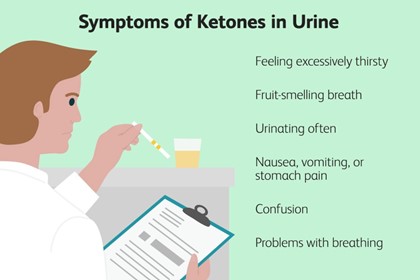
Ketones in the urine can be an indication of diabetic ketoacidosis (DKA) or other metabolic disorders. It is abnormal and should be reported to the healthcare provider for further evaluation and management. Positive ketones suggest that the body is breaking down fats for energy instead of using glucose, which can be a sign of inadequate insulin levels or utilization.
D. Nitrites negative
Nitrites negative indicates the absence of nitrites in the urine, which is a normal finding and indicates the absence of a urinary tract infection.
This question is an excerpt from Nurse Dive's nursing test bank - VATI PN Comprehensive Predictor 2020 Proctored Exam. Take the full exam now
Full Explanation
c. Ketones positive.
Explanation:
Ketones in the urine can be an indication of diabetic ketoacidosis (DKA) or other metabolic disorders. It is abnormal and should be reported to the healthcare provider for further evaluation and management. Positive ketones suggest that the body is breaking down fats for energy instead of using glucose, which can be a sign of inadequate insulin levels or utilization.
Options a, b, and d are within normal ranges or do not indicate an immediate concern. A specific gravity of 1.020 is within the normal range and indicates appropriate urine concentration. Uric acid levels of 475 mg/24 hr are not mentioned as abnormal or concerning in the context provided. Nitrites negative indicates the absence of nitrites in the urine, which is a normal finding and indicates the absence of a urinary tract infection.
However, it's important to note that clinical judgment should always be exercised, and the nurse should consider the patient's overall clinical presentation and history when interpreting laboratory results and making decisions regarding reporting to the provider.
Similar Questions
A nurse is preparing to administer a liquid medication to a 6-month-old infant who is crying. Which of the
following actions should the nurse take to reduce the risk of aspiration?
A. Pinch the infant's nares during administration
B. Administer the whole dose at once
C. Hold the infant in a side-lying position
D. Administer using a needleless syringe in the buccal cavity
To reduce the risk of aspiration, the nurse should administer the liquid medication using a needleless syringe in the buccal cavity. This technique allows for precise administration of small amounts of medication into the side of the infant's mouth, minimizing the risk of choking or aspiration. Pinching the infant's nares (option a) is not necessary for medication administration and can be distressing for the infant. Administering the whole dose at once (option b) increases the risk of aspiration if the infant is unable to swallow all of it. Holding the infant in a side-lying position (option c) may be appropriate for certain situations, but it does not specifically address the risk of aspiration during medication administration.
A nurse is assisting with developing a discharge plan for a client who has a new diagnosis of diabetes mellitus. The client is independent and lives alone. Which of the following interventions should the nurse plan to include?
A. Provide the client with 1 week's supply of insulin syringes
B. Arrange for a home health nurse to visit the client daily.
The nurse should plan to arrange for a home health nurse to visit the client daily. Since the client is independent and lives alone, having a home health nurse visit regularly can provide essential support, education, and monitoring of the client's diabetes management. Providing the client with a 1 week's supply of insulin syringes (option a) is important, but it alone does not address the need for ongoing care and support. Notifying the family (option c) may be appropriate, but it is not the primary intervention for ensuring the client's immediate post-discharge needs are met. Referring the client to a diabetic support group (option d) is beneficial for long-term management, but it does not address the immediate need for support and education after discharge.
C. Notify the family of the client's health status.
D. Refer the client to a diabetic support group
A nurse has obtained a client's oxygen saturation measurement of 88% on 2 liters of oxygen via nasal cannula. Which of the following actions should the nurse take?
A. Check the client's heart rate on the oximeter
A. Check the client's heart rate on the oximeter: Although checking the heart rate may provide context for assessing the client's overall status, it does not address the primary concern of the low oxygen saturation. Understanding the client's baseline saturation level takes priority to guide further actions effectively.
B. Compare the result with the baseline reading
B. Compare the result with the baseline reading: Comparing the reading with the client's baseline is essential. For clients with chronic respiratory conditions, baseline oxygen levels may naturally be lower. Identifying if this 88% saturation is typical or unusual for the client helps determine the need for further intervention or adjustment.
C. Decrease the amount of oxygen administered
C. Decrease the amount of oxygen administered: Reducing oxygen flow when the saturation is low is contraindicated, as it could worsen hypoxia. Instead, increasing oxygen may be warranted if the reading remains below the baseline after further assessment.
D. Perform another reading while the client ambulates
D. Perform another reading while the client ambulates: Repeating the reading during ambulation may worsen hypoxia and is not ideal without understanding baseline oxygenation at rest. Re-evaluation at rest or in a different position may be more appropriate for accurate assessment.
Full Explanation
Answer: B. Compare the result with the baseline reading
Rationale:
A. Check the client's heart rate on the oximeter:
Although checking the heart rate may provide context for assessing the client's overall status, it does not address the primary concern of the low oxygen saturation. Understanding the client's baseline saturation level takes priority to guide further actions effectively.
B. Compare the result with the baseline reading:
Comparing the reading with the client's baseline is essential. For clients with chronic respiratory conditions, baseline oxygen levels may naturally be lower. Identifying if this 88% saturation is typical or unusual for the client helps determine the need for further intervention or adjustment.
C. Decrease the amount of oxygen administered:
Reducing oxygen flow when the saturation is low is contraindicated, as it could worsen hypoxia. Instead, increasing oxygen may be warranted if the reading remains below the baseline after further assessment.
D. Perform another reading while the client ambulates:
Repeating the reading during ambulation may worsen hypoxia and is not ideal without understanding baseline oxygenation at rest. Re-evaluation at rest or in a different position may be more appropriate for accurate assessment.