
Nursing practice questions with comprehensive rationales
NurseDive Free Nursing Practice Question
A nurse in a prenatal clinic is reviewing the health record of a client who is at 28 weeks of gestation. The history includes one pregnancy, terminated by elective abortion at 9 weeks; the birth of twins at 36 weeks; and a spontaneous abortion at 15 weeks. According to the GTPAL system, which of thea following describes the client's current status?
A. 40122
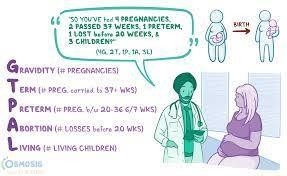
The GTPAL system is used to assess a client's obstetric history: G (Gravida): The total number of pregnancies, including the current one. T (Term births): The number of pregnancies carried to at least 37 weeks. P (Preterm births): The number of pregnancies delivered between 20 and 36 weeks, 6 days. A (Abortions): The number of pregnancies ending before 20 weeks (spontaneous or elective). L (Living children): The number of children currently alive. For this client: G (Gravida): 4 (one elective abortion, one twin pregnancy, one spontaneous abortion, and the current pregnancy). T (Term births): 0 (the twin pregnancy was delivered at 36 weeks, which is preterm). P (Preterm births): 1 (twins delivered at 36 weeks count as one preterm birth). A (Abortions): 2 (one elective abortion at 9 weeks, one spontaneous abortion at 15 weeks). L (Living children): 2 (the twins). Thus, the GTPAL for this client is 4-0-1-2-2.
B. 20020
The GTPAL system is used to assess a client's obstetric history: G (Gravida): The total number of pregnancies, including the current one. T (Term births): The number of pregnancies carried to at least 37 weeks. P (Preterm births): The number of pregnancies delivered between 20 and 36 weeks, 6 days. A (Abortions): The number of pregnancies ending before 20 weeks (spontaneous or elective). L (Living children): The number of children currently alive. For this client: G (Gravida): 4 (one elective abortion, one twin pregnancy, one spontaneous abortion, and the current pregnancy). T (Term births): 0 (the twin pregnancy was delivered at 36 weeks, which is preterm). P (Preterm births): 1 (twins delivered at 36 weeks count as one preterm birth). A (Abortions): 2 (one elective abortion at 9 weeks, one spontaneous abortion at 15 weeks). L (Living children): 2 (the twins). Thus, the GTPAL for this client is 4-0-1-2-2.
C. 40122
The GTPAL system is used to assess a client's obstetric history: G (Gravida): The total number of pregnancies, including the current one. T (Term births): The number of pregnancies carried to at least 37 weeks. P (Preterm births): The number of pregnancies delivered between 20 and 36 weeks, 6 days. A (Abortions): The number of pregnancies ending before 20 weeks (spontaneous or elective). L (Living children): The number of children currently alive. For this client: G (Gravida): 4 (one elective abortion, one twin pregnancy, one spontaneous abortion, and the current pregnancy). T (Term births): 0 (the twin pregnancy was delivered at 36 weeks, which is preterm). P (Preterm births): 1 (twins delivered at 36 weeks count as one preterm birth). A (Abortions): 2 (one elective abortion at 9 weeks, one spontaneous abortion at 15 weeks). L (Living children): 2 (the twins). Thus, the GTPAL for this client is 4-0-1-2-2.
D. 30202
The GTPAL system is used to assess a client's obstetric history: G (Gravida): The total number of pregnancies, including the current one. T (Term births): The number of pregnancies carried to at least 37 weeks. P (Preterm births): The number of pregnancies delivered between 20 and 36 weeks, 6 days. A (Abortions): The number of pregnancies ending before 20 weeks (spontaneous or elective). L (Living children): The number of children currently alive. For this client: G (Gravida): 4 (one elective abortion, one twin pregnancy, one spontaneous abortion, and the current pregnancy). T (Term births): 0 (the twin pregnancy was delivered at 36 weeks, which is preterm). P (Preterm births): 1 (twins delivered at 36 weeks count as one preterm birth). A (Abortions): 2 (one elective abortion at 9 weeks, one spontaneous abortion at 15 weeks). L (Living children): 2 (the twins). Thus, the GTPAL for this client is 4-0-1-2-2.
E. None
None
F. None
None
This question is an excerpt from Nurse Dive's nursing test bank - ATI Maternity Exam - Proctored Exam 2. Take the full exam now
Full Explanation
The correct answer is: c. 42022
Choice A: 40122
Reason: This choice is incorrect because it indicates 4 pregnancies (correct), 0 term births (correct), 1 preterm birth (correct), 2 abortions (correct), but 2 living children (incorrect). The client has 2 living children, which is correct, but the term and preterm counts are not accurate.
Choice B: 20020
Reason: This choice is incorrect because it indicates 2 pregnancies (incorrect), 0 term births (correct), 0 preterm births (incorrect), 2 abortions (correct), and 0 living children (incorrect). The client has had 4 pregnancies, 1 preterm birth, and 2 living children.
Choice C: 42022
Reason: This choice is correct. It indicates 4 pregnancies (current pregnancy, elective abortion, twins, spontaneous abortion), 0 term births, 2 preterm births (twins at 36 weeks), 2 abortions (elective at 9 weeks, spontaneous at 15 weeks), and 2 living children (twins).
Choice D:
The GTPAL system is used to assess a client's obstetric history:
- G (Gravida): The total number of pregnancies, including the current one.
- T (Term births): The number of pregnancies carried to at least 37 weeks.
- P (Preterm births): The number of pregnancies delivered between 20 and 36 weeks, 6 days.
- A (Abortions): The number of pregnancies ending before 20 weeks (spontaneous or elective).
- L (Living children): The number of children currently alive.
For this client:
G (Gravida): 4 (one elective abortion, one twin pregnancy, one spontaneous abortion, and the current pregnancy).
- T (Term births): 0 (the twin pregnancy was delivered at 36 weeks, which is preterm).
- P (Preterm births): 1 (twins delivered at 36 weeks count as one preterm birth).
- A (Abortions): 2 (one elective abortion at 9 weeks, one spontaneous abortion at 15 weeks).
- L (Living children): 2 (the twins).
Thus, the GTPAL for this client is 4-0-1-2-2.
Similar Questions
A nurse is assessing a client who is in the third trimester of pregnancy. The nurse should recognize which of the following findings as an expected physiologic change during pregnancy?
A. Posterior neck flexion
Posterior neck flexion is not an expected change during pregnancy.
B. Increased abdominal muscle tone
Increased abdominal muscle tone is not an expected change during pregnancy. In fact, the abdominal muscles tend to stretch and may become less toned as the uterus expands.
C. Gradual lordosis
During pregnancy, the woman's center of gravity shifts due to the growing uterus, leading to an increased arch in the lower back known as lordosis. This change helps to maintain balance and reduce the strain on the back. The other options are not expected physiologic changes during pregnancy.
D. Decreased mobility of pelvic joints
Decreased mobility of pelvic joints is not an expected change during pregnancy. Some joint laxity may occur due to hormonal changes, but decreased mobility is not typical.
Full Explanation
Choice A: Posterior neck flexion is not an expected change during pregnancy.
Choice B: Increased abdominal muscle tone is not an expected change during pregnancy. In fact, the abdominal muscles tend to stretch and may become less toned as the uterus expands.
Choice C: During pregnancy, the woman's center of gravity shifts due to the growing uterus, leading to an increased arch in the lower back known as lordosis. This change helps to maintain balance and reduce the strain on the back. The other options are not expected physiologic changes during pregnancy.
Choice D: Decreased mobility of pelvic joints is not an expected change during pregnancy. Some joint laxity may occur due to hormonal changes, but decreased mobility is not typical.
A nurse is observing the electronic fetal heart rate monitor tracing for a client who is at 40 weeks of gestation and is in labor. The nurse should suspect a problem with the umbilical cord when he observes which of the following patterns?
A. Variable decelerations
Variable decelerations on the fetal heart rate monitor tracing are suggestive of umbilical cord compression. These decelerations are often V, U, or Wshaped, and their onset, depth, and duration can vary. They are associated with cord compression, which can reduce blood flow to the fetus during contractions.
B. Late decelerations
Late decelerations are indicative of uteroplacental insufficiency and are not related to umbilical cord problems.
C. Accelerations
Accelerations are reassuring and suggest a responsive, healthy fetus.
D. Early decelerations
Early decelerations are usually benign and result from head compression during contractions, not umbilical cord issues.
Full Explanation
Choice A: Variable decelerations on the fetal heart rate monitor tracing are suggestive of umbilical cord compression. These decelerations are often V, U, or Wshaped, and their onset, depth, and duration can vary. They are associated with cord compression, which can reduce blood flow to the fetus during contractions. Other options are as follows:
Choice B: Late decelerations are indicative of uteroplacental insufficiency and are not related to umbilical cord problems.
Choice C: Accelerations are reassuring and suggest a responsive, healthy fetus.
Choice D: Early decelerations are usually benign and result from head compression during contractions, not umbilical cord issues.
A nurse in a prenatal clinic is caring for a client who asks what her estimated date of delivery will be if her last menstrual period was May 4, 2015. The nurse uses Naegele's Rule to calculate the correct EDD:
A. April 27, 2016
Choice A: April 27, 2016 Reason: This date is incorrect because it does not follow Naegele’s Rule. Naegele’s Rule involves adding 7 days to the first day of the last menstrual period (LMP) and then subtracting 3 months. Adding 7 days to May 4, 2015, gives us May 11, 2015. Subtracting 3 months from May brings us to February, not April.
B. April 11, 2016
Choice B: April 11, 2016 Reason: This date is also incorrect for the same reason as Choice A. It does not follow Naegele’s Rule. Adding 7 days to May 4, 2015, gives us May 11, 2015. Subtracting 3 months from May brings us to February, not April.
C. February 27, 2016
Choice C: February 27, 2016 Reason: This date is closer but still incorrect. Adding 7 days to May 4, 2015, gives us May 11, 2015. Subtracting 3 months from May brings us to February. However, the correct date should be February 11, not February 27.
D. February 11, 2016
Choice D: February 11, 2016 Reason: This is the correct date. Using Naegele’s Rule, we add 7 days to the first day of the last menstrual period (May 4, 2015), which gives us May 11, 2015. Then, we subtract 3 months, which brings us to February 11, 2016. This is the correct Estimated Due Date (EDD).
Full Explanation
The correct answer is: April 11, 2016
Choice A: April 27, 2016
Reason: Using Naegele’s Rule, the estimated date of delivery (EDD) is calculated by adding one year, subtracting three months, and adding seven days to the first day of the last menstrual period (LMP). For an LMP of May 4, 2015:
- Add one year: May 4, 2016
- Subtract three months: February 4, 2016
- Add seven days: February 11, 2016
April 27, 2016, is incorrect because it does not follow the correct calculation steps.
Choice B: April 11, 2016
Reason: Following Naegele’s Rule:
- Add one year: May 4, 2016
- Subtract three months: February 4, 2016
- Add seven days: February 11, 2016
April 11, 2016, is the correct EDD as it accurately follows the calculation steps.
Choice C: February 27, 2016
Reason: This date is incorrect because it does not follow the correct calculation steps of Naegele’s Rule. The correct EDD should be in April, not February.
Choice D: February 11, 2016
Reason: This date is also incorrect. While it follows the initial steps of Naegele’s Rule, it does not account for the full calculation, which should result in an April date, not February.