
Nursing practice questions with comprehensive rationales
NurseDive Free Nursing Practice Question
A nurse in the emergency department is caring for a preschooler who has epiglottitis. Which of the following actions should the nurse take?
A. Place the child in a left lateral position.
Place the child in a left lateral position: Placing the child in a left lateral position is not the priority action for a preschooler with epiglottitis. Epiglottitis is a potentially life-threatening condition characterized by inflammation and swelling of the epiglottis, which can rapidly progress to airway obstruction. The priority is to maintain a patent airway and ensure adequate oxygenation.
B. Obtain a specimen from the child's throat for a culture.
Obtain a specimen from the child's throat for a culture: While obtaining a throat culture may be necessary to identify the causative organism and guide antibiotic therapy, it is not the immediate priority in the management of epiglottitis. Airway management and stabilization take precedence.
C. Inspect the child's throat with a padded tongue depressor.
Inspect the child's throat with a padded tongue depressor: Direct visualization of the throat with a padded tongue depressor is contraindicated in a child with suspected epiglottitis. This action can trigger a gag reflex and potentially cause airway obstruction or exacerbate respiratory distress. Epiglottitis is a medical emergency, and any manipulation of the airway should be performed cautiously by experienced healthcare providers in a controlled setting.
D. Initiate droplet precautions for the child.
Initiate droplet precautions for the child: Droplet precautions are appropriate for a child with suspected or confirmed epiglottitis due to the risk of transmission of the causative organism, usually Haemophilus influenzae type B (Hib), through respiratory droplets. However, the immediate priority is to secure the airway and provide respiratory support. Once the child's airway is stabilized, appropriate infection control measures, including droplet precautions, should be implemented to prevent the spread of infection to others.
This question is an excerpt from Nurse Dive's nursing test bank - Ati Nursing Care Of Children Proctored Exam. Take the full exam now
Full Explanation
A. Place the child in a left lateral position: Placing the child in a left lateral position is not the priority action for a preschooler with epiglottitis. Epiglottitis is a potentially life-threatening condition characterized by inflammation and swelling of the epiglottis, which can rapidly progress to airway obstruction. The priority is to maintain a patent airway and ensure adequate oxygenation.
B. Obtain a specimen from the child's throat for a culture: While obtaining a throat culture may be necessary to identify the causative organism and guide antibiotic therapy, it is not the immediate priority in the management of epiglottitis. Airway management and stabilization take precedence.
C. Inspect the child's throat with a padded tongue depressor: Direct visualization of the throat with a padded tongue depressor is contraindicated in a child with suspected epiglottitis. This action can trigger a gag reflex and potentially cause airway obstruction or exacerbate respiratory distress. Epiglottitis is a medical emergency, and any manipulation of the airway should be performed cautiously by experienced healthcare providers in a controlled setting.
D. Initiate droplet precautions for the child: Droplet precautions are appropriate for a child with suspected or confirmed epiglottitis due to the risk of transmission of the causative organism, usually Haemophilus influenzae type B (Hib), through respiratory droplets. However, the immediate priority is to secure the airway and provide respiratory support. Once the child's airway is stabilized, appropriate infection control measures, including droplet precautions, should be implemented to prevent the spread of infection to others.
Similar Questions
A nurse is teaching the parents of a toddler about strategies to manage temper tantrums. Which of the following instructions should the nurse include in the teaching?
A. "Honor the child's request if she holds her breath."
"Honor the child's request if she holds her breath.": This instruction is incorrect and potentially dangerous. Giving in to the child's demands when they hold their breath during a temper tantrum can reinforce the behavior and may lead to more frequent and intense tantrums. It's important for parents to remain calm and not give in to unreasonable demands during tantrums.
B. "Establish a structured daily routine for the child."
"Establish a structured daily routine for the child.": This instruction is appropriate. A structured daily routine can help toddlers feel secure and provide predictability, which may reduce the likelihood of tantrums. Consistency in meal times, naptimes, and activities can help toddlers know what to expect and feel more in control of their environment.
C. "Place the child in her room alone until the temper tantrum ends."
"Place the child in her room alone until the temper tantrum ends.": While it may be necessary to remove a toddler from a potentially dangerous situation during a tantrum, isolating them in their room alone is not recommended. It's important for parents to stay nearby to ensure the child's safety and to provide comfort and support as needed.
D. "Comfort the child during the temper tantrum."
"Comfort the child during the temper tantrum.": Providing comfort and reassurance to a child during a temper tantrum can be helpful, as long as it's done in a calm and supportive manner. Reassuring words and gentle touch can help the child feel secure and may help to de-escalate the tantrum more quickly.
Full Explanation
A. "Honor the child's request if she holds her breath.": This instruction is incorrect and potentially dangerous. Giving in to the child's demands when they hold their breath during a temper tantrum can reinforce the behavior and may lead to more frequent and intense tantrums. It's important for parents to remain calm and not give in to unreasonable demands during tantrums.
B. "Establish a structured daily routine for the child.": This instruction is appropriate. A structured daily routine can help toddlers feel secure and provide predictability, which may reduce the likelihood of tantrums. Consistency in meal times, naptimes, and activities can help toddlers know what to expect and feel more in control of their environment.
C. "Place the child in her room alone until the temper tantrum ends.": While it may be necessary to remove a toddler from a potentially dangerous situation during a tantrum, isolating them in their room alone is not recommended. It's important for parents to stay nearby to ensure the child's safety and to provide comfort and support as needed.
D. "Comfort the child during the temper tantrum.": Providing comfort and reassurance to a child during a temper tantrum can be helpful, as long as it's done in a calm and supportive manner. Reassuring words and gentle touch can help the child feel secure and may help to de-escalate the tantrum more quickly.
A nurse is admitting a child who has pertussis. Which of the following isolation precautions should the nurse initiate?
A. Droplet
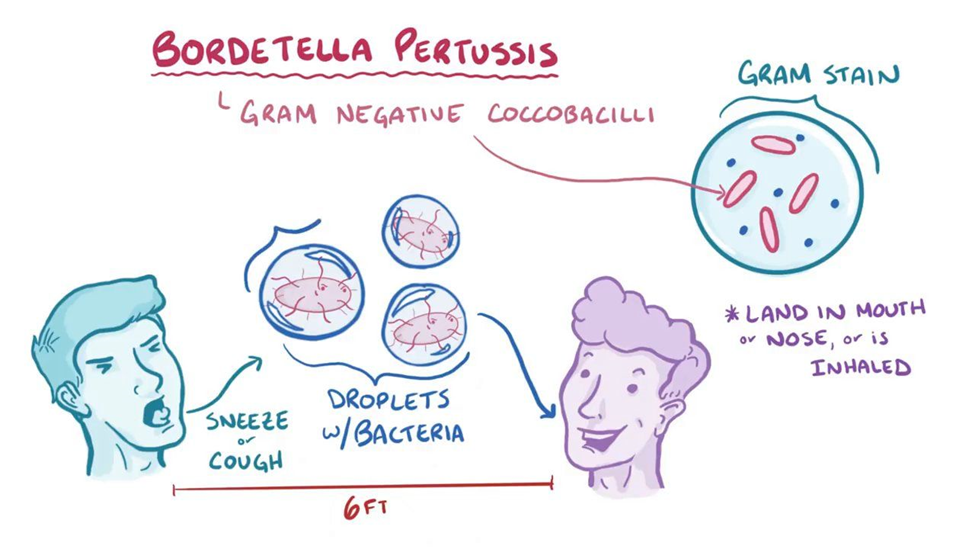
Droplet:Pertussis is primarily transmitted through respiratory droplets when an infected person coughs or sneezes. Droplet precautions involve placing the child in a private room or with another child with the same infection. Healthcare workers should wear a mask or respirator when entering the room to protect against droplet transmission.
B. Contact
Contact:Contact precautions are used for infections that can be spread by direct or indirect contact with the patient or their environment. Pertussis is not typically spread through contact with contaminated surfaces or objects.
C. Airborne
Airborne: Airborne precautions are used for infections that are transmitted through small droplet nuclei that remain in the air for long periods. Pertussis is primarily transmitted through larger respiratory droplets rather than tiny airborne particles.
D. Protective environment
Protective environment:Protective environment precautions are used for patients who have weakened immune systems, such as those undergoing bone marrow transplants. These precautions are not applicable for a child with pertussis.
Full Explanation
A. Droplet:
Pertussis is primarily transmitted through respiratory droplets when an infected person coughs or sneezes. Droplet precautions involve placing the child in a private room or with another child with the same infection. Healthcare workers should wear a mask or respirator when entering the room to protect against droplet transmission.
B. Contact:
Contact precautions are used for infections that can be spread by direct or indirect contact with the patient or their environment. Pertussis is not typically spread through contact with contaminated surfaces or objects.
C. Airborne:
Airborne precautions are used for infections that are transmitted through small droplet nuclei that remain in the air for long periods. Pertussis is primarily transmitted through larger respiratory droplets rather than tiny airborne particles.
D. Protective environment:
Protective environment precautions are used for patients who have weakened immune systems, such as those undergoing bone marrow transplants. These precautions are not applicable for a child with pertussis.
A nurse is providing teaching to the parent of an infant about car seat safety. Which of the following statements by the parent indicate an understanding of the teaching?
A. "I should place the shoulder harness above the level of my baby's shoulders."
"I should place the shoulder harness above the level of my baby's shoulders."This statement is incorrect. Placing the shoulder harness above the baby's shoulders could lead to improper restraint in the event of a crash. The harness should be positioned at or slightly below the level of the baby's shoulders to provide effective protection.
B. "I should place the car seat rear-facing until my baby is 2 years old."
"I should place the car seat rear-facing until my baby is 2 years old."This statement is correct. The American Academy of Pediatrics recommends that infants and toddlers ride in a rear-facing car seat until they are at least 2 years old or until they reach the maximum height and weight limit specified by the car seat manufacturer. This position provides optimal protection for the baby's head, neck, and spine in the event of a crash.
C. "I will place the retainer clip over my baby's abdomen."
"I will place the retainer clip over my baby's abdomen." This statement is incorrect. The retainer clip, also known as the chest clip, should be positioned at armpit level to secure the harness straps. Placing it over the baby's abdomen could result in serious injuries in the event of a crash.
D. "I should position my baby at a 30-degree angle in the car seat."
"I should position my baby at a 30-degree angle in the car seat."This statement is incorrect. Infants should be positioned at a 45-degree angle in their car seats. This angle helps to keep the baby's airway open and prevents the head from flopping forward, which could restrict breathing. Placing the baby at a 30-degree angle may not provide adequate support and protection.
Full Explanation
A. "I should place the shoulder harness above the level of my baby's shoulders."
This statement is incorrect. Placing the shoulder harness above the baby's shoulders could lead to improper restraint in the event of a crash. The harness should be positioned at or slightly below the level of the baby's shoulders to provide effective protection.
B. "I should place the car seat rear-facing until my baby is 2 years old."
This statement is correct. The American Academy of Pediatrics recommends that infants and toddlers ride in a rear-facing car seat until they are at least 2 years old or until they reach the maximum height and weight limit specified by the car seat manufacturer. This position provides optimal protection for the baby's head, neck, and spine in the event of a crash.
C. "I will place the retainer clip over my baby's abdomen."
This statement is incorrect. The retainer clip, also known as the chest clip, should be positioned at armpit level to secure the harness straps. Placing it over the baby's abdomen could result in serious injuries in the event of a crash.
D. "I should position my baby at a 30-degree angle in the car seat."
This statement is incorrect. Infants should be positioned at a 45-degree angle in their car seats. This angle helps to keep the baby's airway open and prevents the head from flopping forward, which could restrict breathing. Placing the baby at a 30-degree angle may not provide adequate support and protection.