Nursing practice questions with comprehensive rationales
NurseDive Free Nursing Practice Question
A nurse is assessing a child who has a congenital heart defect. The nurse should recognize that which of the following defects is associated with increased pulmonary blood flow?
A. Coarctation of the aorta
Coarctation of the aortaCoarctation of the aorta involves a narrowing of the aorta, leading to decreased blood flow to the lower body. It is not associated with increased pulmonary blood flow.
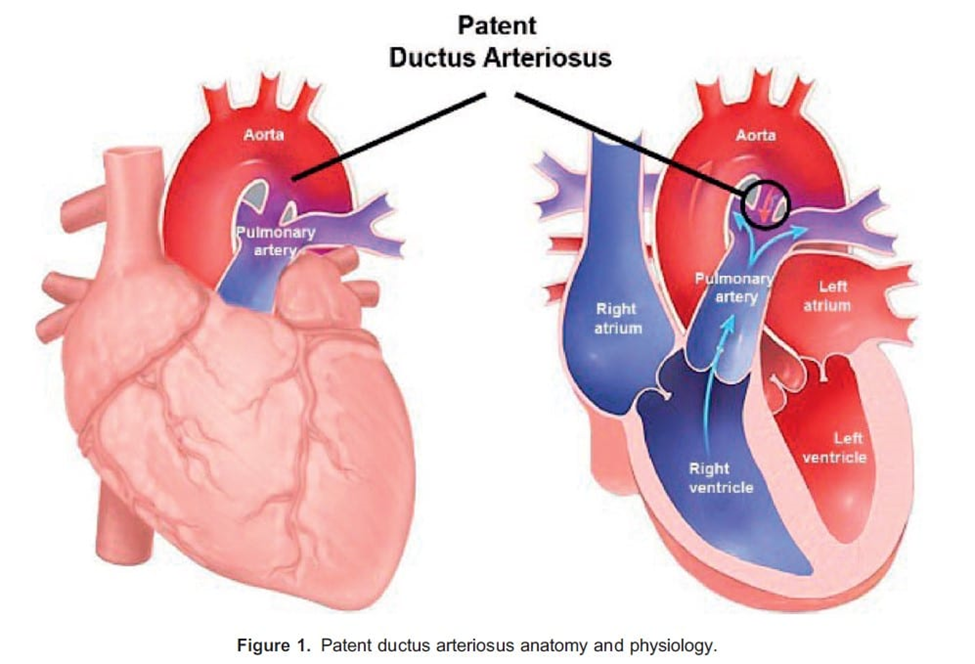
B. Patent ductus arteriosus
Patent ductus arteriosusPatent ductus arteriosus (PDA) is a congenital heart defect where the ductus arteriosus, a fetal blood vessel that usually closes shortly after birth, remains open. This allows blood to flow from the aorta into the pulmonary artery, increasing pulmonary blood flow. Therefore, option B is correct.
C. Tetralogy of Fallot
Tetralogy of Fallot Tetralogy of Fallot is a congenital heart defect characterized by four abnormalities, including a ventricular septal defect (VSD), pulmonary stenosis, right ventricular hypertrophy, and an overriding aorta. While it can lead to cyanosis due to right-to-left shunting, it is not primarily associated with increased pulmonary blood flow.
D. Tricuspid atresia
Tricuspid atresiaTricuspid atresia involves the absence of the tricuspid valve, leading to a lack of direct blood flow from the right atrium to the right ventricle. It usually presents with decreased pulmonary blood flow rather than increased pulmonary blood flow.
This question is an excerpt from Nurse Dive's nursing test bank - Ati Nursing Care Of Children Proctored Exam. Take the full exam now
Full Explanation
A. Coarctation of the aorta
Coarctation of the aorta involves a narrowing of the aorta, leading to decreased blood flow to the lower body. It is not associated with increased pulmonary blood flow.
B. Patent ductus arteriosus
Patent ductus arteriosus (PDA) is a congenital heart defect where the ductus arteriosus, a fetal blood vessel that usually closes shortly after birth, remains open. This allows blood to flow from the aorta into the pulmonary artery, increasing pulmonary blood flow. Therefore, option B is correct.
C. Tetralogy of Fallot
Tetralogy of Fallot is a congenital heart defect characterized by four abnormalities, including a ventricular septal defect (VSD), pulmonary stenosis, right ventricular hypertrophy, and an overriding aorta. While it can lead to cyanosis due to right-to-left shunting, it is not primarily associated with increased pulmonary blood flow.
D. Tricuspid atresia
Tricuspid atresia involves the absence of the tricuspid valve, leading to a lack of direct blood flow from the right atrium to the right ventricle. It usually presents with decreased pulmonary blood flow rather than increased pulmonary blood flow.
Similar Questions
A school nurse is assessing a child who fell from playground equipment and landed head-first. Which of the following manifestations should the nurse recognize as indicating the presence of increased intracranial pressure?
A. Report of diplopia
Report of diplopiaDiplopia, or double vision, can be a symptom of increased intracranial pressure (ICP) due to its effects on cranial nerve function. Therefore, it is a manifestation that the nurse should recognize as indicating the presence of increased ICP.
B. Hyperactivity
HyperactivityHyperactivity is not typically associated with increased ICP. Instead, manifestations of increased ICP often include altered level of consciousness, lethargy, or even coma.
C. Nuchal rigidity
Nuchal rigidity Nuchal rigidity, or stiffness in the neck, is not a direct manifestation of increased ICP. It is more commonly associated with meningitis or other conditions affecting the meninges.
D. Report of sore throat
Report of sore throatA sore throat is not typically associated with increased ICP unless it is related to complications such as pharyngeal injury or infection.
Full Explanation
A. Report of diplopia
Diplopia, or double vision, can be a symptom of increased intracranial pressure (ICP) due to its effects on cranial nerve function. Therefore, it is a manifestation that the nurse should recognize as indicating the presence of increased ICP.
B. Hyperactivity
Hyperactivity is not typically associated with increased ICP. Instead, manifestations of increased ICP often include altered level of consciousness, lethargy, or even coma.
C. Nuchal rigidity
Nuchal rigidity, or stiffness in the neck, is not a direct manifestation of increased ICP. It is more commonly associated with meningitis or other conditions affecting the meninges.
D. Report of sore throat
A sore throat is not typically associated with increased ICP unless it is related to complications such as pharyngeal injury or infection.
A nurse is providing teaching to the parent of a child who has a new prescription for methylphenidate. Which of the following instructions should the nurse include?
A. "Monitor your child for excessive sleepiness."
Methylphenidate is a central nervous system stimulant used to treat attention deficit hyperactivity disorder (ADHD). It typically causes insomnia or decreased need for sleep rather than excessive sleepiness. This option is incorrect, as it does not align with the expected side effects of the medication.
B. "Administer the medication with a caffeinated beverage."
Caffeine is also a stimulant, and combining it with methylphenidate could increase the risk of side effects such as increased heart rate, anxiety, or jitteriness. This instruction is incorrect and unsafe.
C. "Administer the second dose of the medication at lunch time."
Methylphenidate is usually given in divided doses, with the second dose often administered at lunchtime. This timing helps maintain therapeutic levels during the school day while minimizing the risk of insomnia. This option is correct and appropriate for managing the medication.
D. "Monitor your child for weight gain."
A common side effect of methylphenidate is appetite suppression, which can lead to weight loss, not weight gain. This option is incorrect, as the nurse should instruct the parent to monitor for weight loss instead.
Full Explanation
A. "Monitor your child for excessive sleepiness."
Methylphenidate is a central nervous system stimulant used to treat attention deficit hyperactivity disorder (ADHD). It typically causes insomnia or decreased need for sleep rather than excessive sleepiness. This option is incorrect, as it does not align with the expected side effects of the medication.
B. "Administer the medication with a caffeinated beverage."
Caffeine is also a stimulant, and combining it with methylphenidate could increase the risk of side effects such as increased heart rate, anxiety, or jitteriness. This instruction is incorrect and unsafe.
C. "Administer the second dose of the medication at lunch time."
Methylphenidate is usually given in divided doses, with the second dose often administered at lunchtime. This timing helps maintain therapeutic levels during the school day while minimizing the risk of insomnia. This option is correct and appropriate for managing the medication.
D. "Monitor your child for weight gain."
A common side effect of methylphenidate is appetite suppression, which can lead to weight loss, not weight gain. This option is incorrect, as the nurse should instruct the parent to monitor for weight loss instead.
A nurse is assessing an infant who has intussusception. Which of the following manifestations should the nurse expect?
A. Polyuria
PolyuriaPolyuria, or excessive urination, is not typically associated with intussusception. This symptom is more commonly seen in conditions affecting the kidneys or urinary tract.
B. Scaphoid abdomen
Scaphoid abdomenA scaphoid abdomen refers to a concave or hollowed appearance of the abdomen, which is not typically observed in intussusception. In intussusception, abdominal distension and tenderness are more common findings.
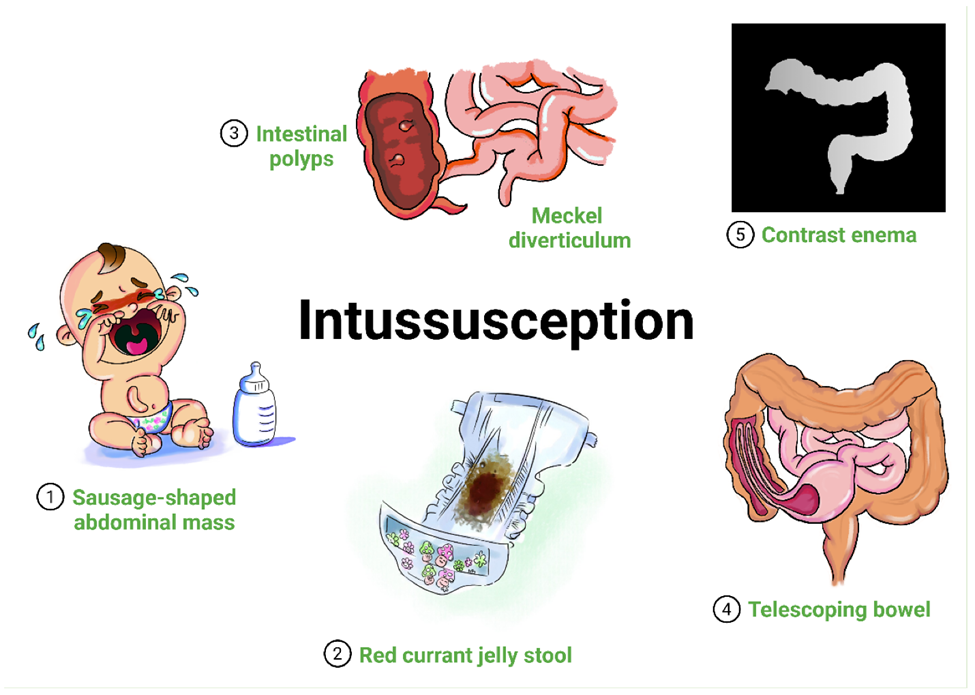
C. Gelatinous red stool
Gelatinous red stool Gelatinous red stool, often described as "currant jelly" stool, is a classic manifestation of intussusception. It occurs due to the mixture of blood, mucus, and bowel contents.
D. Generalized edema
Generalized edemaGeneralized edema, or swelling throughout the body, is not a typical manifestation of intussusception. It is more commonly associated with conditions such as heart failure or kidney disease.
Full Explanation
A. Polyuria
Polyuria, or excessive urination, is not typically associated with intussusception. This symptom is more commonly seen in conditions affecting the kidneys or urinary tract.
B. Scaphoid abdomen
A scaphoid abdomen refers to a concave or hollowed appearance of the abdomen, which is not typically observed in intussusception. In intussusception, abdominal distension and tenderness are more common findings.
C. Gelatinous red stool
Gelatinous red stool, often described as "currant jelly" stool, is a classic manifestation of intussusception. It occurs due to the mixture of blood, mucus, and bowel contents.
D. Generalized edema
Generalized edema, or swelling throughout the body, is not a typical manifestation of intussusception. It is more commonly associated with conditions such as heart failure or kidney disease.