
Nursing practice questions with comprehensive rationales
NurseDive Free Nursing Practice Question
A nurse is assessing a client for a positive Chvostek's sign following a thyroidectomy. Which of the following areas on the client's head should the nurse tap to assess the client for tetany?

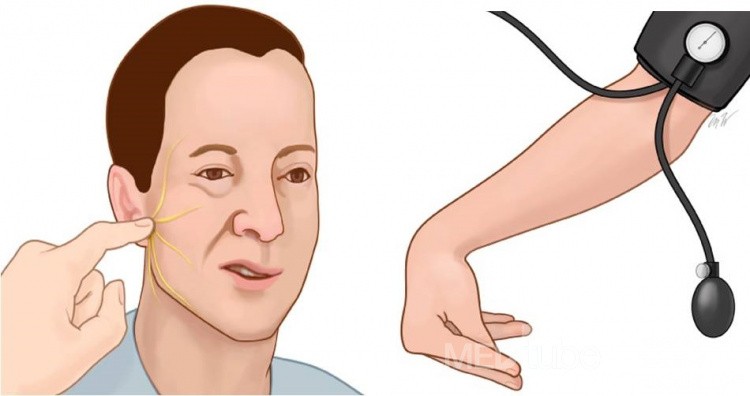
To assess a client for a positive Chvostek’s sign, the nurse should tap gently on the cheek, specifically two centimeters in front of the ear, over the facial nerve (also known as CN VII). This test is used to check for hypocalcemia, a condition that can lead to tetany, which is the involuntary contraction of muscles. A twitch of the facial muscles in response to this tapping indicates a positive Chvostek’s sign. This is particularly relevant following a thyroidectomy, as the procedure can indirectly affect the parathyroid glands, potentially leading to hypocalcemia
To assess a client for a positive Chvostek’s sign, the nurse should tap gently on the cheek, specifically two centimeters in front of the ear, over the facial nerve (also known as CN VII). This test is used to check for hypocalcemia, a condition that can lead to tetany, which is the involuntary contraction of muscles. A twitch of the facial muscles in response to this tapping indicates a positive Chvostek’s sign. This is particularly relevant following a thyroidectomy, as the procedure can indirectly affect the parathyroid glands, potentially leading to hypocalcemia
To assess a client for a positive Chvostek’s sign, the nurse should tap gently on the cheek, specifically two centimeters in front of the ear, over the facial nerve (also known as CN VII). This test is used to check for hypocalcemia, a condition that can lead to tetany, which is the involuntary contraction of muscles. A twitch of the facial muscles in response to this tapping indicates a positive Chvostek’s sign. This is particularly relevant following a thyroidectomy, as the procedure can indirectly affect the parathyroid glands, potentially leading to hypocalcemia
This question is an excerpt from Nurse Dive's nursing test bank - ATI RN adult medical surgical 2019 with NGN - Proctored Exam 3. Take the full exam now
Full Explanation
To assess a client for a positive Chvostek’s sign, the nurse should tap gently on the cheek, specifically two centimeters in front of the ear, over the facial nerve (also known as CN VII). This test is used to check for hypocalcemia, a condition that can lead to tetany, which is the involuntary contraction of muscles. A twitch of the facial muscles in response to this tapping indicates a positive Chvostek’s sign. This is particularly relevant following a thyroidectomy, as the procedure can indirectly affect the parathyroid glands, potentially leading to hypocalcemia
Similar Questions
A nurse in an emergency department is caring for a client who is to receive tissue plasminogen activator (tPA) for the treatment of an ischemic stroke. In which order should the nurse complete the following actions? (Move the steps into the box on the right, placing them in the selected order of performance. Use all the steps.)
A. Weigh the client.
B. Check for contraindications.
C. Administer the tPA.
D. Transfer the client to the CCU.
Full Explanation
The nurse should first check for contraindications to tPA, such as hemorrhagic stroke, recent surgery, bleeding disorder, or uncontrolled hypertension. Then, the nurse should weigh the client to calculate the correct dose of tPA based on body weight. Next, the nurse should administer the tPA within three hours of symptom onset to improve the chances of recovery. Finally, the nurse should transfer the client to the CCU for close monitoring of vital signs, neurological status, and possible complications.
A nurse is preparing to administer daily medications to a client who is undergoing a procedure at 1000 that requires IV contrast dye. Which of the following routine medications to give at 0800 should the nurse withhold?
A. Fluticasone
B. Valproic acid
C. Metformin
Metformin is an oral medication used to treat type 2 diabetes. It should be withheld before and after a procedure that requires IV contrast dye because it can increase the risk of lactic acidosis, a serious condition caused by the buildup of lactic acid in the blood. The other medications are not contraindicated with IV contrast dye and can be given as scheduled.
D. Metoprolol
Full Explanation
Metformin is an oral medication used to treat type 2 diabetes. It should be withheld before and after a procedure that requires IV contrast dye because it can increase the risk of lactic acidosis, a serious condition caused by the buildup of lactic acid in the blood. The other medications are not contraindicated with IV contrast dye and can be given as scheduled.
A nurse on an oncology unit is caring for a client who is receiving internal radiation therapy. Which of the following actions should the nurse take?
A. Allow visitors to hold the client's hand.
B. Leave the door to the client's room open.
C. Place the dosimeter film badge on the client's door.
D. Wear a lead apron when providing client care.
Wear a lead apron when providing client care. Internal radiation therapy (brachytherapy) is a type of treatment that uses a radioactive source placed inside or near the tumor . The nurse should wear a lead apron to protect themselves from exposure to radiation when caring for the client. The other actions are not appropriate for a client receiving internal radiation therapy.
Full Explanation
Wear a lead apron when providing client care. Internal radiation therapy (brachytherapy) is a type of treatment that uses a radioactive source placed inside or near the tumor . The nurse should wear a lead apron to protect themselves from exposure to radiation when caring for the client. The other actions are not appropriate for a client receiving internal radiation therapy.