
Nursing practice questions with comprehensive rationales
NurseDive Free Nursing Practice Question
A nurse is assessing a client who has a new diagnosis of diverticulitis and reports that he uses multiple complementary and alternative healing therapies.
Which of the following complementary therapies should the nurse identify as contraindicated for the client?
A. Acupuncture.
Choice A is wrong because acupuncture is not a contraindication for a client with diverticulitis.
B. Saw palmetto.
Choice B is wrong because saw palmetto is not a contraindication for a client with diverticulitis.
C. Colonics.
Colonics, also known as colonic irrigation or colon hydrotherapy, involves flushing the colon with fluids to remove waste and is not recommended for individuals with diverticulitis.
D. Guided imagery.
Choice D is wrong because guided imagery is not a contraindication for a client with diverticulitis.
This question is an excerpt from Nurse Dive's nursing test bank - ATI Adult Medical Surgical 2019 Proctored Exam. Take the full exam now
Full Explanation

Colonics, also known as colonic irrigation or colon hydrotherapy, involves flushing the colon with fluids to remove waste and is not recommended for individuals with diverticulitis.
Choice A is wrong because acupuncture is not a contraindication for a client with diverticulitis.
Choice B is wrong because saw palmetto is not a contraindication for a client with diverticulitis.
Choice D is wrong because guided imagery is not a contraindication for a client with diverticulitis.
Similar Questions
A nurse is providing discharge teaching to a client who has an impaired immune system due to chemotherapy.
Which of the following information should the nurse include in the teaching?
A. "Wash your perineal area two times each day with antimicrobial soap.".
The nurse should instruct the client to wash their perineal area two times each day with antimicrobial soap. This is important because chemotherapy can weaken the immune system, making the client more susceptible to infections.
B. "Wash your toothbrush in the dishwasher once each month.".
Choice B is wrong because washing a toothbrush in a dishwasher once a month is not an effective way to prevent infection.
C. "Change your pet's litter box daily.".
Choice C is wrong because changing a pet’s litter box daily could expose the client to harmful bacteria and should be avoided.
D. "Change the water in your drinking glass every 4 hours.".
Choice D is wrong because changing the water in a drinking glass every 4 hours is not necessary for preventing infection.
Full Explanation
The nurse should instruct the client to wash their perineal area two times each day with antimicrobial soap.
This is important because chemotherapy can weaken the immune system, making the client more susceptible to infections.
Choice B is wrong because washing a toothbrush in a dishwasher once a month is not an effective way to prevent infection.
Choice C is wrong because changing a pet’s litter box daily could expose the client to harmful bacteria and should be avoided.
Choice D is wrong because changing the water in a drinking glass every 4 hours is not necessary for preventing infection.
A nurse in a provider's office is caring for a client who has total vision loss and is the handler of a service dog.
Which of the following actions should the nurse take to show consideration for the client and the service animal?
A. Pet the dog briefly to demonstrate acceptance.
Choice A is wrong because petting the dog briefly to demonstrate acceptance could distract the dog from its duties.
B. Consult the client before approaching the dog.
The nurse should consult the client before approaching the dog. Service dogs are working animals and it is important to respect their role and the handler’s wishes.
C. Offer the dog a bowl of water to demonstrate caring.
Choice C is wrong because offering the dog a bowl of water without consulting the client first could interfere with the dog’s training or schedule.
D. Command the dog to sit while talking with the client.
Choice D is wrong because commanding the dog to sit while talking with the client could confuse the dog and disrupt its training.
Full Explanation
The nurse should consult the client before approaching the dog.
Service dogs are working animals and it is important to respect their role and the handler’s wishes.
Choice A is wrong because petting the dog briefly to demonstrate acceptance could distract the dog from its duties.
Choice C is wrong because offering the dog a bowl of water without consulting the client first could interfere with the dog’s training or schedule.
Choice D is wrong because commanding the dog to sit while talking with the client could confuse the dog and disrupt its training.
A nurse is planning care for a client who has upper gastrointestinal bleeding due to a peptic ulcer.
Which of the following actions should the nurse plan to take?
A. Ensure that the client has a 22-gauge IV line in place.
Choice A is wrong because a 22-gauge IV line may be too small for rapid fluid resuscitation.
B. Provide ketorolac for abdominal pain.
Choice B is wrong because ketorolac is a nonsteroidal anti-inflammatory drug (NSAID) that can increase the risk of gastrointestinal bleeding.
C. Administer nitroprusside IV based on the client's weight.
Choice C is wrong because nitroprusside is a vasodilator used to treat hypertensive emergencies and is not typically used for upper gastrointestinal bleeding.
D. Insert a large-bore nasogastric tube.
The nurse should plan to insert a large-bore nasogastric tube for a client who has upper gastrointestinal bleeding due to a peptic ulcer. This allows for gastric lavage and can help diagnose the source of bleeding.
Full Explanation
The nurse should plan to insert a large-bore nasogastric tube for a client who has upper gastrointestinal bleeding due to a peptic ulcer.
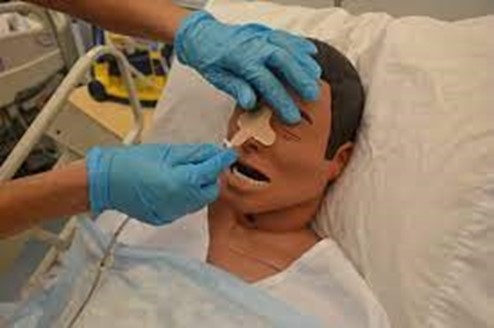
This allows for gastric lavage and can help diagnose the source of bleeding.
Choice A is wrong because a 22-gauge IV line may be too small for rapid fluid resuscitation.
Choice B is wrong because ketorolac is a nonsteroidal anti-inflammatory drug (NSAID) that can increase the risk of gastrointestinal bleeding.
Choice C is wrong because nitroprusside is a vasodilator used to treat hypertensive emergencies and is not typically used for upper gastrointestinal bleeding.