
Nursing practice questions with comprehensive rationales
NurseDive Free Nursing Practice Question
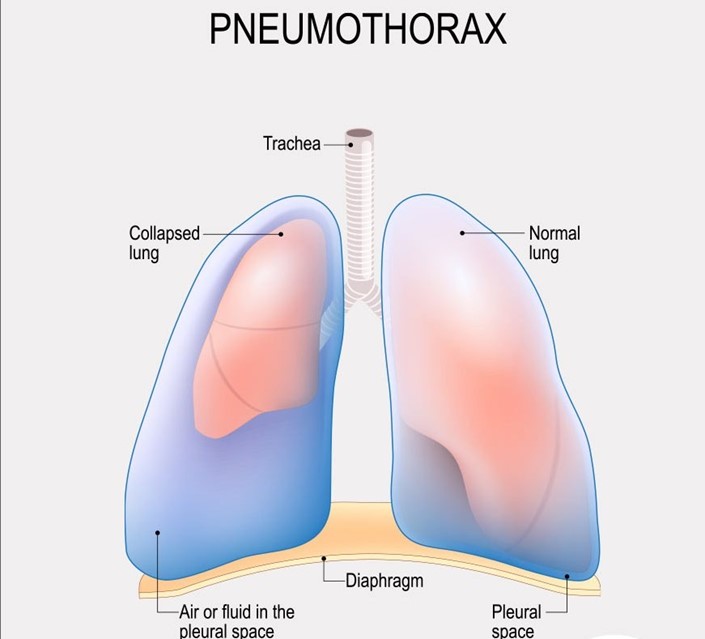
A nurse is assessing a client who has a pneumothorax with a chest tube in place. For which of the following findings should the nurse notify the provider?
A. Crepitus in the area above and surrounding the insertion site
Reason: This is incorrect because crepitus in the area above and surrounding the insertion site is not a serious finding that requires notification of the provider. Crepitus is a crackling sensation that occurs when air leaks into the subcutaneous tissue. It is usually harmless and resolves on its own.
B. Bubbling of the water in the water seal chamber with exhalation
Reason: This is incorrect because bubbling of the water in the water seal chamber with exhalation is a normal finding that indicates that air is being removed from the pleural space. Bubbling should stop when the pneumothorax is resolved.
C. Eyelets are not visible
Reason: This is incorrect because eyelets are not visible is not a serious finding that requires notification of the provider. Eyelets are small holes at the end of the chest tube that allow air and fluid to drain from the pleural space. They are usually covered by a dressing and may not be visible.
D. Movement of the trachea toward the unaffected side
Reason: This is correct because movement of the trachea toward the unaffected side is a serious finding that indicates a tension pneumothorax, which is a life-threatening condition that occurs when air accumulates in the pleural space and causes pressure on the mediastinum. The nurse should notify the provider immediately and prepare for needle decompression or chest tube insertion.
This question is an excerpt from Nurse Dive's nursing test bank - ATI Med Surg Custom N235 Final Summer 2023 Proctored Exam. Take the full exam now
Full Explanation
Choice A Reason: This is incorrect because crepitus in the area above and surrounding the insertion site is not a serious finding that requires notification of the provider. Crepitus is a crackling sensation that occurs when air leaks into the subcutaneous tissue. It is usually harmless and resolves on its own.
Choice B reason: This is incorrect because bubbling of the water in the water seal chamber with exhalation is a normal finding that indicates that air is being removed from the pleural space. Bubbling should stop when the pneumothorax is resolved.
Choice C Reason: This is incorrect because eyelets are not visible is not a serious finding that requires notification of the provider. Eyelets are small holes at the end of the chest tube that allow air and fluid to drain from the pleural space. They are usually covered by a dressing and may not be visible.
Choice D Reason: This is correct because movement of the trachea toward the unaffected side is a serious finding that indicates a tension pneumothorax, which is a life-threatening condition that occurs when air accumulates in the pleural space and causes pressure on the mediastinum. The nurse should notify the provider immediately and prepare for needle decompression or chest tube insertion.
Similar Questions
A nurse is evaluating the central venous pressure (CVP) of a client who has sustained multiple traumas. Which of the following interpretations of a low CVP should the nurse make?
A. Fluid overload
Reason: This is incorrect because fluid overload is a condition of excess fluid volume in the body. A client who has fluid overload is more likely to have a high CVP, which indicates increased pressure in the right atrium and vena cava.
B. Intracardiac shunt
Reason: This is incorrect because an intracardiac shunt is a condition of abnormal blood flow between the chambers of the heart. A client who has an intracardiac shunt may have a normal or high CVP, depending on the direction and magnitude of the shunt.
C. Hypovolemia
Reason: This is correct because hypovolemia is a condition of low fluid volume in the body. A client who has hypovolemia is more likely to have a low CVP, which indicates decreased pressure in the right atrium and vena cava.
D. Left ventricular failure
Reason: This is incorrect because left ventricular failure is a condition of impaired pumping function of the left ventricle. A client who has left ventricular failure may have a normal or high CVP, depending on the degree of backward failure and pulmonary congestion.
Full Explanation
Choice A Reason: This is incorrect because fluid overload is a condition of excess fluid volume in the body. A client who has fluid overload is more likely to have a high CVP, which indicates increased pressure in the right atrium and vena cava.
Choice B Reason: This is incorrect because an intracardiac shunt is a condition of abnormal blood flow between the chambers of the heart. A client who has an intracardiac shunt may have a normal or high CVP, depending on the direction and magnitude of the shunt.
Choice C Reason: This is correct because hypovolemia is a condition of low fluid volume in the body. A client who has hypovolemia is more likely to have a low CVP, which indicates decreased pressure in the right atrium and vena cava.
Choice D Reason: This is incorrect because left ventricular failure is a condition of impaired pumping function of the left ventricle. A client who has left ventricular failure may have a normal or high CVP, depending on the degree of backward failure and pulmonary congestion.
A nurse is monitoring an older adult female client who had a myocardial infarction (MI) for the development of an acute kidney injury (AKI). Which of the following findings should the nurse identify as indicating an increased risk of AKI?
A. Magnesium 2.5 mEq/L
Reason: This is incorrect because magnesium 2.5 mEq/L is a normal value and does not indicate an increased risk of AKI. Magnesium is an electrolyte that plays a role in muscle and nerve function, blood pressure regulation, and energy production. The normal range for magnesium is 1.5 to 2.5 mEq/L.
B. Serum osmolality 290 mOsm/kg H2O
Reason: This is incorrect because serum osmolality 290 mOsm/kg H2O is a normal value and does not indicate an increased risk of AKI. Serum osmolality is a measure of the concentration of solutes in the blood, such as sodium, glucose, and urea. The normal range for serum osmolality is 275 to 295 mOsm/kg H2O.
C. Blood urea nitrogen (BUN) 20 mg/dL
Reason: This is incorrect because blood urea nitrogen (BUN) 20 mg/dL is a normal value and does not indicate an increased risk of AKI. BUN is a measure of the amount of urea, a waste product of protein metabolism, in the blood. The normal range for BUN is 7 to 20 mg/dL.
D. Serum creatinine 1.8 mg/dL
Reason: This is correct because serum creatinine 1.8 mg/dL is an elevated value and indicates an increased risk of AKI. Creatinine is a waste product of muscle metabolism that is filtered by the kidneys. The normal range for serum creatinine is 0.6 to 1.2 mg/dL for women and 0.7 to 1.3 mg/dL for men. An increase in serum creatinine indicates a decrease in kidney function and glomerular filtration rate (GFR).
Full Explanation
Choice A Reason: This is incorrect because magnesium 2.5 mEq/L is a normal value and does not indicate an increased risk of AKI. Magnesium is an electrolyte that plays a role in muscle and nerve function, blood pressure regulation, and energy production. The normal range for magnesium is 1.5 to 2.5 mEq/L.
Choice B Reason: This is incorrect because serum osmolality 290 mOsm/kg H2O is a normal value and does not indicate an increased risk of AKI. Serum osmolality is a measure of the concentration of solutes in the blood, such as sodium, glucose, and urea. The normal range for serum osmolality is 275 to 295 mOsm/kg H2O.
Choice C Reason: This is incorrect because blood urea nitrogen (BUN) 20 mg/dL is a normal value and does not indicate an increased risk of AKI. BUN is a measure of the amount of urea, a waste product of protein metabolism, in the blood. The normal range for BUN is 7 to 20 mg/dL.
Choice D Reason: This is correct because serum creatinine 1.8 mg/dL is an elevated value and indicates an increased risk of AKI. Creatinine is a waste product of muscle metabolism that is filtered by the kidneys. The normal range for serum creatinine is 0.6 to 1.2 mg/dL for women and 0.7 to 1.3 mg/dL for men. An increase in serum creatinine indicates a decrease in kidney function and glomerular filtration rate (GFR).
A nurse is caring for a female client in the emergency department who reports shortness of breath and pain in the lung area. She states that she started taking birth control pills 3 weeks ago and that she smokes. Her heart rate is 110/min, respiratory rate 40/min, and blood pressure 140/80 mm Hg. Her arterial blood gases are pH 7.50, PaCO2 29 mm Hg, PaO2 60 mm Hg, HCO3 20 mEq/L, and SaO2 86%. Which of the following is the priority nursing intervention?
A. Prepare for mechanical ventilation.
Reason: This is incorrect because preparing for mechanical ventilation is not the priority nursing intervention, as it is an invasive and potentially harmful procedure that should be reserved for clients who have severe respiratory failure and cannot maintain adequate oxygenation with noninvasive methods.
B. Administer oxygen via face mask.
Reason: This is correct because administering oxygen via face mask is the priority nursing intervention, as it is a noninvasive and effective way to improve oxygenation and reduce hypoxemia in a client who has low PaO2 and SaO2. Oxygen therapy can also decrease the workload of the heart and lungs and prevent further complications.
C. Prepare to administer a sedative.
Reason: This is incorrect because preparing to administer a sedative is not the priority nursing intervention, as it may worsen the client's respiratory status and mask the signs and symptoms of hypoxemia. Sedatives should be used with caution and only after oxygenation has been optimized.
D. Assess for indications of pulmonary embolism.
Reason: This is incorrect because assessing for indications of pulmonary embolism is not the priority nursing intervention, as it is a diagnostic rather than a therapeutic action. Pulmonary embolism is a possible cause of the client's condition, but it does not address the immediate problem of hypoxemia.
Full Explanation
Choice A Reason: This is incorrect because preparing for mechanical ventilation is not the priority nursing intervention, as it is an invasive and potentially harmful procedure that should be reserved for clients who have severe respiratory failure and cannot maintain adequate oxygenation with noninvasive methods.
Choice B Reason: This is correct because administering oxygen via face mask is the priority nursing intervention, as it is a noninvasive and effective way to improve oxygenation and reduce hypoxemia in a client who has low PaO2 and SaO2. Oxygen therapy can also decrease the workload of the heart and lungs and prevent further complications.
Choice C Reason: This is incorrect because preparing to administer a sedative is not the priority nursing intervention, as it may worsen the client's respiratory status and mask the signs and symptoms of hypoxemia. Sedatives should be used with caution and only after oxygenation has been optimized.
Choice D Reason: This is incorrect because assessing for indications of pulmonary embolism is not the priority nursing intervention, as it is a diagnostic rather than a therapeutic action. Pulmonary embolism is a possible cause of the client's condition, but it does not address the immediate problem of hypoxemia.