
Nursing practice questions with comprehensive rationales
NurseDive Free Nursing Practice Question
A nurse is assessing a client who has an abdominal incision.
Which of the following findings should the nurse report to the provider?
A. Mild swelling under the sutures near the incisional line.
wrong because mild swelling under the sutures near the incisional line is a normal finding in the early stages of wound healing. It does not indicate infection or dehiscence unless accompanied by other signs such as redness, warmth, pain, or purulent drainage.
B. Crusting of exudate on the incisional line.
wrong because crusting of exudate on the incisional line is also a normal finding that indicates the formation of a scab. A scab protects the wound from infection and helps it heal faster. The nurse should not remove the scab unless instructed by the provider.
C. Partial separation of the upper part of the incisional line.
Partial separation of the upper part of the incisional line. This is a sign of wound dehiscence, which is a serious complication that occurs when the edges of a surgical incision separate and the underlying tissues are exposed. Wound dehiscence can lead to infection, bleeding, and evisceration (protrusion of internal organs through the incision). The nurse should report this finding to the provider immediately and cover the wound with a sterile dressing moistened with sterile saline solution. Choice A is wrong because mild swelling under the sutures near the incisional line is a normal finding in the early stages of wound healing. It does not indicate infection or dehiscence unless accompanied by other signs such as redness, warmth, pain, or purulent drainage.
D. Pink-tinged coloration on the incisional line.
is wrong because pink-tinged coloration on the incisional line is another normal finding that shows healthy granulation tissue. Granulation tissue is new tissue that fills in the wound and helps it close. It is usually pink or red and moist.
This question is an excerpt from Nurse Dive's nursing test bank - ATI Comprehensive Predictor 2023 Exit Proctored Exam A. Take the full exam now
Full Explanation
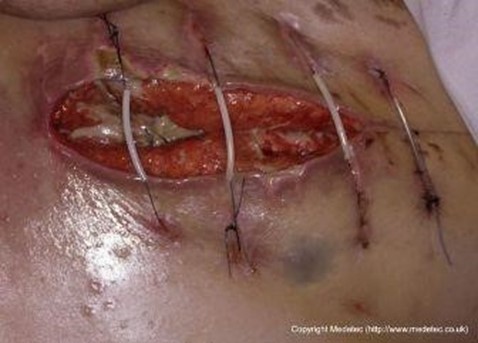
Wound dehiscence can lead to infection, bleeding, and evisceration (protrusion of internal organs through the incision). The nurse should report this finding to the provider immediately and cover the wound with a sterile dressing moistened with sterile saline solution.
Choice A is wrong because mild swelling under the sutures near the incisional line is a normal finding in the early stages of wound healing. It does not indicate infection or dehiscence unless accompanied by other signs such as redness, warmth, pain, or purulent drainage.
Choice B is wrong because crusting of exudate on the incisional line is also a normal finding that indicates the formation of a scab.
A scab protects the wound from infection and helps it heal faster. The nurse should not remove the scab unless instructed by the provider.
Choice D is wrong because pink-tinged coloration on the incisional line is another normal finding that shows healthy granulation tissue.
Granulation tissue is new tissue that fills in the wound and helps it close. It is usually pink or red and moist.
The nurse should follow these general tips for postoperative abdominal incision care:
- Always wash your hands before and after touching your incisions.
- Inspect your incisions and wounds every day for signs your healthcare provider has told you are red flags or concerning.
- Look for any bleeding.
If the incisions start to bleed, apply direct and constant pressure to the incisions.
- Avoid wearing tight clothing that might rub on your incisions.
- Try not to scratch any itchy wounds.
- You can shower starting 48 hours after your operation but no scrubbing or soaking of the abdominal wounds in a tub.
- After the initial dressing from the operating room is removed, you can leave the wound open to air unless there is drainage or you feel more comfortable with soft gauze covering the wound.
- Surgical glue (Indermil) will fall off over a period of up to 2-3 weeks.
Do not put any topical ointments or lotions on the incisions.
- Do not rub over the incisions with a washcloth or towel.
- No tub baths, hot tubs, or swimming until evaluated at your clinic appointment.
Similar Questions
A nurse is admitting a client who is hesitant to create advance directives due to concerns about affording legal representation.
Which of the following statements should the nurse make?
A. “A social worker will assist you to find affordable legal representation.”.
A social worker may assist clients in many ways, including finding legal representation. However, this statement does not address the client’s concern about the cost of legal representation for advance directives. It’s important to note that while social workers can provide support, they do not eliminate the need for legal representation if the client chooses to seek it.
B. “Advance directives can be signed without legal representation.”.
This is the correct statement because advance directives do not require legal representation to be valid. They become legally binding when signed in front of the required witnesses. This option directly addresses the client’s concern about affording legal representation by informing them that it is not necessary for the creation of advance directives.
C. “We can initiate medical care until you get legal assistance in preparing your advance directives.”.
While medical care can be initiated without advance directives, this statement does not address the client’s concern about the cost of creating advance directives. It also implies that medical care is contingent on the completion of legal documents, which is not accurate.
D. Advance directives can be a verbal agreement between you and your provider until legal review can be obtained.
Verbal agreements are not as legally binding as written advance directives and could lead to misunderstandings or disputes later on. It is important for the client to have a clear and documented advance directive, which does not necessarily require legal review to be valid.
Full Explanation
The correct answer is: B
Choice A reason: A social worker may assist clients in many ways, including finding legal representation. However, this statement does not address the client’s concern about the cost of legal representation for advance directives. It’s important to note that while social workers can provide support, they do not eliminate the need for legal representation if the client chooses to seek it.
Choice B reason: This is the correct statement because advance directives do not require legal representation to be valid. They become legally binding when signed in front of the required witnesses. This option directly addresses the client’s concern about affording legal representation by informing them that it is not necessary for the creation of advance directives.
Choice C reason: While medical care can be initiated without advance directives, this statement does not address the client’s concern about the cost of creating advance directives. It also implies that medical care is contingent on the completion of legal documents, which is not accurate.
Choice D reason: Verbal agreements are not as legally binding as written advance directives and could lead to misunderstandings or disputes later on. It is important for the client to have a clear and documented advance directive, which does not necessarily require legal review to be valid.
A nurse is caring for a client who has acute glomerulonephritis.
Which of the following findings should the nurse expect?
A. Hematuria
Hematuria is the presence of red blood cells in the urine, which can make it appear pink or cola-colored. Hematuria is a common sign of glomerulonephritis, which is inflammation of the tiny filters in the kidneys (glomeruli) that remove waste and excess fluid from the blood. Hematuria occurs because the inflamed glomeruli allow some blood cells to leak into the urine.
B. Polyuria
, is wrong because polyuria is the production of abnormally large amounts of urine. Polyuria is not a typical feature of acute glomerulonephritis, which may actually cause reduced urine output due to fluid retention and decreased kidney function
C. Weight loss.
is wrong because weight loss is not a common symptom of acute glomerulonephritis. On the contrary, weight gain may occur due to fluid retention and edema (swelling) in the face, hands, feet and abdomen.
D. Hypotension
because hypotension is low blood pressure. Hypotension is not usually associated with acute glomerulonephritis, which may cause high blood pressure (hypertension) due to fluid overload and impaired sodium excretion by the kidneys.
Full Explanation
The correct answer is choice A, hematuria.
Hematuria is the presence of red blood cells in the urine, which can make it appear pink or cola-colored. Hematuria is a common sign of glomerulonephritis, which is inflammation of the tiny filters in the kidneys (glomeruli) that remove waste and excess fluid from the blood.
Hematuria occurs because the inflamed glomeruli allow some blood cells to leak into the urine.
Choice B, polyuria, is wrong because polyuria is the production of abnormally large amounts of urine. Polyuria is not a typical feature of acute glomerulonephritis, which may actually cause reduced urine output due to fluid retention and decreased kidney function.
Choice C, weight loss, is wrong because weight loss is not a common symptom of acute glomerulonephritis. On the contrary, weight gain may occur due to fluid retention and edema (swelling) in the face, hands, feet and abdomen.
Choice D, hypotension, is wrong because hypotension is low blood pressure. Hypotension is not usually associated with acute glomerulonephritis, which may cause high blood pressure (hypertension) due to fluid overload and impaired sodium excretion by the kidneys.
Normal ranges for blood pressure are less than 120/80 mmHg for adults.
Normal ranges for urine output are about 800 to 2000 mL per day for adults.
Normal ranges for protein in the urine are less than 150 mg per day for adults. Normal ranges for red blood cells in the urine are less than 3 per high-power field for men and less than 5 per high-power field for women.
A nurse is caring for a client who has given informed consent for electroconvulsive therapy (ECT). Just before the procedure, the client expresses to the nurse that she is having second thoughts and is considering not going through with the treatment. What is the most appropriate response for the nurse in this situation?
A. "It's understandable to feel nervous before this treatment. Most people feel better after, but you have the right to change your mind at any time."
Acknowledges the client's feelings:It's important for the nurse to validate the client's concerns and let them know that it's understandable to feel nervous or uncertain about ECT. Provides information about the treatment:The nurse can offer information about the potential benefits of ECT,but it's important not to pressure the client or make them feel like they have to go through with it. Reassures the client of their right to change their mind:This is a crucial aspect of informed consent.The client has the right to withdraw their consent at any time,even after signing the consent form.
B. "I know this is a difficult decision, but the doctor believes ECT is the best option for you. Are you sure you want to cancel?"
Places undue pressure on the client:This response implies that the doctor knows what's best for the client and that the client should go through with the treatment even if they have doubts.This can undermine the client's autonomy and decision-making ability.
C. "That's completely fine! We can reschedule for another time when you're feeling more ready."
May minimize the client's concerns:While rescheduling the treatment is an option,it's important to explore the client's concerns more thoroughly before suggesting this.It's possible that the client has valid reasons for not wanting to go through with ECT,and these reasons should be addressed.
D. "You signed the consent form, so you need to go through with the treatment. It's important to follow through on your commitments."
Is disrespectful of the client's autonomy:This response suggests that the client is obligated to go through with the treatment simply because they signed a consent form.This ignores the fact that people can change their minds and that consent is an ongoing process.
Full Explanation
The correct answer is Choice A.
Choice A rationale:
- Acknowledges the client's feelings: It's important for the nurse to validate the client's concerns and let them know that it's understandable to feel nervous or uncertain about ECT.
- Provides information about the treatment: The nurse can offer information about the potential benefits of ECT, but it's important not to pressure the client or make them feel like they have to go through with it.
- Reassures the client of their right to change their mind: This is a crucial aspect of informed consent. The client has the right to withdraw their consent at any time, even after signing the consent form.
Choice B rationale:
- Places undue pressure on the client: This response implies that the doctor knows what's best for the client and that the client should go through with the treatment even if they have doubts. This can undermine the client's autonomy and decision-making ability.
Choice C rationale:
- May minimize the client's concerns: While rescheduling the treatment is an option, it's important to explore the client's concerns more thoroughly before suggesting this. It's possible that the client has valid reasons for not wanting to go through with ECT, and these reasons should be addressed.
Choice D rationale:
- Is disrespectful of the client's autonomy: This response suggests that the client is obligated to go through with the treatment simply because they signed a consent form. This ignores the fact that people can change their minds and that consent is an ongoing process.