
Nursing practice questions with comprehensive rationales
NurseDive Free Nursing Practice Question
A nurse is assessing a client who has major depressive disorder and is taking amitriptyline.
Which of the following findings should the nurse identify as an adverse effect of the medication?
A. Diarrhea
Diarrhea is not an adverse effect of amitriptyline, which is a tricyclic antidepressant (TCA). Diarrhea may be caused by other factors, such as infection, food intolerance, or stress. Therefore, this choice is incorrect.
B. Frequent urination
Frequent urination is not an adverse effect of amitriptyline either. Frequent urination may be a sign of diabetes, urinary tract infection, or other conditions that affect the kidneys or bladder. Therefore, this choice is also incorrect.
C. Excessive salivation
Excessive salivation is not an adverse effect of amitriptyline as well. Excessive salivation may be due to increased production of saliva, difficulty swallowing, or mouth irritation. Therefore, this choice is incorrect too.
D. Blurred vision
Blurred vision is an adverse effect of amitriptyline and other TCAs. Amitriptyline can cause anticholinergic effects, such as dry mouth, constipation, urinary retention, and blurred vision. These effects are more pronounced in older adults and can impair their daily functioning and quality of life. Therefore, this choice is correct and the nurse should identify it as an adverse effect of the medication.
This question is an excerpt from Nurse Dive's nursing test bank - RN Comprehensive Online Practice 2019 B with NGN Proctored Exam. Take the full exam now
Full Explanation
- A. Diarrhea is not an adverse effect of amitriptyline, which is a tricyclic antidepressant (TCA). Diarrhea may be caused by other factors, such as infection, food intolerance, or stress. Therefore, this choice is incorrect.
- B. Frequent urination is not an adverse effect of amitriptyline either. Frequent urination may be a sign of diabetes, urinary tract infection, or other conditions that affect the kidneys or bladder. Therefore, this choice is also incorrect.
- C. Excessive salivation is not an adverse effect of amitriptyline as well. Excessive salivation may be due to increased production of saliva, difficulty swallowing, or mouth irritation. Therefore, this choice is incorrect too.
- D. Blurred vision is an adverse effect of amitriptyline and other TCAs. Amitriptyline can cause anticholinergic effects, such as dry mouth, constipation, urinary retention, and blurred vision. These effects are more pronounced in older adults and can impair their daily functioning and quality of life. Therefore, this choice is correct and the nurse should identify it as an adverse effect of the medication.
Similar Questions
A nurse is caring for a client who has a new prescription for clonidine. The nurse should inform the client that which of the following findings is an adverse effect of this medication?
A. Diarrhea
A is incorrect because diarrhea is not an adverse effect of clonidine, but rather a symptom of other conditions such as infection, inflammation, or food intolerance.
B. Dry mouth
B is correct because dry mouth is a common adverse effect of clonidine, which is an alpha-2 adrenergic agonist that reduces sympathetic nervous system activity.
C. Photophobia
C is incorrect because photophobia, or sensitivity to light, is not an adverse effect of clonidine, but rather a symptom of other conditions such as migraine, eye injury, or infection.
D. Bruising
D is incorrect because bruising, or bleeding under the skin, is not an adverse effect of clonidine, but rather a symptom of other conditions such as coagulation disorders, vitamin deficiency, or trauma.
Full Explanation
- A is incorrect because diarrhea is not an adverse effect of clonidine, but rather a symptom of other conditions such as infection, inflammation, or food intolerance.
- B is correct because dry mouth is a common adverse effect of clonidine, which is an alpha-2 adrenergic agonist that reduces sympathetic nervous system activity.
- C is incorrect because photophobia, or sensitivity to light, is not an adverse effect of clonidine, but rather a symptom of other conditions such as migraine, eye injury, or infection.
- D is incorrect because bruising, or bleeding under the skin, is not an adverse effect of clonidine, but rather a symptom of other conditions such as coagulation disorders, vitamin deficiency, or trauma.
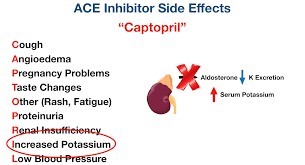
A nurse is teaching about adverse effects with a client who is starting to take captopril. Which of the following findings should the nurse identify as an adverse effect of the medication to report to the provider?
A. Tinnitus
A is incorrect because tinnitus, or ringing in the ears, is not an adverse effect of captopril, but rather a symptom of other conditions such as ear infection, noise exposure, or medication toxicity.
B. Cough
B is correct because cough is a serious adverse effect of captopril, which is an angiotensinconverting enzyme (ACE) inhibitor that can cause angioedema, or swelling of the airways.
C. Polyuria
C is incorrect because polyuria, or excessive urination, is not an adverse effect of captopril, but rather a symptom of other conditions such as diabetes mellitus, diabetes insipidus, or diuretic use.
D. Blurred vision
D is incorrect because blurred vision is not an adverse effect of captopril, but rather a symptom of other conditions such as eye strain, refractive error, or cataract.
Full Explanation
- A is incorrect because tinnitus, or ringing in the ears, is not an adverse effect of captopril, but rather a symptom of other conditions such as ear infection, noise exposure, or medication toxicity.
- B is correct because cough is a serious adverse effect of captopril, which is an angiotensinconverting enzyme (ACE) inhibitor that can cause angioedema, or swelling of the airways.
- C is incorrect because polyuria, or excessive urination, is not an adverse effect of captopril, but rather a symptom of other conditions such as diabetes mellitus, diabetes insipidus, or diuretic use.
- D is incorrect because blurred vision is not an adverse effect of captopril, but rather a symptom of other conditions such as eye strain, refractive error, or cataract.
A nurse is planning care for a client who is receiving chemotherapy and has neutropenia.
Which of the following interventions should the nurse include in the plan?
A. Avoid including raw fruits in the client's diet.
The nurse should discourage raw fruits due to risk of infection.
B. Restrict visits from young children to 2 hr per day.
There is no standard recommendation against exposure to young children.
C. Measure the client's temperature once per shift.
The nurse should measure the client's temperature at least every 4 hr, or more frequently if indicated, because fever is a sign of infection in a client who has neutropenia and requires prompt intervention.
D. Use disposable gloves from a box outside the client's room.
The nurse should use disposable gloves from a box inside the client's room, not outside, to prevent cross-contamination and protect the client from exposure to pathogens.
Full Explanation
- A. The nurse should discourage raw fruits due to risk of infection.
- B. There is no standard recommendation against exposure to young children.
- C. Incorrect. The nurse should measure the client's temperature at least every 4 hr, or more frequently if indicated because fever is a sign of infection in a client who has neutropenia and requires prompt intervention.
- D. Incorrect. The nurse should use disposable gloves from a box inside the client's room, not outside, to prevent cross-contamination and protect the client from exposure to pathogens.