
Nursing practice questions with comprehensive rationales
NurseDive Free Nursing Practice Question
A nurse is assessing a client who is at 39 weeks of gestation and determines that the fetus is in a left occipitoanterior position. On which of the following sites should the nurse place the external fetal monitor to hear the point of maximum impulse of the fetal heart rate?
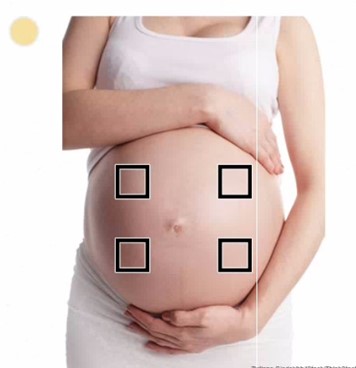
A. Right upper quadrant
This would be appropriate if the fetus were in a breech presentation.
B. left upper quadrant
This is incorrect because the fetal back is in the lower left quadrant, not the upper quadrant.
C. left lower quadrant.
In the Left Occipitoanterior (LOA) Position, the fetal occiput (back of the head) is facing the mother’s left side and anteriorly (toward the front of the uterus). The fetal back will be on the left side of the maternal abdomen, making the PMI in the left lower quadrant. The best location to place the fetal monitor is over the fetal back, closest to the head. Since the fetus is cephalic (head down) in LOA position, the heart sounds are heard in the left lower quadrant.
D. right lower quadrant.
This would be appropriate if the fetus were in a right occipitoanterior (ROA) position, but in LOA, the back is on the left.
This question is an excerpt from Nurse Dive's nursing test bank - ATI Maternal Newborn 2019 with NGN Proctored Exam. Take the full exam now
Full Explanation
A. This would be appropriate if the fetus were in a breech presentation.
B. This is incorrect because the fetal back is in the lower left quadrant, not the upper quadrant.
C. In the Left Occipitoanterior (LOA) Position, the fetal occiput (back of the head) is facing the mother’s left side and anteriorly (toward the front of the uterus). The fetal back will be on the left side of the maternal abdomen, making the PMI in the left lower quadrant. The best location to place the fetal monitor is over the fetal back, closest to the head. Since the fetus is cephalic (head down) in LOA position, the heart sounds are heard in the left lower quadrant.
D. This would be appropriate if the fetus were in a right occipitoanterior (ROA) position, but in LOA, the back is on the left.
Similar Questions
A nurse is caring for a 2-day-old newborn who was born at 35 weeks of gestation.
Which of the following actions should the nurse take
A. Diagnostic results
The nurse should insert an orogastric decompression tube with low wall suction. The newborn has Escherichia coli infection resulting in necrotizing enterocolitis, which can cause abdominal distention, decreased activity level, and bloody stools. The newborn also has a superficial rash on the abdominal wall, which may indicate a bacterial infection. The presence of a fist clenching, thrashing, and crying during light palpation of the abdomen may indicate pain caused by bowel distention. An orogastric decompression tube with low wall suction can help decompress the bowel and relieve abdominal distention.
B. Escherichia coli infection resulting in necrotizing enterocolitis Hgb 10g/dL
None
C. Platelet count 50,000 mm
None
D. WBC count 4,000 mm3
None
Full Explanation
The nurse should insert an orogastric decompression tube with low wall suction. The newborn has Escherichia coli infection resulting in necrotizing enterocolitis, which can cause abdominal distention, decreased activity level, and bloody stools. The newborn also has a superficial rash on the abdominal wall, which may indicate a bacterial infection. The presence of a fist clenching, thrashing, and crying during light palpation of the
abdomen may indicate pain caused by bowel distention. An orogastric decompression tube with low wall suction can help decompress the bowel and relieve abdominal distention.
A nurse is performing an assessment for a newborn and notes breast tissue that has a flat areola with no bud. The nurse should identify that this finding indicates which of the following conditions?
A. Decreased maternal hormones during pregnancy
This option is incorrect because the development of breast tissue in newborns is not directly related to the mother’s hormone levels during pregnancy. Newborns typically have breast buds regardless of maternal hormone variations.
B. Preterm gestational age
A flat areola with no breast bud is a characteristic finding in preterm newborns. Breast tissue development is one of the physical markers used to assess gestational age, and the lack of a breast bud is an indicator of immaturity, suggesting a preterm gestational age.
C. Ambiguous secondary sex characteristics
Ambiguous secondary sex characteristics are not related to the presence or absence of breast buds in newborns. This option focuses on sexual development rather than gestational markers.
D. Congenital anomaly
A flat areola with no breast bud is a normal finding in preterm infants and does not indicate a congenital anomaly. This condition is expected in preterm newborns based on their developmental stage.
Full Explanation
A. This option is incorrect because the development of breast tissue in newborns is not directly related to the mother’s hormone levels during pregnancy. Newborns typically have breast buds regardless of maternal hormone variations.
B. A flat areola with no breast bud is a characteristic finding in preterm newborns. Breast tissue development is one of the physical markers used to assess gestational age, and the lack of a breast bud is an indicator of immaturity, suggesting a preterm gestational age.
C. Ambiguous secondary sex characteristics are not related to the presence or absence of breast buds in newborns. This option focuses on sexual development rather than gestational markers.
D. A flat areola with no breast bud is a normal finding in preterm infants and does not indicate a congenital anomaly. This condition is expected in preterm newborns based on their developmental stage.
A nurse is assessing a postpartum client during a follow-up visit.
The nurse is teaching the client about postpartum depression. The nurse should encourage the client to
Full Explanation
The correct answer is Eating a well-balanced diet and exercising for 30 minutes per day.
It can help to reduce stress and improve mood, which can help to prevent postpartum depression. This provide the body with the essential nutrients it needs to function properly and maintain good health. Exercise can help to reduce stress and improve mood by releasing endorphins, which are hormones that can help to improve mood and reduce stress.