
Nursing practice questions with comprehensive rationales
NurseDive Free Nursing Practice Question
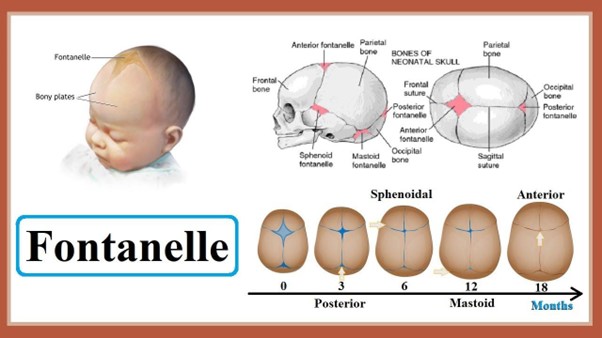
A nurse is assessing the fontanels of an 8-month-old infant. Which of the following findings should the nurse recognize as an expected finding
A. The anterior fontanel is open.
The anterior fontanel is open is the correct answer. An expected finding in an 8-month-old infant is that the anterior fontanel (the soft spot on the top of the baby's head) is open. The fontanelles are spaces between the bones of an infant's skull that allow for the baby's brain to grow and the skull to mould during birth. The anterior fontanel typically remains open until the baby is around 18 to 24 months old, with the closure process starting sometime after 9 months of age. Therefore, at 8 months of age, it is normal for the anterior fontanel to still be open.
B. Both fontanels are the same size.
Both fontanels are the same size is incorrect. Both fontanels are usually not the same size. The anterior fontanel is larger and diamond-shaped, while the posterior fontanel is smaller and triangular.
C. The posterior fontanel is open.
The posterior fontanel is open is incorrect. The posterior fontanel, located at the back of the baby's head, usually closes earlier than the anterior fontanel. It typically closes within the first few months after birth, so it is not expected to be open at 8 months of age.
D. Both fontanels show moulding
Both fontanels show molding is incorrect. Molding refers to the temporary shaping of the baby's head during birth due to the pressure exerted during the passage through the birth canal. By 8 months of age, the molding typically resolves, and the baby's head should have a more rounded appearance.
This question is an excerpt from Nurse Dive's nursing test bank - ATI Comprehensive Predictor 2023 Exit Proctored Exam A. Take the full exam now
Full Explanation
Choice A reason
The anterior fontanel is open is the correct answer. An expected finding in an 8-month-old infant is that the anterior fontanel (the soft spot on the top of the baby's head) is open. The fontanelles are spaces between the bones of an infant's skull that allow for the baby's brain to grow and the skull to mould during birth.
The anterior fontanel typically remains open until the baby is around 18 to 24 months old, with the closure process starting sometime after 9 months of age. Therefore, at 8 months of age, it is normal for the anterior fontanel to still be open.
Choice B reason:
Both fontanels are the same size is incorrect. Both fontanels are usually not the same size. The anterior fontanel is larger and diamond-shaped, while the posterior fontanel is smaller and triangular.
Choice C reason:
The posterior fontanel is open is incorrect. The posterior fontanel, located at the back of the baby's head, usually closes earlier than the anterior fontanel. It typically closes within the first few months after birth, so it is not expected to be open at 8 months of age.
Choice D reason
Both fontanels show molding is incorrect. Molding refers to the temporary shaping of the baby's head during birth due to the pressure exerted during the passage through the birth canal. By 8 months of age, the molding typically resolves, and the baby's head should have a more rounded appearance.
Similar Questions
A nurse is caring for a client who has a new diagnosis of schizophrenia and a prescription for an antipsychotic medication. The nurse should recognize that which of the following indicates an adverse effect that must be reported to the provider?
A. The client is observed displaying a shuffling gait while walking in the hall.
The client is observed displaying a shuffling gait while walking in the hall is the correct answer. The nurse should recognize that observing a shuffling gait in a client who is taking antipsychotic medication is an adverse effect that must be reported to the healthcare provider. A shuffling gait is a movement disorder known as parkinsonism, which can be a side effect of some antipsychotic medications, particularly first-generation or typical antipsychotics. Parkinsonism includes symptoms similar to Parkinson's disease, such as a shuffling walk, muscle stiffness, tremors, and difficulty with balance and coordination. It can occur as a result of blocking dopamine receptors in the brain, leading to an imbalance in dopamine levels.
B. The client is observed mumbling quietly while alone in the day room.
The client mumbling quietly while alone is not correct because in the day room may be related to the symptoms of schizophrenia, and it does not indicate an adverse effect of the antipsychotic medication.
C. The client states, "I feel light-headed when I stand up quickly."
The client feeling light-headed when standing up quickly is not correct and it may be related to postural hypotension, which can be a side effect of some antipsychotic medications. While it should be monitored and reported if persistent or severe, it is not as urgent as reporting a shuffling gait.
D. The client states. "Being in the sun seems to really hurt my eyes
The client stating that being in the sun hurts their eyes does not necessarily indicate an adverse effect of the antipsychotic medication. It may be related to other factors or unrelated to the medication.
Full Explanation
Choice A reason
The client is observed displaying a shuffling gait while walking in the hall is the correct answer. The nurse should recognize that observing a shuffling gait in a client who is taking antipsychotic medication is an adverse effect that must be reported to the healthcare provider. A shuffling gait is a movement disorder known as parkinsonism, which can be a side effect of some antipsychotic medications, particularly first-generation or typical antipsychotics.
Parkinsonism includes symptoms similar to Parkinson's disease, such as a shuffling walk, muscle stiffness, tremors, and difficulty with balance and coordination. It can occur as a result of blocking dopamine receptors in the brain, leading to an imbalance in dopamine levels.
Choice B reason:
The client mumbling quietly while alone is not correct because in the day room may be related to the symptoms of schizophrenia, and it does not indicate an adverse effect of the antipsychotic medication.
Choice C reason:
The client feeling light-headed when standing up quickly is not correct and it may be related to postural hypotension, which can be a side effect of some antipsychotic medications. While it should be monitored and reported if persistent or severe, it is not as urgent as reporting a shuffling gait.
Choice D reason:
The client stating that being in the sun hurts their eyes does not necessarily indicate an adverse effect of the antipsychotic medication. It may be related to other factors or unrelated to the medication.

A nurse is providing information for a client who has a new prescription for simvastatin. For which of the following should the nurse instruct the client to monitor and report to the provider?
A. Weight loss
Weight loss is not the correct answer: Weight loss is not a common side effect of simvastatin. In fact, weight loss is generally not associated with statin use. If the client experiences significant, unintentional weight loss, it may indicate another underlying issue that should be reported to the provider.
B. Muscle weaknesss
Muscle weakness is the correct answer. The nurse should instruct the client to monitor and report any muscle weakness to the healthcare provider when taking simvastatin. Simvastatin is a statin medication used to lower cholesterol levels in the blood. While statins are generally well-tolerated, they can occasionally cause muscle-related side effects, including muscle weakness or pain. Rhabdomyolysis, a severe condition characterized by the breakdown of muscle fibres, is a rare but serious side effect of statin use. Muscle weakness may be an early sign of this condition. Therefore, if the client experiences any unexplained or persistent muscle weakness while taking simvastatin, it should be reported to the healthcare provider immediately.
C. Fever
Fever is not the correct answer: Fever is not a common side effect of simvastatin. If the client develops a fever while taking simvastatin, it is more likely to be related to another condition and should be reported to the provider for further evaluation.
D. Edema
Edema is the correct answer: Edema (swelling) is not a common side effect of simvastatin. If the client experiences significant edema, especially in the extremities, it may indicate another underlying issue that should be reported to the provider.
Full Explanation
Choice A reason
Weight loss is not the correct answer: Weight loss is not a common side effect of simvastatin. In fact, weight loss is generally not associated with statin use. If the client experiences significant, unintentional weight loss, it may indicate another underlying issue that should be reported to the provider.
Choice B reason:
Muscle weakness is the correct answer. The nurse should instruct the client to monitor and report any muscle weakness to the healthcare provider when taking simvastatin. Simvastatin is a statin medication used to lower cholesterol levels in the blood. While statins are generally well-tolerated, they can occasionally cause muscle-related side effects, including muscle weakness or pain.
Rhabdomyolysis, a severe condition characterized by the breakdown of muscle fibres, is a rare but serious side effect of statin use. Muscle weakness may be an early sign of this condition. Therefore, if the client experiences any unexplained or persistent muscle weakness while taking simvastatin, it should be reported to the healthcare provider immediately.
Choice C reason
Fever is not the correct answer: Fever is not a common side effect of simvastatin. If the client develops a fever while taking simvastatin, it is more likely to be related to another condition and should be reported to the provider for further evaluation.
Choice D reason:
Edema is the correct answer: Edema (swelling) is not a common side effect of simvastatin. If the client experiences significant edema, especially in the extremities, it may indicate another underlying issue that should be reported to the provider.
A nurse is assessing the skin turgor of an older adult client. In which of the following areas should the nurse lift the skin?
A. Abdomen
Abdomen area is not appropriate: Assessing skin turgor on the abdomen is not commonly performed. The abdomen may not be the most accurate site for assessing skin turgor, especially in older adults, as it can be influenced by factors such as body fat distribution.
B. Shoulder
The skin over the sternum or the subclavicular area (shoulder/chest) is the most reliable site for older adults. These areas typically maintain more elastic tissue, providing a more accurate reflection of hydration.
C. Stomach
Stomach is not the correct answer.: Assessing skin turgor on the stomach is also not commonly performed. The abdomen or stomach may not be the most accurate site for assessing skin turgor, especially in older adults.
D. Neck
The skin on the neck is thin and highly susceptible to wrinkles and sun damage. Lifting the skin here in an older adult will often show "tenting" even if the patient is well-hydrated.
E. None
None
F. None
None
Full Explanation
Choice A rationale: Testing skin turgor on the abdomen is common in infants and young children, but in older adults, abdominal skin often loses elasticity due to aging, making it an unreliable site for assessment.
Choice B rationale: The skin over the sternum or the subclavicular area (shoulder/chest) is the most reliable site for older adults. These areas typically maintain more elastic tissue, providing a more accurate reflection of hydration.
Choice C rationale: Assessing the stomach is essentially the same as the abdomen. This site is prone to skin sagging and loss of subcutaneous fat in elderly patients, which can lead to false-positive signs of dehydration.
Choice D rationale: The skin on the neck is thin and highly susceptible to wrinkles and sun damage. Lifting the skin here in an older adult will often show "tenting" even if the patient is well-hydrated.