
Nursing practice questions with comprehensive rationales
NurseDive Free Nursing Practice Question
A nurse is assessing the psychosocial development of a toddler. The nurse should recognize that this stage is characterized by which of the following?
A. Imaginary playmates
Imaginary playmates are more common in the preschool years, typically around ages 3 to 5, rather than during the toddler stage.
B. Negative behaviors characterized by the need for autonomy
Toddlers are in Erikson's stage of autonomy versus shame and doubt. During this stage, they strive for independence and autonomy, often exhibiting negative behaviors such as saying "no" frequently as they assert their independence. They are often in the stage of asserting their independence, leading to behaviors like tantrums, stubbornness, and defiance.
C. Demonstrations of sexual curiosity
Sexual curiosity is more commonly seen in preschool and school-age children, not typically in toddlers.
D. Erikson's stage of initiative versus guilt
This stage applies to preschool-aged children (approximately 3 to 6 years old), where they begin to assert power and control over their environment through directing play and other social interactions.
This question is an excerpt from Nurse Dive's nursing test bank - Paediatrics ATI Proctored Exam. Take the full exam now
Full Explanation
a. Imaginary playmates are more common in the preschool years, typically around ages 3 to 5, rather than during the toddler stage.
b. Toddlers are in Erikson's stage of autonomy versus shame and doubt. During this stage, they strive for independence and autonomy, often exhibiting negative behaviors such as saying "no" frequently as they assert their independence. They are often in the stage of asserting their independence, leading to behaviors like tantrums, stubbornness, and defiance.
c. Sexual curiosity is more commonly seen in preschool and school-age children, not typically in toddlers.
d. This stage applies to preschool-aged children (approximately 3 to 6 years old), where they begin to assert power and control over their environment through directing play and other social interactions.
Similar Questions
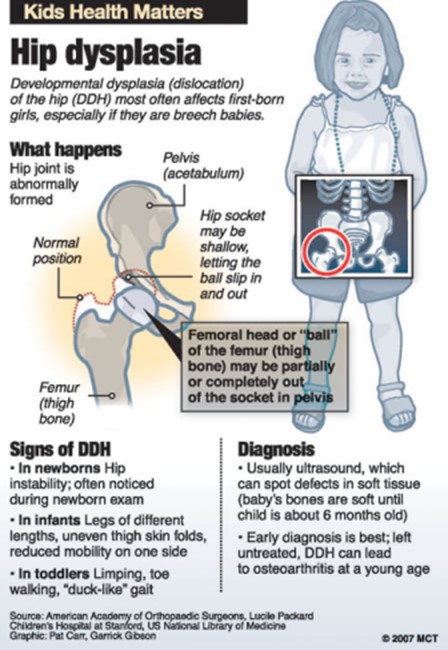
A nurse is assessing a newborn who has developmental dysplasia of the hip (DDH). Which of the following findings should the nurse expect?
A. Inwardly turned foot on the affected side
B. Absent plantar reflexes
C. Lengthened thigh on the affected side
D. Asymmetric thigh fold
DDH refers to an abnormal development or alignment of the hip joint, which can lead to instability or dislocation of the hip. An asymmetric thigh fold is a common physical finding in DDH, where there is a difference in the skin fold between the affected and unaffected sides of the thigh. This occurs due to the malposition or displacement of the femoral head within the acetabulum. While other findings may also be present in DDH, such as an inwardly turned foot on the affected side (also known as a positive Ortolani or Barlow test), absent plantar reflexes, or a lengthened thigh on the affected side, the asymmetric thigh fold is a key indicator of hip dysplasia in a newborn.
Full Explanation
DDH refers to an abnormal development or alignment of the hip joint, which can lead to instability or dislocation of the hip. An asymmetric thigh fold is a common physical finding in DDH, where there is a difference in the skin fold between the affected and unaffected sides of the thigh. This occurs due to the malposition or displacement of the femoral head within the acetabulum.
While other findings may also be present in DDH, such as an inwardly turned foot on the affected side (also known as a positive Ortolani or Barlow test), absent plantar reflexes, or a lengthened thigh on the affected side, the asymmetric thigh fold is a key indicator of hip dysplasia in a newborn.
A nurse is assessing a 10-month-old infant. Which of the following findings should the nurse report to the provider?
A. infant cannot build a tower of three or four cubes
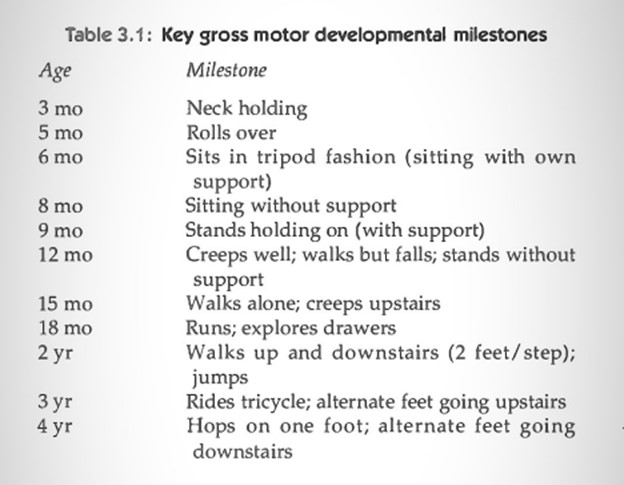
B. The infant does not sit steadily without support
At 10 months of age, most infants should be able to sit steadily without support. If the infant is unable to sit without support or shows difficulty maintaining balance while sitting, it may indicate a developmental delay or potential motor coordination issues. It is important to report this finding to the healthcare provider for further evaluation and appropriate intervention if necessary.
C. The infant is unable to imitate animal sounds
D. The infant cannot turn pages in a book
Full Explanation
At 10 months of age, most infants should be able to sit steadily without support. If the infant is unable to sit without support or shows difficulty maintaining balance while sitting, it may indicate a developmental delay or potential motor coordination issues. It is important to report this finding to the healthcare provider for further evaluation and appropriate intervention if necessary.
A nurse is assessing a female child in an area struck by an earthquake. The child, who is crying, walks well, can state her first name, and repeatedly says "All done" and "Go bye-bye” now during the assessment. The child has 24 deciduous teeth and her anterior fontanel is closed. Based on these observations, the nurse should estimate that the child is how many months old?
A. 24
None
B. 12
None
C. 18
None
D. 30
Full Explanation
Walking Well: The ability to walk well typically develops around 12 to 15 months. Since the child walks well, we can consider her closer to this age range.
Stating first name: By 24-30 months, most children can identify themselves by name.
Repeating Phrases (“All done” and “Go bye-bye”): Repeating phrases is common around 15 to 18 months. The child’s language development aligns with this stage.
24 Deciduous Teeth: By the age of 2 to 3 years, children typically have all 20 deciduous (baby) teeth. Since this child has 24 deciduous teeth, she is likely closer to the 2-year-old mark.
Closed Anterior Fontanel: The anterior fontanel (soft spot on the baby’s head) usually closes by 18 months. The fact that it is closed indicates that the child is beyond this age.
Child is most likely 30 months old.