
Nursing practice questions with comprehensive rationales
NurseDive Free Nursing Practice Question
A nurse is assisting with discharge planning for a client who has a sacral pressure injury and has a prescription for daily dressing changes. Which of the following resource referrals should the nurse anticipate from the provider for this client?
A. Home care
Home care is the most appropriate resource referral for this client, as they will need skilled nursing care to perform wound care and monitor the healing process. Home care can also provide education and support for the client and their family.
B. Assisted living
Assisted living is not a suitable resource referral for this client, as they do not provide skilled nursing care or wound care. Assisted living facilities are designed for clients who need assistance with activities of daily living, but not medical care.
C. Long-term care
Long-term care is not a necessary resource referral for this client, as they do not have a chronic or terminal condition that requires 24hour nursing care. Long-term care facilities are intended for clients who are unable to live independently due to physical or cognitive impairments.
D. Hospice care
Hospice care is not an appropriate resource referral for this client, as they do not have a terminal illness or a life expectancy of less than six months. Hospice care provides palliative care and comfort measures for clients who are dying and their families.
This question is an excerpt from Nurse Dive's nursing test bank - Ati Lpn Fundamentals Proctored Exam 1. Take the full exam now
Full Explanation
Choice A reason: Home care is the most appropriate resource referral for this client, as they will need skilled nursing care to perform wound care and monitor the healing process. Home care can also provide education and support for the client and their family.
Choice B reason: Assisted living is not a suitable resource referral for this client, as they do not provide skilled nursing care or wound care. Assisted living facilities are designed for clients who need assistance with activities of daily living, but not medical care.
Choice C reason: Long-term care is not a necessary resource referral for this client, as they do not have a chronic or terminal condition that requires 24hour nursing care. Long-term care facilities are intended for clients who are unable to live independently due to physical or cognitive impairments.
Choice D reason: Hospice care is not an appropriate resource referral for this client, as they do not have a terminal illness or a life expectancy of less than six months. Hospice care provides palliative care and comfort measures for clients who are dying and their families.
Similar Questions
A nurse is caring for a client who reports sneezing, productive cough, muscle aches, headache, and fever that has progressed over the last 4 days. Which of the following stages of infection is the client likely experiencing?
A. Prodromal
The prodromal stage is the period between the exposure to the infectious agent and the onset of specific symptoms. During this stage, the person may experience mild and nonspecific signs of infection, such as fatigue or lowgrade fever. The client in the question has already developed specific symptoms of infection, such as sneezing, productive cough, and fever, which indicate that they have passed the prodromal stage.
B. Period of convalescence
The period of convalescence is the stage of recovery after the infection. During this stage, the person's symptoms gradually subside, and their immune system eliminates the infectious agent from the body. The client in the question is still experiencing symptoms of infection, which suggest that they have not reached the period of convalescence yet.
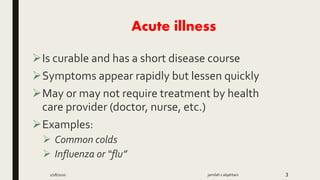
C. Acute illness
The acute illness stage is the peak of the infection, when the person exhibits the most severe and specific symptoms of the disease. During this stage, the person's immune system fights against the infectious agent, and the outcome of the infection is determined. The client in the question is likely in the acute illness stage, as they have been experiencing symptoms of infection for 4 days, and their condition has worsened over time.
D. Incubation
The incubation stage is the time between the entry of the infectious agent into the body and the appearance of the first symptoms of infection. During this stage, the person does not feel ill, but the infectious agent is multiplying in the body. The client in the question has already developed symptoms of infection, which indicate that they have left the incubation stage.
Full Explanation
Choice A reason: The prodromal stage is the period between the exposure to the infectious agent and the onset of specific symptoms. During this stage, the person may experience mild and nonspecific signs of infection, such as fatigue or lowgrade fever. The client in the question has already developed specific symptoms of infection, such as sneezing, productive cough, and fever, which indicate that they have passed the prodromal stage.
Choice B reason: The period of convalescence is the stage of recovery after the infection. During this stage, the person's symptoms gradually subside, and their immune system eliminates the infectious agent from the body. The client in the question is still experiencing symptoms of infection, which suggest that they have not reached the period of convalescence yet.
Choice C reason: The acute illness stage is the peak of the infection, when the person exhibits the most severe and specific symptoms of the disease. During this stage, the person's immune system fights against the infectious agent, and the outcome of the infection is determined. The client in the question is likely in the acute illness stage, as they have been experiencing symptoms of infection for 4 days, and their condition has worsened over time.
Choice D reason: The incubation stage is the time between the entry of the infectious agent into the body and the appearance of the first symptoms of infection. During this stage, the person does not feel ill, but the infectious agent is multiplying in the body. The client in the question has already developed symptoms of infection, which indicate that they have left the incubation stage.
A nurse is reinforcing information with a nursing colleague about sentinel events. Which of the following statements by the nursing colleague indicates an understanding?
A. "An example of a sentinel event is administering incompatible blood products to a client."
A sentinel event is a serious adverse event that results in death, permanent harm, or severe temporary harm to a patient. Administering incompatible blood products to a client is a sentinel event because it can cause fatal hemolytic reactions.
B. "An example of a sentinel event is administering client medications 30 minutes late."
Administering client medications 30 minutes late is not a sentinel event, unless it leads to a serious adverse outcome for the patient. Medication errors are common and preventable, and they should be reported and analyzed to improve patient safety.
C. "An example of a sentinel event is documenting vital signs at the wrong time in the client’s electronic health record."
Documenting vital signs at the wrong time in the client’s electronic health record is not a sentinel event, unless it leads to a serious adverse outcome for the patient. Documentation errors are also common and preventable, and they should be corrected and avoided to ensure accurate and timely information.
D. "An example of a sentinel event is administering a prescribed sedative to a client for insomnia."
Administering a prescribed sedative to a client for insomnia is not a sentinel event, unless it leads to a serious adverse outcome for the patient. Sedatives are commonly used to treat insomnia, and they should be prescribed and administered with caution and monitoring⁵.
Full Explanation
Choice A reason: A sentinel event is a serious adverse event that results in death, permanent harm, or severe temporary harm to a patient. Administering incompatible blood products to a client is a sentinel event because it can cause fatal hemolytic reactions.
Choice B reason: Administering client medications 30 minutes late is not a sentinel event, unless it leads to a serious adverse outcome for the patient. Medication errors are common and preventable, and they should be reported and analyzed to improve patient safety.
Choice C reason: Documenting vital signs at the wrong time in the client’s electronic health record is not a sentinel event, unless it leads to a serious adverse outcome for the patient. Documentation errors are also common and preventable, and they should be corrected and avoided to ensure accurate and timely information.
Choice D reason: Administering a prescribed sedative to a client for insomnia is not a sentinel event, unless it leads to a serious adverse outcome for the patient. Sedatives are commonly used to treat insomnia, and they should be prescribed and administered with caution and monitoring⁵.
A nurse is instructing a newly licensed nurse about the scope and standards of nursing practice. Which of the following describes standards of practice?
A. Provides competencies for the nurses to achieve before licensure.
Providing competencies for the nurses to achieve before licensure is not a description of standards of practice, but rather a function of the nursing education and accreditation system. Standards of practice are authoritative statements that define the expected level of performance for nurses after they obtain their license.
B. Establishes a protocol for care to provide for a specific health problem.
Establishing a protocol for care to provide for a specific health problem is not a description of standards of practice, but rather a function of the clinical practice guidelines and evidence based practice. Standards of practice are broader and more general statements that apply to all nurses regardless of their specialty or setting.
C. Specifies that nurses provide care that reflects current and competent level of behavior when providing client care.
Specifying that nurses provide care that reflects current and competent level of behavior when providing client care is a description of standards of practice, as it captures the essence of what standards of practice are and why they are important. Standards of practice are based on the best available evidence and professional consensus, and they guide nurses in delivering safe, quality, and ethical care to their clients.
D. Lists a set of skills that all nurses should be competent in performing, outlines responsibilities that every nurse is expected to provide regardless of their role.
Listing a set of skills that all nurses should be competent in performing, outlining responsibilities that every nurse is expected to provide regardless of their role is not a description of standards of practice, but rather a function of the scope of practice. Scope of practice describes the services that a qualified health professional is deemed competent to perform, and permitted to undertake, in keeping with the terms of their professional license..
Full Explanation
Choice A reason: Providing competencies for the nurses to achieve before licensure is not a description of standards of practice, but rather a function of the nursing education and accreditation system. Standards of practice are authoritative statements that define the expected level of performance for nurses after they obtain their license.
Choice B reason: Establishing a protocol for care to provide for a specific health problem is not a description of standards of practice, but rather a function of the clinical practice guidelines and evidence based practice. Standards of practice are broader and more general statements that apply to all nurses regardless of their specialty or setting.
Choice C reason: Specifying that nurses provide care that reflects current and competent level of behavior when providing client care is a description of standards of practice, as it captures the essence of what standards of practice are and why they are important. Standards of practice are based on the best available evidence and professional consensus, and they guide nurses in delivering safe, quality, and ethical care to their clients.
Choice D reason: Listing a set of skills that all nurses should be competent in performing, outlining responsibilities that every nurse is expected to provide regardless of their role is not a description of standards of practice, but rather a function of the scope of practice. Scope of practice describes the services that a qualified health professional is deemed competent to perform, and permitted to undertake, in keeping with the terms of their professional license..