Nursing practice questions with comprehensive rationales
NurseDive Free Nursing Practice Question
A nurse is assisting with the admission of a client who has varicella zoster.
Which of the following interventions should the nurse plan to implement?
A. Assign the client to a negative pressure airflow room
Varicella zoster is highly contagious, and airborne precautions should be implemented. Assigning the client to a negative pressure airflow room helps prevent the spread of the virus to others by containing and filtering the air within the room.
B. Have visitors remain at least 0.91 m (3 feet) away from the client
While it is important to minimize close contact with an infectious client, varicella zoster is primarily transmitted through airborne droplets. Visitors should follow the appropriate precautions, such as wearing masks and adhering to hand hygiene, rather than just maintaining a certain distance.
C. Initiate contact precautions for the client
In addition to airborne precautions, contact precautions should also be implemented. This includes using gloves and gowns when providing care to the client to minimize direct contact with infectious materials.
D. Administer aspirin if the client develops a fever
Aspirin should not be given to clients with varicella zoster, especially children, due to the risk of developing Reye's syndrome. Reye's syndrome is a rare but serious condition that can cause swelling in the liver and brain. Acetaminophen (paracetamol) is typically recommended for managing fever in clients with varicella zoster.
This question is an excerpt from Nurse Dive's nursing test bank - ATI PN Comprehensive Predictor 2023 - Proctored Exam 1. Take the full exam now
Full Explanation
Varicella zoster is highly contagious, and airborne precautions should be implemented. Assigning the client to a negative pressure airflow room helps prevent the spread of the virus to others by containing and filtering the air within the room.
In addition to airborne precautions, contact precautions should also be implemented. This includes using gloves and gowns when providing care to the client to minimize direct contact with infectious materials.

The other options listed are not appropriate interventions for a client with varicella zoster: While it is important to minimize close contact with an infectious client, varicella zoster is primarily transmitted through airborne droplets. Visitors should follow the appropriate precautions, such as wearing masks and adhering to hand hygiene, rather than just maintaining a certain distance.
Aspirin should not be given to clients with varicella zoster, especially children, due to the risk of developing Reye's syndrome. Reye's syndrome is a rare but serious condition that can cause swelling in the liver and brain. Acetaminophen (paracetamol) is typically recommended for managing fever in clients with varicella zoster.
Similar Questions
A nurse is preparing to test a client's plantar Babinski reflex. Which of the following instructions should the nurse give to prepare the client for this test?
A. "Place your foot in my hand and I will tap the back of your heel."
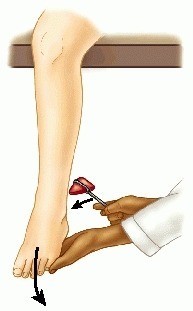
"Place your foot in my hand and I will tap the back of your heel": This instruction is more relevant to testing the Achilles tendon reflex, where the nurse taps the back of the heel to elicit a plantarflexion response.
B. "Lie down and I will stroke the bottom of your foot."
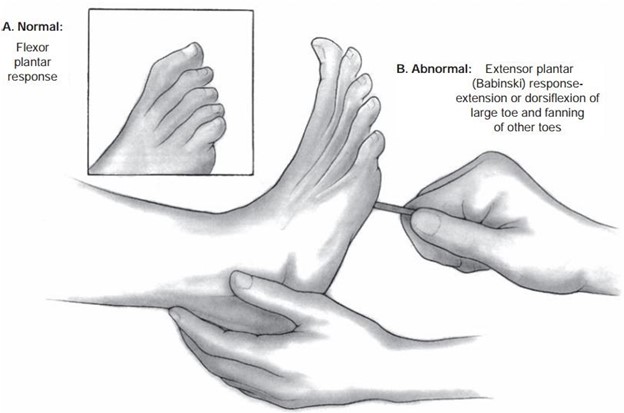
The plantar Babinski reflex is assessed by stroking the sole of the foot from the heel towards the toes. A normal response is the flexion or curling of the toes. An abnormal response, known as a positive Babinski sign, is the extension and fanning out of the toes, which indicates an upper motor neuron lesion.
C. "Sit on the edge of the bed while I tap your knee."
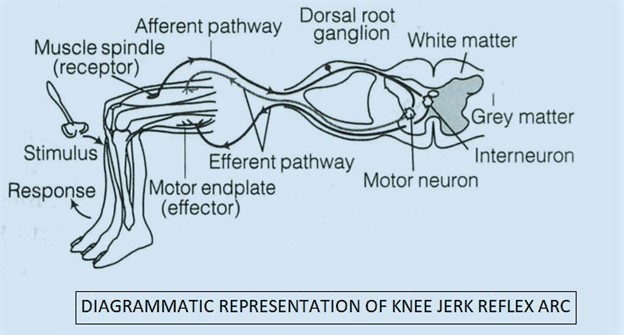
"Sit on the edge of the bed while I tap your knee": This instruction is more relevant to testing the patellar reflex, also known as the knee-jerk reflex. The nurse taps the patellar tendon just below the kneecap to elicit a reflexive contraction of the quadriceps muscle.
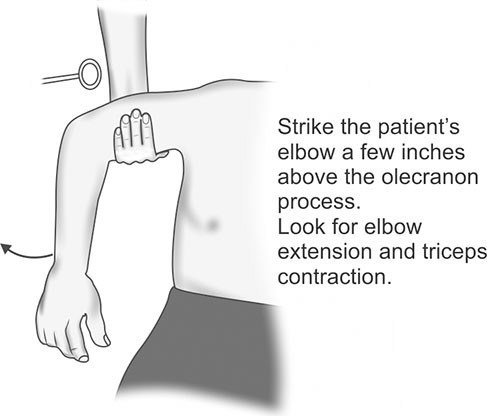
D. "Relax your arm across your chest and I will test your elbow extension."
"Relax your arm across your chest and I will test your elbow extension": This instruction is more relevant to testing the triceps reflex, where the nurse taps the triceps tendon to elicit a reflexive extension of the elbow.
Full Explanation
The plantar Babinski reflex is assessed by stroking the sole of the foot from the heel towards the toes. A normal response is the flexion or curling of the toes. An abnormal response, known as a positive Babinski sign, is the extension and fanning out of the toes, which indicates an upper motor neuron lesion.
"Place your foot in my hand and I will tap the back of your heel": This instruction is more relevant to testing the Achilles tendon reflex, where the nurse taps the back of the heel to elicit a plantarflexion response.
"Sit on the edge of the bed while I tap your knee": This instruction is more relevant to testing the patellar reflex, also known as the knee-jerk reflex. The nurse taps the patellar tendon just below the kneecap to elicit a reflexive contraction of the quadriceps muscle.
"Relax your arm across your chest and I will test your elbow extension": This instruction is more relevant to testing the triceps reflex, where the nurse taps the triceps tendon to elicit a reflexive extension of the elbow.
A nurse is assisting with the discharge of an older adult client who has early onset dementiaand lives with their adult child who works full time Which of the following resources should thenurse recommend to the family to assist with the client's care?
A. Hospice care
Hospice care is generally recommended for individuals with terminal illnesses who are nearing the end of life. It focuses on providing comfort and support to the patient and family during the end-of-life journey.
B. Long-term care facility
Long-term care facilities may be appropriate for some individuals with advanced dementia who require round-the-clock care and supervision. However, in this scenario, the client's adult child is present and working full time, suggesting that the family intends to provide care at home as much as possible.
C. Adult day care facility
Adult day care facilities provide a safe and supervised environment for older adults during the day, while their family members or caregivers are at work or unable to be present. These facilities offer various activities, social interactions, and personal care services to support the needs of individuals with dementia and other conditions. Attending an adult day care facility canalso give the client an opportunity to engage with others and maintain cognitive and physical stimulation.
D. Community senior center
Community senior centers may offer various activities and programs for older adults, but they may not provide the level of supervision and care required for an individual with early onset dementia during the day, especially if their family member is at work.
Full Explanation
explanation:
Adult day care facilities provide a safe and supervised environment for older adults during the day, while their family members or caregivers are at work or unable to be present. These facilities offer various activities, social interactions, and personal care services to support the needs of individuals with dementia and other conditions. Attending an adult day care facility can also give the client an opportunity to engage with others and maintain cognitive and physical stimulation.
A- Hospice care is generally recommended for individuals with terminal illnesses who are nearing the end of life. It focuses on providing comfort and support to the patient and family during the end-of-life journey.
B- Long-term care facilities may be appropriate for some individuals with advanced dementia who require round-the-clock care and supervision. However, in this scenario, the client's adult child is present and working full time, suggesting that the family intends to provide care at home as much as possible.
D- Community senior centers may offer various activities and programs for older adults, but they may not provide the level of supervision and care required for an individual with early onset dementia during the day, especially if their family member is at work.
A nurse at an outpatient clinic receives a call from a client who reports experiencing syncope after starting a new prescription for enalapril.
Which of the following instructions should the nurse give the client?
A. Decrease daily fluid intake.
Decreasing fluid intake is not likely to be the cause of syncope related to enalapril. It is important for clients to maintain adequate hydration, especially if they are experiencing side effects such as orthostatic hypotension.
B. Withhold the medication if pulse rate is less than 60/min
While a low pulse rate may indicate bradycardia, it is not the primary concern in this situation. Orthostatic hypotension leading to syncope is the main issue, and the client should be instructed to rise slowly to prevent it.
C. Rise slowly from a sitting position to a standing position
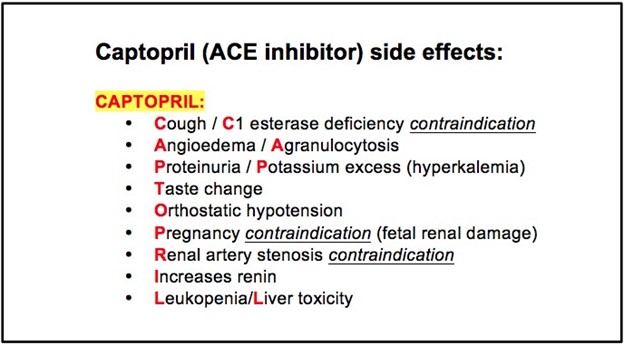
Orthostatic hypotension, which is a sudden drop in blood pressure upon standing, can be a side effect of enalapril and may lead to syncope. Instructing the client to rise slowly from a sitting to a standing position helps minimize the risk of a sudden drop in blood pressure and decreases the chances of syncope occurring.
D. Increase dietary potassium
While enalapril is an angiotensin-converting enzyme (ACE) inhibitor that can increase potassium levels in the blood, it is not directly related to syncope. Dietary changes should be made under the guidance of a healthcare provider based on individual needs and blood test results.
Full Explanation
Orthostatic hypotension, which is a sudden drop in blood pressure upon standing, can be a side effect of enalapril and may lead to syncope. Instructing the client to rise slowly from a sitting to a standing position helps minimize the risk of a sudden drop in blood pressure and decreases the chances of syncope occurring.
Decreasing fluid intake is not likely to be the cause of syncope related to enalapril. It is important for clients to maintain adequate hydration, especially if they are experiencing side effects such as orthostatic hypotension.
While a low pulse rate may indicate bradycardia, it is not the primary concern in this situation. Orthostatic hypotension leading to syncope is the main issue, and the client should be instructed to rise slowly to prevent it.
While enalapril is an angiotensin-converting enzyme (ACE) inhibitor that can increase potassium levels in the blood, it is not directly related to syncope. Dietary changes should be made under the guidance of a healthcare provider based on individual needs and blood test results.