
Nursing practice questions with comprehensive rationales
NurseDive Free Nursing Practice Question
A nurse is assisting with the care of a client in a medical-surgical unit.
Vital Signs
05:00
Temperature 36.6 C (97.9 F)
Heart rate 100/min
Respiratory rate 22/min
Blood pressure 160/98 mm Hg
Oxygen saturation 96% on oxygen 2 L/min via nasal cannula
14:00
Temperature 36.8 C (98.3 F)
Heart rate 90/min
Respiratory rate 18/min
Blood pressure 138/88 mm Hg
Oxygen saturation 97% on oxygen 2 L/min via nasal cannula
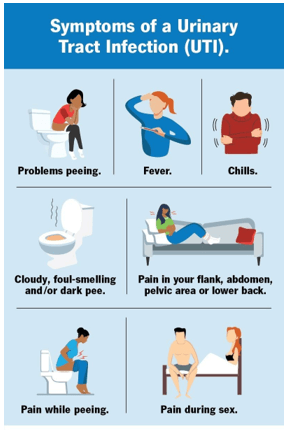
Which of the following actions should the nurse take to decrease the risks for a urinary tract infection for this client? Select all that apply.
A. Encourage the client to drink 3,000 mL of fluid daily.
To decrease the risks for a urinary tract infection for this client, the nurse should take several actions. The nurse should encourage the client to drink 3,000 mL of fluid daily to help flush bacteria out of the urinary tract¹.
B. Change the indwelling urinary catheter tubing every 3 days.
-
C. Place the drainage bag on the bed when transporting the client.
-
D. Empty the drainage bag when it is half-full.
The nurse should also empty the drainage bag when it is half-full to prevent bacterial growth¹.
E. Review the need for the indwelling urinary catheter daily.
-
F. Use soap and water to provide perineal care.
-
This question is an excerpt from Nurse Dive's nursing test bank - PN Comprehensive Predictor PN 2020 Proctored Exam. Take the full exam now
Full Explanation
To decrease the risks for a urinary tract infection for this client, the nurse should take several actions. The nurse should encourage the client to drink 3,000 mL of fluid daily to help flush bacteria out of the urinary tract¹. The nurse should also empty the drainage bag when it is half-full to prevent bacterial growth¹.
Additionally, the nurse should review the need for the indwelling urinary catheter daily and use soap and water to provide perineal care¹.
Similar Questions
The nurse is identifying tertiary prevention strategies to implement for this client.
Select the three actions the nurse should take.
A. Insist that the client explain the reason for their bruises.
None
B. Inform the client that their child is being abusive toward them.
None
C. Report suspected maltreatment to the appropriate agency.
None
D. Confront the client's child about the client's injuries.
None
E. Ask the client how the fracture occurred.
None
F. Conduct the interview with the client privately.
None
Full Explanation
In a situation where maltreatment is suspected, it is important for the nurse to report their concerns to the appropriate agency. The nurse should also ask the client how the fracture occurred and conduct the interview with the client privately, without the presence of their child, to gather more information and assess the situation.
A nurse in a provider's office is reinforcing teaching about skin care with a client who has a new diagnosis of systemic lupus erythematosus. Which of the following statements by the client indicates an understanding of the teaching?
A. "I will limit my time in the tanning bed to 15 minutes."
B. "I will dry my skin by patting it with a towel."
People with SLE are often sensitive to sunlight and should take precautions to protect their skin. Limiting time in the tanning bed is important because exposure to ultraviolet (UV) light can trigger or worsen symptoms of SLE. Using an astringent on the face and cleansing with an antibacterial soap may not be recommended for individuals with SLE, as these products can be harsh on the skin and may cause irritation. However, patting the skin dry with a towel is a gentle and appropriate method to dry the skin without causing unnecessary friction or irritation.
C. "I will use an astringent on my face."
D. "I will cleanse my skin using an antibacterial soap."
Full Explanation
People with SLE are often sensitive to sunlight and should take precautions to protect their skin. Limiting time in the tanning bed is important because exposure to ultraviolet (UV) light can trigger or worsen symptoms of SLE. Using an astringent on the face and cleansing with an antibacterial soap may not be recommended for individuals with SLE, as these products can be harsh on the skin and may cause irritation. However, patting the skin dry with a towel is a gentle and appropriate method to dry the skin without causing unnecessary friction or irritation.
A nurse is caring for an older adult client who reports dry, itchy skin. Which of the following actions should the nurse take?
A. Encourage the client to bathe frequently.
B. Apply powder to the client's skin.
C. Add moisturizing oil to the client's bath water.
D. Place a humidifier in the client's room.
Dry, itchy skin is a common concern in older adults, especially during the winter months or in dry environments. Increasing the humidity in the client's environment can help alleviate dryness and itching. Placing a humidifier in the client's room will add moisture to the air and help prevent excessive drying of the skin. It is important to ensure that the humidifier is clean and well-maintained to avoid the growth of bacteria or mould. Encouraging the client to bathe frequently may further dry out the skin, so it is not recommended. Similarly, applying powder to the skin may exacerbate dryness and should be avoided. Adding moisturizing oil to the bath water may provide temporary relief, but a humidifier will have a more consistent and long-lasting effect on the client's environment.
Full Explanation
Dry, itchy skin is a common concern in older adults, especially during the winter months or in dry environments. Increasing the humidity in the client's environment can help alleviate dryness and itching. Placing a humidifier in the client's room will add moisture to the air and help prevent excessive drying of the skin. It is important to ensure that the humidifier is clean and well-maintained to avoid the growth of bacteria or mould.
Encouraging the client to bathe frequently may further dry out the skin, so it is not recommended. Similarly, applying powder to the skin may exacerbate dryness and should be avoided. Adding moisturizing oil to the bath water may provide temporary relief, but a humidifier will have a more consistent and long-lasting effect on the client's environment.