
Nursing practice questions with comprehensive rationales
NurseDive Free Nursing Practice Question
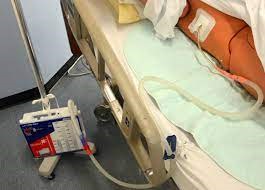
A nurse is assisting with the care of a client who has a chest tube.
Which of the following actions should the nurse take?
A. Strip the client’s chest tube every 2 hours.
Stripping the client’s chest tube every 2 hours is not recommended. Stripping can create high negative pressures in the tube that can cause damage to the lung tissue. It can also lead to increased pain for the patient and is generally not a standard practice in chest tube management.
B. Loop the tubing of the chest tube on the client’s bed.
Looping the tubing of the chest tube on the client’s bed is not a recommended practice. The chest tube should be free of loops or kinks to allow for proper drainage of air and fluid from the pleural space. Any loops or kinks in the tube can lead to accumulation of fluid or air, which can cause complications such as tension pneumothorax. The chest tube drainage system should not be placed above the level of the client’s heart. This can lead to the backflow of blood or fluid into the pleural space, which can cause complications such as hemothorax or pleural effusion. The drainage system should always be kept below the level of the client’s chest to allow for gravity-assisted drainage.
C. Place the chest tube drainage system above the level of the client’s heart.
D. Tape the connections on the client’s chest tube.
Taping the connections on the client’s chest tube is a recommended practice. This is done to secure the connections and prevent accidental disconnection or dislodgement of the tube. An accidental disconnection or dislodgement can lead to complications such as pneumothorax or hemothorax. Therefore, all connections should be securely taped to prevent any accidental disconnections.
This question is an excerpt from Nurse Dive's nursing test bank - ATI Fundamental of nursing proctored exam 2 Custom NS_117_T Winter 2023 Monroe. Take the full exam now
Full Explanation
Choice A rationale:
Stripping the client’s chest tube every 2 hours is not recommended. Stripping can create high negative pressures in the tube that can cause damage to the lung tissue. It can also lead to increased pain for the patient and is generally not a standard practice in chest tube management.
Choice B rationale:
Looping the tubing of the chest tube on the client’s bed is not a recommended practice. The chest tube should be free of loops or kinks to allow for proper drainage of air and fluid from the pleural space. Any loops or kinks in the tube can lead to accumulation of fluid or air, which can cause complications such as tension pneumothorax.
The chest tube drainage system should not be placed above the level of the client’s heart. This can lead to the backflow of blood or fluid into the pleural space, which can cause complications such as hemothorax or pleural effusion. The drainage system should always be kept below the level of the client’s chest to allow for gravity-assisted drainage.
Choice D rationale:
Taping the connections on the client’s chest tube is a recommended practice. This is done to secure the connections and prevent accidental disconnection or dislodgement of the tube. An accidental disconnection or dislodgement can lead to complications such as pneumothorax or hemothorax. Therefore, all connections should be securely taped to prevent any accidental disconnections.
Similar Questions
A nurse is caring for a client who has paraplegia and is on an intermittent urinary catheterization program.
Which of the following findings indicates to the nurse the need to catheterize the client?
A. Reflex incontinence
Reflex incontinence is a type of urinary incontinence that occurs when the person has no control over urination. They’re unable to feel when their bladder is full and can’t control the process of emptying it. This is often due to a brain or spinal cord injury that disrupts communication between these organs. However, this condition does not necessarily indicate the need for catheterization in a client with paraplegia who is already on an intermittent urinary catheterization program.
B. Urge incontinence C. Nocturnal enuresis
Urge incontinence, also known as overactive bladder, is characterized by a sudden, intense urge to urinate, followed by an involuntary loss of urine. This condition can be caused by various factors, including neurological disorders, bladder abnormalities, and certain medications. While it can be a challenge for individuals with paraplegia, it does not directly indicate the need for catheterization.
C. Suprapubic discomfort
Nocturnal enuresis, or bedwetting, is involuntary urination while asleep. It’s a common condition, especially in young children, but it can affect individuals of any age. In the context of a client with paraplegia, nocturnal enuresis could be a symptom of a larger issue, such as a urinary tract infection or bladder dysfunction, but it does not directly indicate the need for catheterization. Choice D rationale: Suprapubic discomfort or pain in the area above the pubic bone could be a sign of bladder distension, which is a common complication in individuals with spinal cord injuries. Bladder distension can occur when the bladder becomes overly full and can’t empty, causing discomfort or pain in the lower abdomen. This is a clear indication for the need to catheterize the client.
Full Explanation
Choice A rationale:
Reflex incontinence is a type of urinary incontinence that occurs when the person has no control over urination. They’re unable to feel when their bladder is full and can’t control the process of emptying it. This is often due to a brain or spinal cord injury that disrupts communication between these organs. However, this condition does not necessarily indicate the need for catheterization in a client with paraplegia who is already on an intermittent urinary catheterization program.
Choice B rationale:
Urge incontinence, also known as overactive bladder, is characterized by a sudden, intense urge to urinate, followed by an involuntary loss of urine. This condition can be caused by various factors, including neurological disorders, bladder abnormalities, and certain medications. While it can be a challenge for individuals with paraplegia, it does not directly indicate the need for catheterization.
Choice C rationale:
Nocturnal enuresis, or bedwetting, is involuntary urination while asleep. It’s a common condition, especially in young children, but it can affect individuals of any age. In the context of a client with paraplegia, nocturnal enuresis could be a symptom of a larger issue, such as a urinary tract infection or bladder dysfunction, but it does not directly indicate the need for catheterization. Choice D rationale:
Suprapubic discomfort or pain in the area above the pubic bone could be a sign of bladder distension, which is a common complication in individuals with spinal cord injuries. Bladder distension can occur when the bladder becomes overly full and can’t empty, causing discomfort or pain in the lower abdomen. This is a clear indication for the need to catheterize the client.
A nurse is assessing a client who has respiratory alkalosis.
Which of the following findings should the nurse expect?
A. Dry skin
Dry skin is not typically associated with respiratory alkalosis. Respiratory alkalosis occurs when the levels of carbon dioxide and oxygen in the blood aren’t balanced, often due to hyperventilation. Dry skin is not listed as a common symptom of this condition.
B. Diarrhea
Diarrhea is not a common symptom of respiratory alkalosis. The condition is characterized by symptoms such as dizziness, numbness, confusion, and shortness of breath. Diarrhea is more commonly associated with gastrointestinal issues rather than respiratory conditions.
C. Abdominal pain
Abdominal pain is not a typical symptom of respiratory alkalosis. The condition is usually caused by over-breathing (hyperventilation) that occurs when you breathe very deeply or rapidly. Abdominal pain is not listed as a common symptom of this condition.
D. Hyperventilation
Hyperventilation is typically the underlying cause of respiratory alkalosis. Hyperventilation, also known as overbreathing, occurs when someone breathes very deeply or rapidly. This can cause the levels of carbon dioxide in the blood to drop too low, leading to respiratory alkalosis. Therefore, a nurse assessing a client who has respiratory alkalosis should expect to find signs of hyperventilation.
E. Hyperventilation
Full Explanation
Choice A rationale:
Dry skin is not typically associated with respiratory alkalosis. Respiratory alkalosis occurs when the levels of carbon dioxide and oxygen in the blood aren’t balanced, often due to hyperventilation. Dry skin is not listed as a common symptom of this condition.
Choice B rationale:
Diarrhea is not a common symptom of respiratory alkalosis. The condition is characterized by symptoms such as dizziness, numbness, confusion, and shortness of breath. Diarrhea is more commonly associated with gastrointestinal issues rather than respiratory conditions.
Choice C rationale:
Abdominal pain is not a typical symptom of respiratory alkalosis. The condition is usually caused by over-breathing
(hyperventilation) that occurs when you breathe very deeply or rapidly. Abdominal pain is not listed as a common symptom of this condition.
Choice D rationale:
Hyperventilation is typically the underlying cause of respiratory alkalosis. Hyperventilation, also known as overbreathing, occurs when someone breathes very deeply or rapidly. This can cause the levels of carbon dioxide in the blood to drop too low, leading to respiratory alkalosis. Therefore, a nurse assessing a client who has respiratory alkalosis should expect to find signs of hyperventilation.
A nurse is gathering information from a patient who has been experiencing diarrhea for several days.
What symptoms should the nurse anticipate?
A. Hypothermia
Hypothermia, or abnormally low body temperature, is not typically a symptom of diarrhea. While it’s possible for a person with severe diarrhea to experience chills or feel cold, hypothermia is not a direct result of diarrhea.
B. Rigid abdomen
A rigid abdomen is often a sign of a serious condition like peritonitis (inflammation of the peritoneum, the tissue that lines the inner wall of the abdomen), but it is not typically associated with diarrhea.
C. Dehydration
Dehydration is a common complication of diarrhea. When a person has diarrhea, they can lose a lot of fluid and electrolytes quickly, leading to dehydration. Symptoms of dehydration can include thirst, less frequent urination, dark-colored urine, fatigue, dizziness, and confusion.
D. Decreased bowel sounds
Decreased bowel sounds are not typically associated with diarrhea. In fact, bowel sounds may actually increase in some cases of diarrhea due to increased gut motility.
E. Decreased bowel sounds
Full Explanation
Choice A rationale:
Hypothermia, or abnormally low body temperature, is not typically a symptom of diarrhea. While it’s possible for a person with severe diarrhea to experience chills or feel cold, hypothermia is not a direct result of diarrhea.
Choice B rationale:
A rigid abdomen is often a sign of a serious condition like peritonitis (inflammation of the peritoneum, the tissue that lines the inner wall of the abdomen), but it is not typically associated with diarrhea.
Choice C rationale:
Dehydration is a common complication of diarrhea. When a person has diarrhea, they can lose a lot of fluid and electrolytes quickly, leading to dehydration. Symptoms of dehydration can include thirst, less frequent urination, dark-colored urine, fatigue, dizziness, and confusion.
Choice D rationale:
Decreased bowel sounds are not typically associated with diarrhea. In fact, bowel sounds may actually increase in some cases of diarrhea due to increased gut motility.