
Nursing practice questions with comprehensive rationales
NurseDive Free Nursing Practice Question
A nurse is assisting with the care of a client who is at 32 weeks of gestation and in labor. The client asks the nurse, "Will my baby be okay?”. Which of the following responses should the nurse make?
A. "We have a neonatal unit here equipped to handle emergencies.".
While it’s true that the presence of a neonatal unit equipped to handle emergencies is reassuring, this response does not address the client’s immediate emotional needs or fears. It’s important for the nurse to recognize and validate the client’s feelings rather than focusing solely on the facilities available.
B. "You must be feeling very scared.".
This choice demonstrates empathy and understanding. It allows the client to express their feelings and concerns, which is a crucial aspect of providing emotional support during labor. By acknowledging the client’s potential fear, the nurse opens the door for further communication and support. “You must be feeling very scared.” This response is an example of therapeutic communication, where the nurse acknowledges the client’s feelings and provides emotional support without making assumptions or giving false reassurances.
C. "Everyone worries about their baby while they are in labor.".
This response minimizes the client’s individual feelings by suggesting that everyone has the same worries. It can make the client feel that their concerns are not unique or taken seriously, which is not conducive to establishing trust or providing individualized care.
D. "You are far enough along that your baby will be just fine.".
This choice provides false reassurance. At 32 weeks of gestation, while the prognosis for the baby is generally good, there are still risks associated with preterm birth. It’s important not to make definitive statements about outcomes that cannot be guaranteed.
This question is an excerpt from Nurse Dive's nursing test bank - ATI PN Maternity Proctored Exam. Take the full exam now
Full Explanation
The correct answer is choice B: “You must be feeling very scared.” This response is an example of therapeutic communication, where the nurse acknowledges the client’s feelings and provides emotional support without making assumptions or giving false reassurances.
Choice A rationale: While it’s true that the presence of a neonatal unit equipped to handle emergencies is reassuring, this response does not address the client’s immediate emotional needs or fears. It’s important for the nurse to recognize and validate the client’s feelings rather than focusing solely on the facilities available.
Choice B rationale: This choice demonstrates empathy and understanding. It allows the client to express their feelings and concerns, which is a crucial aspect of providing emotional support during labor. By acknowledging the client’s potential fear, the nurse opens the door for further communication and support.
Choice C rationale: This response minimizes the client’s individual feelings by suggesting that everyone has the same worries. It can make the client feel that their concerns are not unique or taken seriously, which is not conducive to establishing trust or providing individualized care.
Choice D rationale: This choice provides false reassurance. At 32 weeks of gestation, while the prognosis for the baby is generally good, there are still risks associated with preterm birth. It’s important not to make definitive statements about outcomes that cannot be guaranteed.
Similar Questions
A nurse is assisting with the monitoring of a client who is in the first stage of labor, with an external fetal monitor in place and IV fluids infusing. Which of the following factors will cause variable decelerations in the fetal heart rate?
A. Fetal head compression.
Fetal head compression is unlikely to cause variable decelerations in the fetal heart rate. During contractions and labor, the fetal head may experience pressure, but this usually leads to early decelerations, not variable decelerations. Early decelerations are considered benign and are caused by the head's pressure stimulating the vagus nerve, resulting in a temporary decrease in heart rate.
B. Umbilical cord compression.
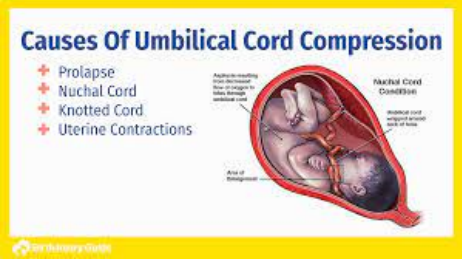
Umbilical cord compression is a known cause of variable decelerations in the fetal heart rate. When the umbilical cord is compressed, it can temporarily disrupt blood flow and oxygen supply to the fetus, leading to decelerations. Variable decelerations often appear as abrupt, sharp drops in the fetal heart rate and are typically characterized by their unpredictable nature.
C. Maternal opioid administration.
Maternal opioid administration is not a direct cause of variable decelerations in the fetal heart rate. While opioids can cross the placenta and may affect the fetus, they are more likely to cause other issues, such as respiratory depression in the newborn, rather than variable decelerations.
D. Uteroplacental insufficiency.
Uteroplacental insufficiency is not the primary factor causing variable decelerations. Uteroplacental insufficiency refers to an inadequate blood flow and oxygen delivery to the placenta, which can lead to late decelerations in the fetal heart rate, not variable decelerations.
Full Explanation
Choice A rationale:
Fetal head compression is unlikely to cause variable decelerations in the fetal heart rate. During contractions and labor, the fetal head may experience pressure, but this usually leads to early decelerations, not variable decelerations. Early decelerations are considered benign and are caused by the head's pressure stimulating the vagus nerve, resulting in a temporary decrease in heart rate.
Choice B rationale:
Umbilical cord compression is a known cause of variable decelerations in the fetal heart rate. When the umbilical cord is compressed, it can temporarily disrupt blood flow and oxygen supply to the fetus, leading to decelerations. Variable decelerations often appear as abrupt, sharp drops in the fetal heart rate and are typically characterized by their unpredictable
nature.
Choice C rationale:
Maternal opioid administration is not a direct cause of variable decelerations in the fetal heart rate. While opioids can cross the placenta and may affect the fetus, they are more likely to cause other issues, such as respiratory depression in the newborn, rather than variable decelerations.
Choice D rationale:
Uteroplacental insufficiency is not the primary factor causing variable decelerations. Uteroplacental insufficiency refers to an inadequate blood flow and oxygen delivery to the placenta, which can lead to late decelerations in the fetal heart rate, not variable decelerations.
A nurse is assisting with the monitoring of a client who is in the first stage of labor, with an external fetal monitor in place and IV fluids infusing. Which of the following factors will cause variable decelerations in the fetal heart rate?
A. Fetal head compression.
Fetal head compression is unlikely to cause variable decelerations in the fetal heart rate. During contractions and labor, the fetal head may experience pressure, but this usually leads to early decelerations, not variable decelerations. Early decelerations are considered benign and are caused by the head's pressure stimulating the vagus nerve, resulting in a temporary decrease in heart rate.
B. Umbilical cord compression.
Umbilical cord compression is a known cause of variable decelerations in the fetal heart rate. When the umbilical cord is compressed, it can temporarily disrupt blood flow and oxygen supply to the fetus, leading to decelerations. Variable decelerations often appear as abrupt, sharp drops in the fetal heart rate and are typically characterized by their unpredictable nature.
C. Maternal opioid administration.
Maternal opioid administration is not a direct cause of variable decelerations in the fetal heart rate. While opioids can cross the placenta and may affect the fetus, they are more likely to cause other issues, such as respiratory depression in the newborn, rather than variable decelerations.
D. Uteroplacental insufficiency.
Uteroplacental insufficiency is not the primary factor causing variable decelerations. Uteroplacental insufficiency refers to an inadequate blood flow and oxygen delivery to the placenta, which can lead to late decelerations in the fetal heart rate, not variable decelerations.
Full Explanation
Choice A rationale:
Fetal head compression is unlikely to cause variable decelerations in the fetal heart rate. During contractions and labor, the fetal head may experience pressure, but this usually leads to early decelerations, not variable decelerations. Early decelerations are considered benign and are caused by the head's pressure stimulating the vagus nerve, resulting in a temporary decrease in heart rate.
Choice B rationale:
nature.
Choice C rationale:
Maternal opioid administration is not a direct cause of variable decelerations in the fetal heart rate. While opioids can cross the placenta and may affect the fetus, they are more likely to cause other issues, such as respiratory depression in the newborn, rather than variable decelerations.
Choice D rationale:
Uteroplacental insufficiency is not the primary factor causing variable decelerations. Uteroplacental insufficiency refers to an inadequate blood flow and oxygen delivery to the placenta, which c
A nurse is caring for a client who might have a hydatidiform mole. The nurse should monitor the client for which of the following findings?
A. Excessive uterine enlargement.
Excessive uterine enlargement. Rationale: The nurse should monitor the client for excessive uterine enlargement, as a hydatidiform mole is a rare condition in pregnancy where abnormal placental tissue forms instead of a fetus. This abnormal growth can lead to uterine enlargement beyond the expected size for gestational age.
B. Rapidly dropping human chorionic gonadotropin (hCG) levels.
Rapidly dropping human chorionic gonadotropin (hCG) levels. Rationale: The nurse should also monitor the client's hCG levels. In a normal pregnancy, hCG levels typically rise steadily during the early stages. However, in the case of a hydatidiform mole, hCG levels may either plateau or drop rapidly due to the abnormal placental growth.
C. Fetal heart rate irregularities.
Fetal heart rate irregularities. Rationale: Although a hydatidiform mole does not involve a viable fetus, the nurse should still assess for fetal heart rate irregularities. In some rare cases, the presence of abnormal placental tissue can cause confusion in the diagnosis, and there may be coexisting fetal development. Fetal heart rate irregularities may indicate potential complications.
D. Whitish vaginal discharge.
Whitish vaginal discharge. Rationale: Whitish vaginal discharge is not typically associated with a hydatidiform mole. Instead, this finding is more commonly seen in other vaginal infections or conditions unrelated to a molar pregnancy. The nurse should be cautious not to misinterpret this symptom as a definitive sign of a hydatidiform mole.
Full Explanation
Choice A rationale:

Excessive uterine enlargement. Rationale: The nurse should monitor the client for excessive uterine enlargement, as a hydatidiform mole is a rare condition in pregnancy where abnormal placental tissue forms instead of a fetus. This abnormal growth can lead to uterine enlargement beyond the expected size for gestational age.
Choice B rationale:
Rapidly dropping human chorionic gonadotropin (hCG) levels. Rationale: The nurse should also monitor the client's hCG levels. In a normal pregnancy, hCG levels typically rise steadily during the early stages. However, in the case of a hydatidiform mole, hCG levels may either plateau or drop rapidly due to the abnormal placental growth.
Choice C rationale:
Fetal heart rate irregularities. Rationale: Although a hydatidiform mole does not involve a viable fetus, the nurse should still assess for fetal heart rate irregularities. In some rare cases, the presence of abnormal placental tissue can cause confusion in the diagnosis, and there may be coexisting fetal development. Fetal heart rate irregularities may indicate potential complications.
Choice D rationale:
Whitish vaginal discharge. Rationale: Whitish vaginal discharge is not typically associated with a hydatidiform mole. Instead, this finding is more commonly seen in other vaginal infections or conditions unrelated to a molar pregnancy. The nurse should be cautious not to misinterpret this symptom as a definitive sign of a hydatidiform mole.