
Nursing practice questions with comprehensive rationales
NurseDive Free Nursing Practice Question
A nurse is assisting with the care of a client who is in labor with ruptured membranes and has herpes simplex virus with active lesions.
Which of the following actions should the nurse take?
A. Begin an amnioinfusion for the client.
Choice A is wrong because an amnioinfusion is a procedure that involves infusing fluid into the amniotic cavity to increase the volume of amniotic fluid and reduce cord compression. It is not indicated for a client with herpes simplex virus with active lesions.
B. Prepare the client for a cesarean birth.
This is because the client has herpes simplex virus with active lesions, which can be transmitted to the newborn during vaginal delivery and cause serious complications such as neonatal herpes infection. A cesarean birth can prevent this transmission and protect the newborn’s health.
C. Administer ampicillin IV to the client.
Choice C is wrong because ampicillin is an antibiotic that is used to treat bacterial infections, not viral infections such as herpes simplex virus. Ampicillin will not prevent the transmission of herpes simplex virus to the newborn.
D. Initiate an oxytocin infusion for the client.
Choice D is wrong because oxytocin is a hormone that stimulates uterine contractions and can be used to augment or induce labor. It is not indicated for a client with herpes simplex virus with active lesions, as it can increase the risk of transmission to the newborn by prolonging the exposure to infected genital secretions.
This question is an excerpt from Nurse Dive's nursing test bank - ATI PN Capstone Proctored Comprehensive Assessment 2020 B. Take the full exam now
Full Explanation
Prepare the client for a cesarean birth.
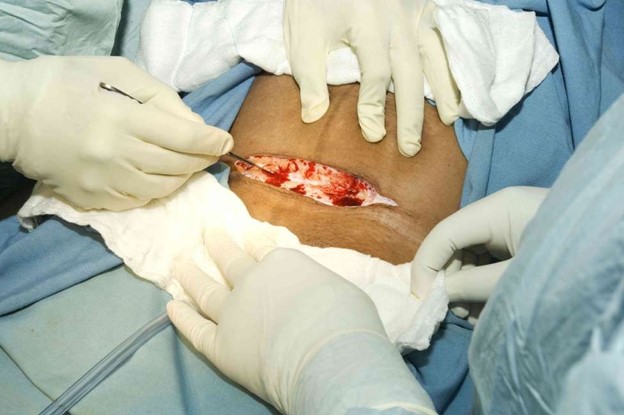
This is because the client has herpes simplex virus with active lesions, which can be transmitted to the newborn during vaginal delivery and cause serious complications such as neonatal herpes infection. A cesarean birth can prevent this transmission and protect the newborn’s health.
Choice A is wrong because an amnioinfusion is a procedure that involves infusing fluid into the amniotic cavity to increase the volume of amniotic fluid and reduce cord compression.
It is not indicated for a client with herpes simplex virus with active lesions.
Choice C is wrong because ampicillin is an antibiotic that is used to treat bacterial infections, not viral infections such as herpes simplex virus.
Ampicillin will not prevent the transmission of herpes simplex virus to the newborn.
Choice D is wrong because oxytocin is a hormone that stimulates uterine contractions and can be used to augment or induce labor.
It is not indicated for a client with herpes simplex virus with active lesions, as it can increase the risk of transmission to the newborn by prolonging the exposure to infected genital secretions.
Similar Questions
A nurse is administering the inactivated influenza vaccine to a group of clients at a health clinic.
The nurse should recognize that which of the following conditions is a contraindication for this vaccine?
A. Pregnancy.
Choice A is wrong because pregnancy is not a contraindication for the inactivated influenza vaccine. In fact, pregnant people are recommended to get a flu shot because they are at higher risk of developing serious flu complications.
B. Immunosuppression.
Choice B is wrong because immunosuppression is not a contraindication for the inactivated influenza vaccine. People with weakened immune systems can get a flu shot, but they should avoid the nasal spray flu vaccine which contains live viruses.
C. Allergy to gelatin.
Allergy to gelatin is a contraindication for the inactivated influenza vaccine because gelatin is one of the ingredients in the vaccine. People with severe, life-threatening allergies to any ingredient in a flu vaccine (other than egg proteins) should not get that vaccine.
D. Moderate illness with fever.
Choice D is wrong because moderate illness with fever is not a contraindication for the inactivated influenza vaccine. People who are moderately ill can still get a flu shot, but they should wait until they recover if they have a severe illness.
Full Explanation
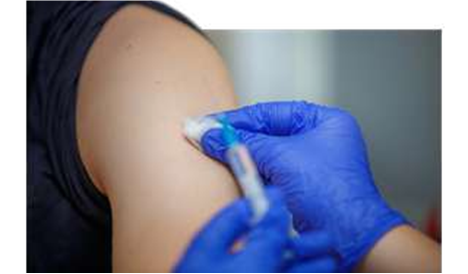
The correct answer is choice C. Allergy to gelatin is a contraindication for the inactivated influenza vaccine because gelatin is one of the ingredients in the vaccine. People with severe, life-threatening allergies to any ingredient in a flu vaccine (other than egg proteins) should not get that vaccine.
Choice A is wrong because pregnancy is not a contraindication for the inactivated influenza vaccine. In fact, pregnant people are recommended to get a flu shot because they are at higher risk of developing serious flu complications.
Choice B is wrong because immunosuppression is not a contraindication for the inactivated influenza vaccine. People with weakened immune systems can get a flu shot, but they should avoid the nasal spray flu vaccine which contains live viruses.
Choice D is wrong because moderate illness with fever is not a contraindication for the inactivated influenza vaccine. People who are moderately ill can still get a flu shot, but they should wait until they recover if they have a severe illness.
A nurse is caring for a client who is postpartum and asks the nurse why her newborn received a vitamin K injection.
The nurse should explain that the injection is administered in order to prevent which of the following complications in the newborn?
A. Sepsis.
Choice A is wrong because sepsis is not caused by vitamin K deficiency, but by bacterial infection.
B. Tachypnea.
Choice B is wrong because tachypnea is not caused by vitamin K deficiency, but by respiratory distress or other conditions.
C. Bleeding.
The nurse should explain that the injection is administered in order to prevent vitamin K deficiency bleeding (VKDB) in the newborn. Vitamin K is needed for blood clotting, but newborn babies have very low levels of vitamin K in their bodies at birth because only small amounts of the vitamin pass through the placenta and breast milk. VKDB can cause life-threatening bleeding in various parts of the body, such as the brain, intestines, or skin. VKDB can be classified into early-onset, classic, or late- onset depending on the time of presentation after birth. The most effective way to prevent VKDB is to give a single intramuscular dose of 0.5 to 1 mg of vitamin K to all newborn infants within 6 hours of birth.
D. Jaundice.
Choice D is wrong because jaundice is not caused by vitamin K deficiency, but by high levels of bilirubin in the blood.
Full Explanation
The nurse should explain that the injection is administered in order to prevent vitamin K deficiency bleeding (VKDB) in the newborn. Vitamin K is needed for blood clotting, but newborn babies have very low levels of vitamin K in their bodies at birth because only small amounts of the vitamin pass through the placenta and breast milk. VKDB can cause life-threatening bleeding in various parts of the body, such as the brain, intestines, or skin. VKDB can be classified into early-onset, classic, or late- onset depending on the time of presentation after birth. The most effective way to prevent VKDB is to give a single intramuscular dose of 0.5 to 1 mg of vitamin K to all newborn infants within 6 hours of birth.
Choice A is wrong because sepsis is not caused by vitamin K deficiency, but by bacterial infection.
Choice B is wrong because tachypnea is not caused by vitamin K deficiency, but by respiratory distress or other conditions.
Choice D is wrong because jaundice is not caused by vitamin K deficiency, but by high levels of bilirubin in the blood.
A nurse is collecting data from a client who is recovering from a recent stroke.
Which of the following findings should indicate to the nurse the need for a referral to a speech-language pathologist?
A. Coughing while eating.
Coughing while eating after a stroke may be caused by dysphagia, a swallowing disorder that can lead to aspiration, pneumonia and infection. A speech-language pathologist can assess and treat dysphagia and help the client improve their swallowing function.
B. Fine motor tremors.
Choice B is wrong because fine motor tremors are not related to speech or language problems. They may be caused by damage to the cerebellum or basal ganglia, parts of the brain that control movement and coordination.
C. Facial flushing.
Choice C is wrong because facial flushing is not related to speech or language problems. It may be caused by high blood pressure, fever, anxiety or other conditions.
D. Urinary incontinence.
Choice D is wrong because urinary incontinence is not related to speech or language problems. It may be caused by damage to the spinal cord, bladder, pelvic floor muscles or nerves that control urination.
Full Explanation
Coughing while eating after a stroke may be caused by dysphagia, a swallowing disorder that can lead to aspiration, pneumonia and infection. A speech-language pathologist can assess and treat dysphagia and help the client improve their swallowing function.
Choice B is wrong because fine motor tremors are not related to speech or language problems.
They may be caused by damage to the cerebellum or basal ganglia, parts of the brain that control movement and coordination.
Choice C is wrong because facial flushing is not related to speech or language problems.
It may be caused by high blood pressure, fever, anxiety or other conditions.
Choice D is wrong because urinary incontinence is not related to speech or language problems.
It may be caused by damage to the spinal cord, bladder, pelvic floor muscles or nerves that control urination.