
Nursing practice questions with comprehensive rationales
NurseDive Free Nursing Practice Question
A nurse is calculating a client's body mass index (BMI). Which of the following information does the nurse require?
A. The client's waist circumference
Waist circumference is useful for assessing abdominal obesity but is not the primary factor in calculating BMI.
B. The client's height
BMI is calculated using the client's height and weight to estimate body fat and assess potential health risks associated with weight.
C. The client's daily calorie intake
Daily calorie intake is relevant for dietary assessment but is not used in the calculation of BMI.
D. The client's skinfold thickness
Skinfold thickness measurement is a method for assessing body fat percentage but is not used in the standard BMI calculation.
This question is an excerpt from Nurse Dive's nursing test bank - LPN ATI Fundamental Proctored Exam - Paredes. Take the full exam now
Full Explanation
A. Waist circumference is useful for assessing abdominal obesity but is not the primary factor in calculating BMI.
B. BMI is calculated using the client's height and weight to estimate body fat and assess potential health risks associated with weight.
C. Daily calorie intake is relevant for dietary assessment but is not used in the calculation of BMI.
D. Skinfold thickness measurement is a method for assessing body fat percentage but is not used in the standard BMI calculation.
Similar Questions
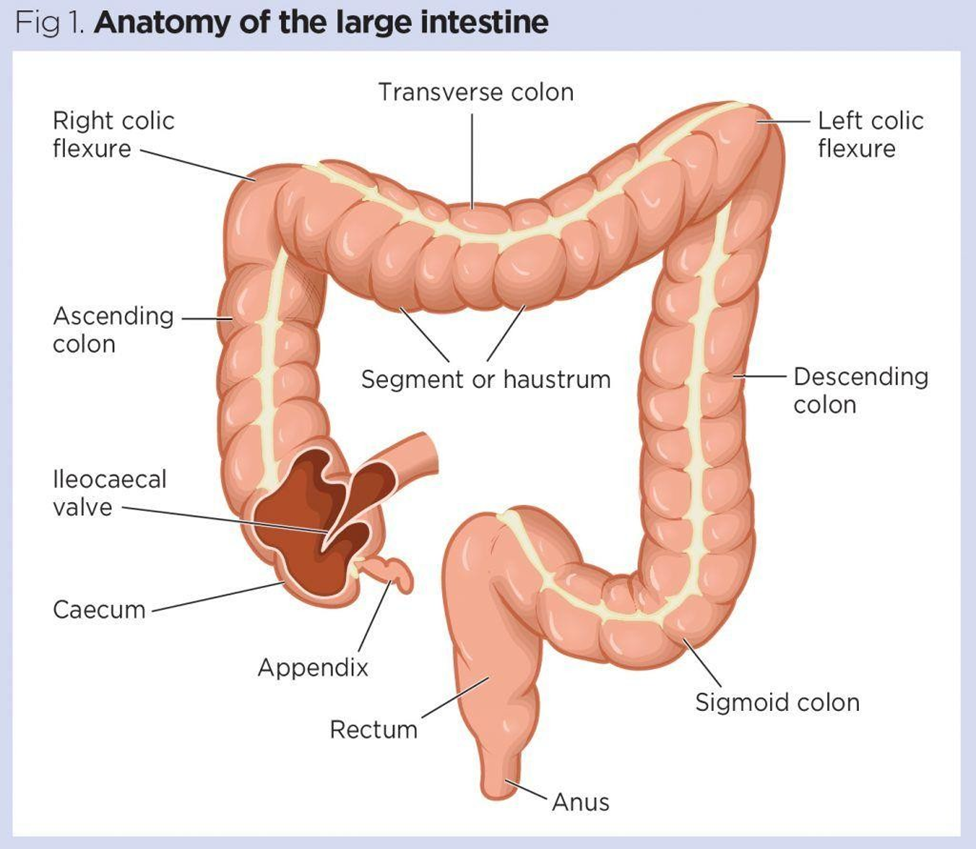
The large intestine includes which of the following:
A. Descending colon
The descending colon is a part of the large intestine, specifically the section that runs downward on the left side of the abdomen.
B. Pancreas
The pancreas is a gland located behind the stomach that plays a role in digestion by secreting enzymes, but it is not a part of the large intestine.
C. Ureter
The ureter is a tube that carries urine from the kidneys to the bladder, not part of the large intestine.
D. Pancreas
The pancreas was listed twice; it is not part of the large intestine but an organ of the digestive system.
Full Explanation
A. The descending colon is a part of the large intestine, specifically the section that runs downward on the left side of the abdomen.
B. The pancreas is a gland located behind the stomach that plays a role in digestion by secreting enzymes, but it is not a part of the large intestine.
C. The ureter is a tube that carries urine from the kidneys to the bladder, not part of the large intestine.
D. The pancreas was listed twice; it is not part of the large intestine but an organ of the digestive system.
A nurse is reinforcing teaching about a high-fiber diet with a client who has constipation. Which of the following foods should the nurse include as sources of fiber? (Select all that apply.)
A. Peanut butter
Peanut butter does contain some fiber but typically in lesser amounts compared to other sources like whole grains or fruits.
B. Kidney beans
Kidney beans are excellent sources of fiber, aiding in digestive health and preventing constipation.
C. Whole wheat bread
Whole wheat bread, particularly if it's whole grain, is a good source of dietary fiber beneficial for relieving constipation.
D. Lean turkey
Lean turkey is a protein source and doesn’t contain significant amounts of fiber.
E. Strawberries
Strawberries are high in fiber and can aid in improving bowel movements due to their fiber content.
Full Explanation
A. Peanut butter does contain some fiber but typically in lesser amounts compared to other sources like whole grains or fruits.
B. Kidney beans are excellent sources of fiber, aiding in digestive health and preventing constipation.
C. Whole wheat bread, particularly if it's whole grain, is a good source of dietary fiber beneficial for relieving constipation.
D. Lean turkey is a protein source and doesn’t contain significant amounts of fiber.
E. Strawberries are high in fiber and can aid in improving bowel movements due to their fiber content.
A nurse is collecting data from a client who has an inadequate dietary intake of vitamin C. Which of the following findings should the nurse expect?
A. Brittle hair
Brittle hair is more commonly associated with nutritional deficiencies such as protein or biotin, not specifically with vitamin C deficiency.
B. Constipation
Constipation is not typically a direct symptom of vitamin C deficiency.
C. Bleeding gums
Vitamin C deficiency often leads to scurvy, a condition characterized by bleeding gums, easy bruising, and weakness.
D. Memory loss
Memory loss is not a common symptom of vitamin C deficiency.
Full Explanation
A. Brittle hair is more commonly associated with nutritional deficiencies such as protein or biotin, not specifically with vitamin C deficiency.
B. Constipation is not typically a direct symptom of vitamin C deficiency.
C. Vitamin C deficiency often leads to scurvy, a condition characterized by bleeding gums, easy bruising, and weakness.
D. Memory loss is not a common symptom of vitamin C deficiency.