
Nursing practice questions with comprehensive rationales
NurseDive Free Nursing Practice Question
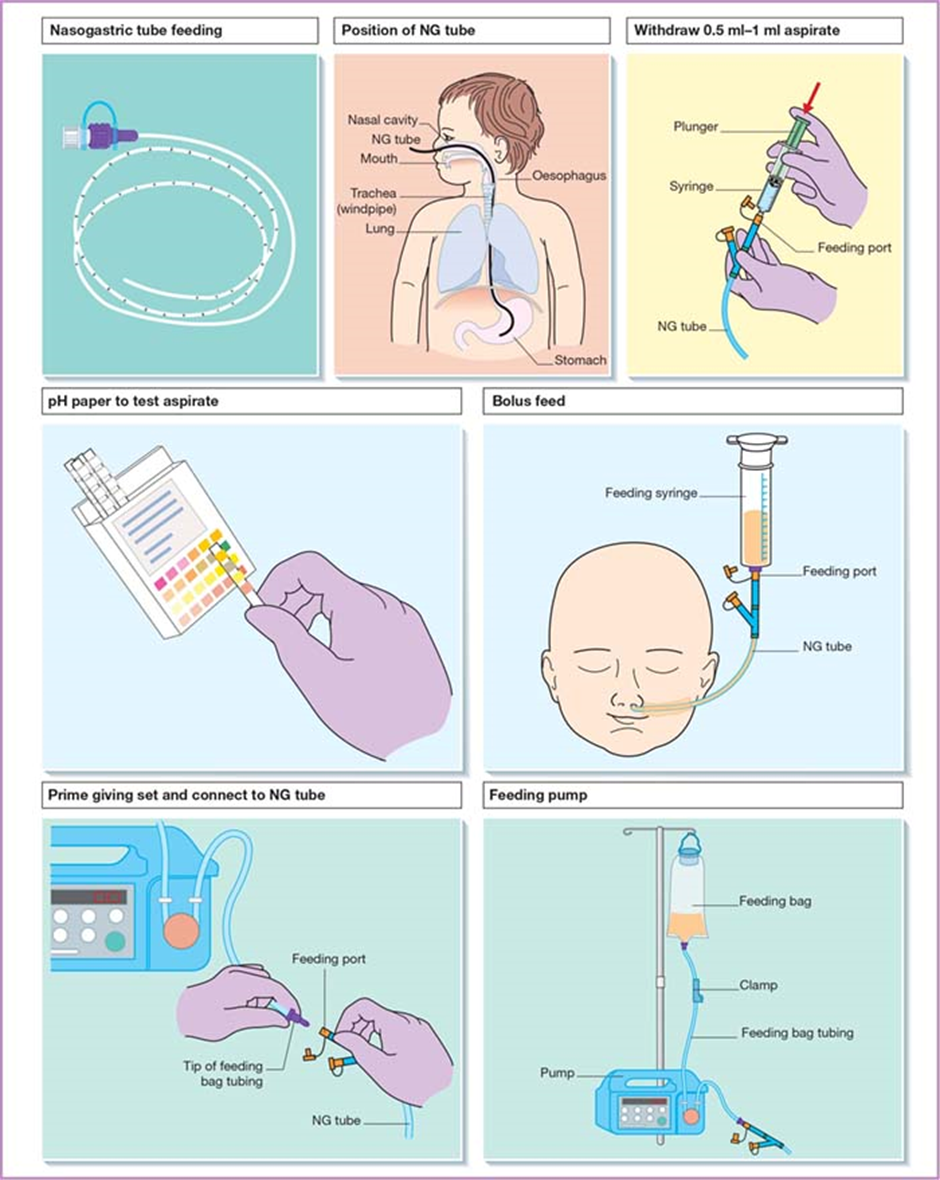
A nurse is caring for a client in a long-term care facility who is receiving enteral feedings via an NG tube. Which of the following actions should the nurse take prior to administering the tube feeding?
A. Assist the client to low Fowler's position.
Assist the client to low Fowler's position: Placing the client in a semi-upright or low Fowler's position during and after the feeding helps prevent aspiration and facilitates digestion. This position reduces the risk of regurgitation and reflux.
B. Warm the feeding solution to body temperature.
Warm the feeding solution to body temperature: Ensuring the feeding solution is at room temperature or slightly warmer can enhance the client's comfort and reduce the risk of cramping or discomfort caused by cold fluids.
C. Discard any residual gastric contents.
Discard any residual gastric contents: Before initiating a new feeding, it's essential to check and discard any residual gastric contents from the previous feeding to prevent contamination, ensure accurate measurement, and minimize the risk of bacterial growth.
D. Test the pH of gastric aspirate.
Test the pH of gastric aspirate: Checking the pH of gastric aspirate is an important step to confirm the proper placement of the NG tube in the stomach. Gastric pH is typically acidic (pH less than 5), indicating the correct placement of the tube in the stomach rather than the respiratory tract, where the pH is higher (more alkaline).
This question is an excerpt from Nurse Dive's nursing test bank - ATI LPN Proctored Exam. Take the full exam now
Full Explanation
A. Assist the client to low Fowler's position:
Placing the client in a semi-upright or low Fowler's position during and after the feeding helps prevent aspiration and facilitates digestion. This position reduces the risk of regurgitation and reflux.
B. Warm the feeding solution to body temperature:
Ensuring the feeding solution is at room temperature or slightly warmer can enhance the client's comfort and reduce the risk of cramping or discomfort caused by cold fluids.
C. Discard any residual gastric contents:
Before initiating a new feeding, it's essential to check and discard any residual gastric contents from the previous feeding to prevent contamination, ensure accurate measurement, and minimize the risk of bacterial growth.
D. Test the pH of gastric aspirate:
Checking the pH of gastric aspirate is an important step to confirm the proper placement of the NG tube in the stomach. Gastric pH is typically acidic (pH less than 5), indicating the correct placement of the tube in the stomach rather than the respiratory tract, where the pH is higher (more alkaline).
Similar Questions
A nurse collecting data from a client who has dehydration. Which of the following findings should the nurse expect?
A. Moist skin
Moist skin: Dehydration often leads to dry skin rather than moist skin. When the body is dehydrated, it conserves water, and one of the signs can be dry, less elastic skin.
B. High blood pressure
High blood pressure: Dehydration tends to result in lower blood volume, which can lead to lower blood pressure rather than high blood pressure. However, severe dehydration may cause a drop in blood pressure.
C. Dark-colored urine
Dark-colored urine: Dehydration commonly causes urine to become more concentrated, leading to darker urine. This is due to the kidneys conserving water and producing less urine.
D. Distended neck veins
Distended neck veins: Dehydration is more likely to result in decreased blood volume and lower venous return, which would not typically lead to distended neck veins. Distended neck veins are more commonly associated with conditions like heart failure.
Full Explanation
A. Moist skin: Dehydration often leads to dry skin rather than moist skin. When the body is dehydrated, it conserves water, and one of the signs can be dry, less elastic skin.
B. High blood pressure: Dehydration tends to result in lower blood volume, which can lead to lower blood pressure rather than high blood pressure. However, severe dehydration may cause a drop in blood pressure.
C. Dark-colored urine: Dehydration commonly causes urine to become more concentrated, leading to darker urine. This is due to the kidneys conserving water and producing less urine.
D. Distended neck veins: Dehydration is more likely to result in decreased blood volume and lower venous return, which would not typically lead to distended neck veins. Distended neck veins are more commonly associated with conditions like heart failure.
A nurse is caring for a client who has gestational diabetes and reports feeling shaky, sweaty, and having blurred vision. The client's blood glucose level is 48 mg/dL. Which of the following foods should the nurse give to the client? (Select all that apply).
A. 1 tbsp honey
1 tbsp honey: Honey is a quick source of glucose and is an appropriate choice to raise blood sugar rapidly during hypoglycemia.
B. 5 hard candies
5 hard candies: Hard candies containing sugar can provide a quick source of glucose and are suitable for treating hypoglycemia.
C. 240 mL regular soda
240 mL regular soda might provide 20 to 30 grams of carbohydrates, which could be too much and may lead to a rebound hypoglycemia after the initial correction of blood glucose levels.
D. 120 mL unsweetened fruit juice
Unsweetened fruit juice provides a quick source of glucose, which is essential for rapidly raising blood sugar levels in a hypoglycemic patient. The sugar in the juice is readily absorbed into the bloodstream, helping to counteract the effects of low blood sugar. It's important to choose unsweetened juice to avoid a sudden spike in blood sugar followed by another drop.
E. 120 mL milk
120 mL milk: Milk contains natural sugars and can contribute to raising blood glucose levels. However, it may not be as rapid as some other options.
Full Explanation
A. 1 tbsp honey: Honey is a quick source of glucose and is an appropriate choice to raise blood sugar rapidly during hypoglycemia.
B. 5 hard candies: Hard candies containing sugar can provide a quick source of glucose and are suitable for treating hypoglycemia.
C. 240 mL regular soda might provide 20 to 30 grams of carbohydrates, which could be too much and may lead to a rebound hypoglycemia after the initial correction of blood glucose levels.
D. 120 mL unsweetened fruit juice: Unsweetened fruit juice provides a quick source of glucose, which is essential for rapidly raising blood sugar levels in a hypoglycemic patient. The sugar in the juice is readily absorbed into the bloodstream, helping to counteract the effects of low blood sugar. It's important to choose unsweetened juice to avoid a sudden spike in blood sugar followed by another drop.
E. 120 mL milk: Milk contains lactose, a natural sugar, but it also contains protein and fat, which can slow down the absorption of sugar into the bloodstream. Therefore, it may not be as effective in rapidly raising blood sugar levels during an episode of hypoglycemia.
A nurse is reinforcing discharge teaching with the parent of a child who has a new diagnosis of diabetes mellitus. Which of the following statements by the parent requires a clarification of the teaching?
A. "Sweating can occur with hypoglycemia."
"Sweating can occur with hypoglycemia." Sweating is one of the common symptoms of hypoglycemia. When blood glucose levels drop too low, the body releases stress hormones, including adrenaline, which can lead to sweating.
B. "My son might complain of feeling shaky when he has a low blood glucose level."
"My son might complain of feeling shaky when he has a low blood glucose level." Shaking or feeling shaky is a common symptom of hypoglycemia. It results from the release of stress hormones in response to low blood glucose.
C. "My son might have nausea and vomiting with hypoglycemia."
"My son might have nausea and vomiting with hypoglycemia."Nausea and vomiting are more commonly associated with hyperglycemia, especially in diabetic ketoacidosis (DKA). They are not typical signs of hypoglycemia.
D. "The onset of low blood glucose usually occurs rapidly."
"The onset of low blood glucose usually occurs rapidly."Hypoglycemia often has a rapid onset, especially with missed meals or increased activity.
Full Explanation
A. "Sweating can occur with hypoglycemia."
Explanation: This statement is correct. Sweating is one of the common symptoms of hypoglycemia. When blood glucose levels drop too low, the body releases stress hormones, including adrenaline, which can lead to sweating.
B. "My son might complain of feeling shaky when he has a low blood glucose level."
Explanation: This statement is correct. Shaking or feeling shaky is a common symptom of hypoglycemia. It results from the release of stress hormones in response to low blood glucose.
C. "My son might have nausea and vomiting with hypoglycemia."Nausea and vomiting are more commonly associated with hyperglycemia, especially in diabetic ketoacidosis (DKA). They are not typical signs of hypoglycemia.
D. "The onset of low blood glucose usually occurs rapidly."Hypoglycemia often has a rapid onset, especially with missed meals or increased activity.