
Nursing practice questions with comprehensive rationales
NurseDive Free Nursing Practice Question
A nurse is caring for a client in the emergency department who experienced a full-thickness burn injury to the lower torso 1 hr ago.
Which of the following findings should the nurse expect?
A. Urinary diuresis.
Choice A, Urinary diuresis, is not the correct answer because it refers to increased production of urine and is not a common symptom of a full-thickness burn injury.
B. Hypotension.
A full-thickness burn injury can result in fluid loss and low blood volume (hypovolemia), which can lead to hypotension.
C. Decreased respiratory rate.
Choice C, Decreased respiratory rate, is not the correct answer because it refers to a decrease in the number of breaths per minute and is not a common symptom of a full-thickness burn injury.
D. Bradycardia.
Choice D, Bradycardia, is not the correct answer because it refers to a slow heart rate and is not a common symptom of a full-thickness burn injury.
This question is an excerpt from Nurse Dive's nursing test bank - ATI Adult Medical Surgical 2019 Proctored Exam. Take the full exam now
Full Explanation
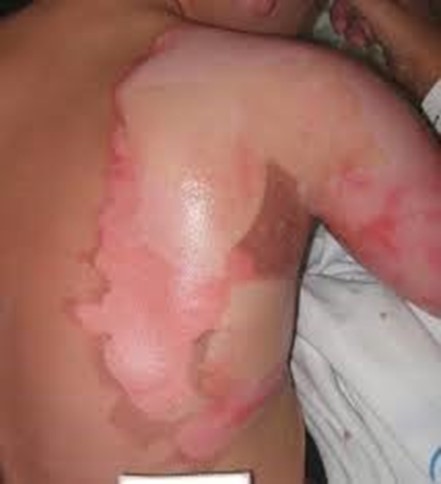
A full-thickness burn injury can result in fluid loss and low blood volume (hypovolemia), which can lead to hypotension.
Choice A, Urinary diuresis, is not the correct answer because it refers to increased production of urine and is not a common symptom of a full-thickness burn injury.
Choice C, Decreased respiratory rate, is not the correct answer because it refers to a decrease in the number of breaths per minute and is not a common symptom of a full-thickness burn injury.
Choice D, Bradycardia, is not the correct answer because it refers to a slow heart rate and is not a common symptom of a full-thickness burn injury.
Similar Questions
A nurse is completing discharge teaching with a client who has a peripherally inserted central catheter (PICC) line in the left arm.
Which of the following instructions should the nurse include in the teaching?
A. Clean the insertion site using 20 mL of hydrogen peroxide.
Choice A, Clean the insertion site using 20 mL of hydrogen peroxide, is not the correct answer because hydrogen peroxide should not be used to clean the insertion site of a PICC line.
B. Change the catheter dressing daily.
Choice B, Changing the catheter dressing daily, is not the correct answer because the catheter dressing should be changed every 3 to 7 days or as directed by a healthcare provider.
C. Use a 10-mL syringe to flush the line.
A 10-mL syringe is the minimum size that should be used to flush a PICC line to prevent damage to the catheter.
D. Do not elevate the arm above the level of the heart.
Choice D, Do not elevate the arm above the level of the heart, is not the correct answer because there is no restriction on elevating the arm above the level of the heart with a PICC line.
Full Explanation
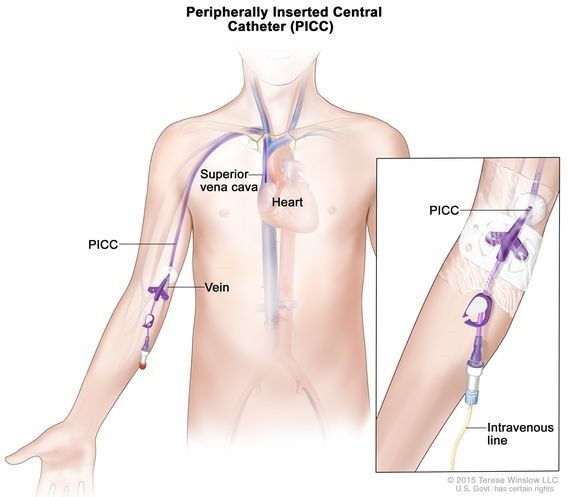
A 10-mL syringe is the minimum size that should be used to flush a PICC line to prevent damage to the catheter.
Choice A, Clean the insertion site using 20 mL of hydrogen peroxide, is not the correct answer because hydrogen peroxide should not be used to clean the insertion site of a PICC line.
Choice B, Changing the catheter dressing daily, is not the correct answer because the catheter dressing should be changed every 3 to 7 days or as directed by a healthcare provider.
Choice D, Do not elevate the arm above the level of the heart, is not the correct answer because there is no restriction on elevating the arm above the level of the heart with a PICC line.
A nurse is monitoring a client's heart rhythm following the insertion of a permanent pacemaker.
Which of the following images should the nurse expect?
A. A regular sinus rhythm.
Choice A, A regular sinus rhythm, is not the correct answer because a regular sinus rhythm is a normal heart rhythm that originates from the sinoatrial (SA) node and does not involve a pacemaker.
B. A chaotic, irregular rhythm.
Choice B, A chaotic, irregular rhythm, is not the correct answer because a pacemaker is designed to regulate the heartbeat and prevent chaotic or irregular rhythms.
C. Absence of any electrical activity.
Choice C, the Absence of any electrical activity, is not the correct answer because a pacemaker sends electrical signals to the heart to regulate its activity.
D. A series of spikes followed by a QRS complex.
A pacemaker sends electrical signals to the heart to regulate the heartbeat. On an electrocardiogram (ECG), these signals appear as small spikes followed by a QRS complex, which represents the contraction of the ventricles.
Full Explanation
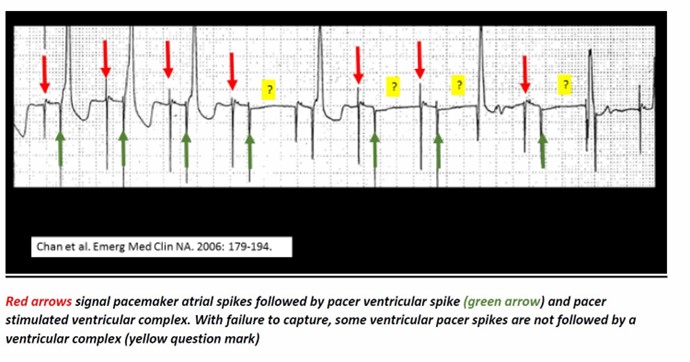
A pacemaker sends electrical signals to the heart to regulate the heartbeat.
On an electrocardiogram (ECG), these signals appear as small spikes followed by a QRS complex, which represents the contraction of the ventricles.
Choice A, A regular sinus rhythm, is not the correct answer because a regular sinus rhythm is a normal heart rhythm that originates from the sinoatrial (SA) node and does not involve a pacemaker.
Choice B, A chaotic, irregular rhythm, is not the correct answer because a pacemaker is designed to regulate the heartbeat and prevent chaotic or irregular rhythms.
Choice C, the Absence of any electrical activity, is not the correct answer because a pacemaker sends electrical signals to the heart to regulate its activity.
A nurse is teaching a client who has endometriosis about the adverse effects of leuprolide.
Which of the following manifestations should the nurse include in the teaching?
A. Pallor.
Choice A, Pallor, is not the correct answer because pallor (pale skin) is not a common side effect of leuprolide.
B. Increased appetite.
Choice B, Increased appetite, is not the correct answer because increased appetite is not a common side effect of leuprolide.
C. Bone loss.
Leuprolide can cause bone loss, which can lead to osteoporosis and an increased risk of bone fractures.
D. Hypoglycemia.
Choice D, Hypoglycemia, is not the correct answer because hypoglycemia (low blood sugar) is not a common side effect of leuprolide.
Full Explanation
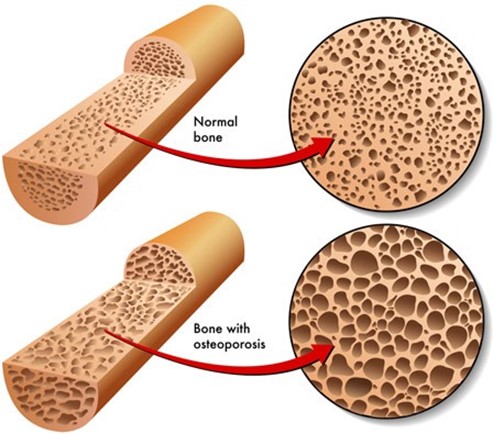
Leuprolide can cause bone loss, which can lead to osteoporosis and an increased risk of bone fractures.
Choice A, Pallor, is not the correct answer because pallor (pale skin) is not a common side effect of leuprolide.
Choice B, Increased appetite, is not the correct answer because increased appetite is not a common side effect of leuprolide.
Choice D, Hypoglycemia, is not the correct answer because hypoglycemia (low blood sugar) is not a common side effect of leuprolide.