
Nursing practice questions with comprehensive rationales
NurseDive Free Nursing Practice Question
A nurse is caring for a client who has an epidural hematoma. Which of the following manifestations should the nurse expect?
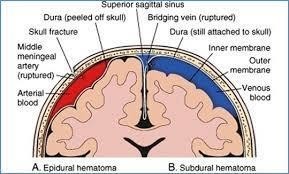
A. Cognitive perception that decreases over several months postinjury
Incorrect. Cognitive perception that decreases over several months postinjury is more characteristic of a subdural hematoma.
B. A change in the level of consciousness that develops over 48 hr
Incorrect. A change in the level of consciousness that develops over 48 hr is more characteristic of an intracerebral hemorrhage.
C. Neurologic deficits that increase up to 2 weeks postinjury
Incorrect. Neurologic deficits that increase up to 2 weeks postinjury is more characteristic of a subacute subdural hematoma.
D. A lucid period followed by decreasing level of consciousness
Correct. An epidural hematoma is caused by bleeding between the dura mater and the skull, usually from a ruptured artery. The bleeding can cause increased intracranial pressure, which can compress the brain and lead to a loss of consciousness. However, there may be a lucid periodbetween the initial injury and the onset of symptoms, when the client appears alert and oriented.
This question is an excerpt from Nurse Dive's nursing test bank - Ati med surg adult care 2 proctored exam. Take the full exam now
Similar Questions
A nurse is caring for a client who has had a stroke involving the right hemisphere. Which of the following alterations in function should the nurse expect?
A. Inability to recognize his family members
Correct. A stroke involving the right hemisphere can impair the ability to recognize faces, a condition known as prosopagnosia. Choice C is also correct.
B. Difficulty reading
Incorrect. Difficulty reading is more likely to occur with a stroke involving the left hemisphere, which is responsible for language processing.
C. Right hemiparesis
Correct. A stroke involving the right hemisphere can cause weakness or paralysis of the left side of the body, a condition known as right hemiparesis.
D. Aphasia
Incorrect. Aphasia, or difficulty with speech and language, is more likely to occur with a stroke involving the left hemisphere, which is responsible for language production and comprehension.
A client has a history of atrial fibrillation. Which of the following is the nurse likely to see on the clients medication history to prevent stroke?
A. antihyperlipidemics
Antihyperlipidemics are used to lower cholesterol levels and prevent atherosclerosis, which can lead to coronary artery disease and myocardial infarction. They do not directly prevent stroke, which is caused by a clot or hemorrhage in the brain.
B. oral anticoagulants
Oral anticoagulants are used to prevent blood clots from forming or growing larger, which can cause stroke in patients with atrial fibrillation. Atrial fibrillation is a type of irregular heartbeatthat increases the risk of stroke because it can cause blood to pool and clot in the atria, the upper chambers of the heart.
C. a patch for smoking cessation
A patch for smoking cessation is used to help smokers quit by delivering nicotine through the skin. Smoking is a risk factor for stroke, but quitting smoking does not require a prescriptionmedication.
D. insulin
Insulin is used to treat diabetes mellitus, which is a condition where the body does not produce enough insulin or use it properly. Insulin helps lower blood glucose levels and prevent complications such as kidney damage and nerve damage. Diabetes is a risk factor for stroke, but insulin does not directly prevent stroke.
A client is extremely drowsy, minimally responsive, and has a difficult time following commands. With vigorous stimulation the client awakens but quickly falls back asleep. What level of consciousness does this describe?
A. lethargy
Lethargy is a state of reduced alertness and awareness, where the client is sleepy but can be aroused easily and respond appropriately.
B. obtunded
Obtunded is a state of decreased alertness and responsiveness, where the client is difficult to arouse and has limited interaction with the environment.
C. stuporous
Stuporous is a state of deep unconsciousness, where the client is unresponsive to most stimuli and requires painful stimulation to elicit a response.
D. confusion
Confusion is a state of impaired orientation and memory, where the client is awake but has difficulty understanding and following commands.