
Nursing practice questions with comprehensive rationales
NurseDive Free Nursing Practice Question
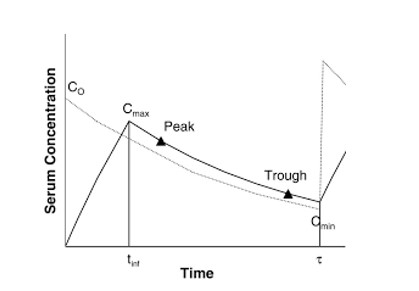
A nurse is caring for a client who has an infection and a prescription for gentamicin Intermittent IV bolus every 8 hr. A peak and trough are required with the next dose. Which of the following actions should the nurse take to obtain an accurate gentamicin serum level?
A. Draw a peak level 90 min prior to administering the medication and a trough level 90 min after the dose.
B. Draw a trough level immediately prior to administering the medication and a peak level 30 min after the
To obtain an accurate gentamicin serum level, the nurse should draw a trough level immediately before administering the next dose of medication and a peak level 30 minutes after the dose has been administered. The trough level measures the lowest concentration of the medication in the blood, while the peak level measures the highest concentration.
C. dose.
D. Draw a trough level at 0900 and a peak level at 2100.
This question is an excerpt from Nurse Dive's nursing test bank - ATI Custom Pharmacology Proctored Exam 2. Take the full exam now
Full Explanation
To obtain an accurate gentamicin serum level, the nurse should draw a trough level immediately before administering the next dose of medication and a peak level 30 minutes after the dose has been administered. The trough level measures the lowest concentration of the medication in the blood, while the peak level measures the highest concentration.
Similar Questions
Which symptoms will be most important for the nurse to assess for early signs of respiratory distress in the patient who has been given a neuromuscular-blocking agent?
A. Dyspnea, increased respiratory rate, and cyanosis.
Dyspnea (difficulty breathing), an increased respiratory rate, and cyanosis (bluish discolouration of the skin and mucous membranes due to lack of oxygen) are early signs of respiratory distress that the nurse should assess for in a patient who has been given a neuromuscular-blocking agent. These medications can cause respiratory depression and compromise the patient’s ability to breathe effectively.
B. Restlessness, anxiety, and lethargy.
C. Nasal flaring and retraction of intercostal muscles.
D. Pallor, stridor, and diaphoresis.
Full Explanation
Dyspnea (difficulty breathing), an increased respiratory rate, and cyanosis (bluish discolouration of the skin and mucous membranes due to lack of oxygen) are early signs of respiratory distress that the nurse should assess for in a patient who has been given a neuromuscular-blocking agent. These medications can cause respiratory depression and compromise the patient’s ability to breathe effectively.
A nurse is caring for a client who is to start taking cyclosporine following a kidney transplant. The nurse should instruct the client that which of the following foods can have an adverse interaction with this medication?
A. Grapefruit juke
B. Pepperoni
C. Smoked salmon
D. Orange juice
Full Explanation
Cyclosporine is an immunosuppressant medication that is often used following organ transplant to prevent rejection. Grapefruit juice can increase the absorption of cyclosporine, leading to an increased risk of side effects and toxicity. Therefore, clients taking cyclosporine should be advised to avoid grapefruit and grapefruit juice while taking this medication. Pepperoni and smoked salmon do not have any known interactions with cyclosporine. Orange juice may also interact with cyclosporine, but not to the same extent as grapefruit juice. It is generally recommended that clients taking cyclosporine avoid drinking large amounts of orange juice and to inform their healthcare provider if they experience any adverse effects.
A nurse is reinforcing teaching with a client about using transdermal patches at home. Which of the following statements should the nurse identify as an indication that the client understands the teaching?
A. Use lotion and moisturizer before applying a new patch to either area.
B. Remove the old patch and apply a new one in the same location.
C. Press the patch securely in place on my forearm.
D. Clean and dry the area before applying the patch.
When using a transdermal patch, it is important to clean and dry the skin before applying the patch 1. This helps to ensure that the patch sticks properly to the skin. The nurse should identify this statement as an indication that the client understands the teaching about using transdermal patches at home.
Full Explanation
When using a transdermal patch, it is important to clean and dry the skin before applying the patch 1. This helps to ensure that the patch sticks properly to the skin. The nurse should identify this statement as an indication that the client understands the teaching about using transdermal patches at home.