
Nursing practice questions with comprehensive rationales
NurseDive Free Nursing Practice Question
A nurse is caring for a client who has diabetes insipidus and is receiving desmopressin by intermittent IV bolus. Which of the following manifestations should indicate to the nurse a therapeutic response to the medication?
A. Increase in serum glucose
Increase in serum glucose is incorrect. Desmopressin, which is a synthetic form of vasopressin, primarily affects water reabsorption in the kidneys and doesn't directly impact glucose levels. Therefore, an increase in serum glucose wouldn't be an expected therapeutic response to desmopressin for diabetes insipidus.
B. Decrease in blood pressure
Decrease in blood pressure is incorrect. Desmopressin is primarily used for its antidiuretic effect, concentrating urine by increasing water reabsorption in the kidneys. It typically doesn't have a significant impact on blood pressure. Therefore, a decrease in blood pressure wouldn't typically be an anticipated therapeutic response to desmopressin in this context.
C. Decrease in urine output
Decrease in urine output is correct. Desmopressin is a synthetic form of vasopressin (antidiuretic hormone) used to treat diabetes insipidus, a condition characterized by excessive urination and extreme thirst due to the inability to concentrate urine. The primary goal of desmopressin is to reduce urine output by increasing water reabsorption in the kidneys, thereby decreasing excessive urination. Therefore, a decrease in urine output would indicate a therapeutic response to the medication in this context.
D. Increase in WBC count
Increase in WBC count is incorrect. Desmopressin's action is centered on affecting kidney function by regulating water reabsorption and does not involve changes in white blood cell count. Consequently, an increase in WBC count wouldn't be an expected therapeutic response to desmopressin for diabetes insipidus.
This question is an excerpt from Nurse Dive's nursing test bank - RN Pharmacology 2019 Proctored Exam 5. Take the full exam now
Full Explanation
Choice A Reason:
Increase in serum glucose is incorrect. Desmopressin, which is a synthetic form of vasopressin, primarily affects water reabsorption in the kidneys and doesn't directly impact glucose levels. Therefore, an increase in serum glucose wouldn't be an expected therapeutic response to desmopressin for diabetes insipidus.
Choice B Reason:
Decrease in blood pressure is incorrect. Desmopressin is primarily used for its antidiuretic effect, concentrating urine by increasing water reabsorption in the kidneys. It typically doesn't have a significant impact on blood pressure. Therefore, a decrease in blood pressure wouldn't typically be an anticipated therapeutic response to desmopressin in this context.
Choice C Reason:
Decrease in urine output is correct. Desmopressin is a synthetic form of vasopressin (antidiuretic hormone) used to treat diabetes insipidus, a condition characterized by excessive urination and extreme thirst due to the inability to concentrate urine. The primary goal of desmopressin is to reduce urine output by increasing water reabsorption in the kidneys, thereby decreasing excessive urination. Therefore, a decrease in urine output would indicate a therapeutic response to the medication in this context.
Choice D Reason:
Increase in WBC count is incorrect. Desmopressin's action is centered on affecting kidney function by regulating water reabsorption and does not involve changes in white blood cell count. Consequently, an increase in WBC count wouldn't be an expected therapeutic response to desmopressin for diabetes insipidus.
Similar Questions
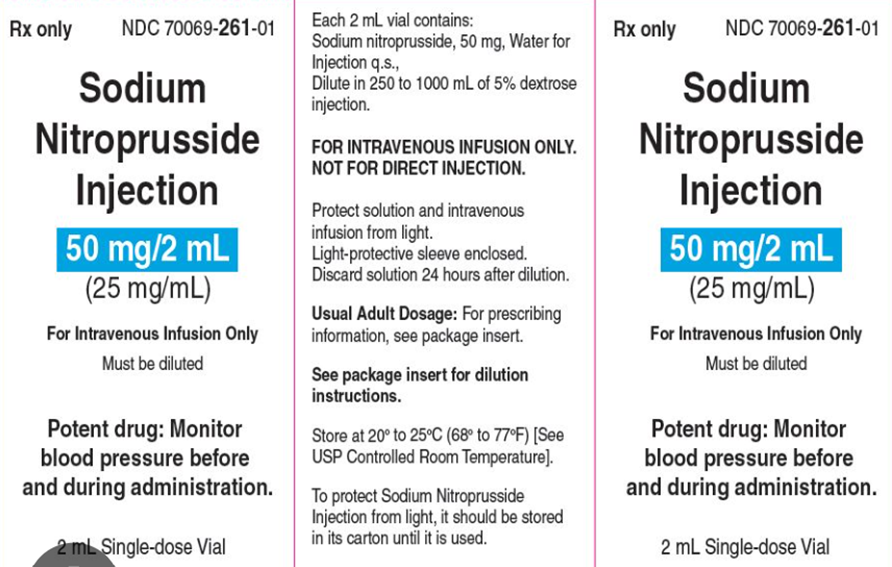
A nurse is preparing to titrate a continuous nitroprusside infusion for a client. The nurse should plan to titrate the infusion according to which of the following assessments?
A. Blood pressure
Blood pressure is correct. Nitroprusside is a medication used to lower blood pressure in conditions such as hypertensive emergencies. It's titrated based on blood pressure readings, with the goal of achieving the desired target blood pressure range as directed by the healthcare provider. The nurse would monitor the client's blood pressure closely and adjust the infusion rate accordingly to achieve the prescribed blood pressure parameters.
B. Stroke volume
Stroke volume is incorrect. While stroke volume (the amount of blood ejected by the heart with each contraction) is important in assessing heart function, it's not directly used to titrate a nitroprusside infusion. Nitroprusside primarily acts as a vasodilator to reduce blood pressure, rather than affecting stroke volume.
C. Cardiac output
Cardiac output is incorrect. Cardiac output (the volume of blood pumped by the heart per minute) is also a crucial measure of heart function, but adjusting a nitroprusside infusion based on cardiac output is not a common practice. Nitroprusside's primary action is to dilate blood vessels, impacting blood pressure regulation more directly than cardiac output.
D. Urine output
Urine output is incorrect. While urine output is an important indicator of renal function and overall fluid balance, it is not typically used as the main parameter for titrating nitroprusside. Nitroprusside's primary effect is on vasodilation and blood pressure control rather than directly impacting urine output.
Full Explanation
Choice A Reason:
Blood pressure is correct. Nitroprusside is a medication used to lower blood pressure in conditions such as hypertensive emergencies. It's titrated based on blood pressure readings, with the goal of achieving the desired target blood pressure range as directed by the healthcare provider. The nurse would monitor the client's blood pressure closely and adjust the infusion rate accordingly to achieve the prescribed blood pressure parameters.
Choice B Reason:
Stroke volume is incorrect. While stroke volume (the amount of blood ejected by the heart with each contraction) is important in assessing heart function, it's not directly used to titrate a nitroprusside infusion. Nitroprusside primarily acts as a vasodilator to reduce blood pressure, rather than affecting stroke volume.
Choice C Reason:
Cardiac output is incorrect. Cardiac output (the volume of blood pumped by the heart per minute) is also a crucial measure of heart function, but adjusting a nitroprusside infusion based on cardiac output is not a common practice. Nitroprusside's primary action is to dilate blood vessels, impacting blood pressure regulation more directly than cardiac output.
Choice D Reason:
Urine output is incorrect. While urine output is an important indicator of renal function and overall fluid balance, it is not typically used as the main parameter for titrating nitroprusside. Nitroprusside's primary effect is on vasodilation and blood pressure control rather than directly impacting urine output.
A nurse is caring for a client who is receiving a continuous IV infusion of magnesium sulfate for preterm labor. The nurse should discontinue the infusion and prepare to administer calcium gluconate if the client demonstrates which of the following findings? (Select all that apply.)
A. Absence of deep-tendon reflexes
Absence of deep-tendon reflexes is correct. The absence or decrease in deep-tendon reflexes can be a sign of magnesium toxicity. Magnesium sulfate, when given in excessive amounts or in the case of accumulation due to impaired renal function, can lead to muscle weakness, hyporeflexia, and in severe cases, loss of deep-tendon reflexes. Discontinuation of magnesium sulfate and administration of calcium gluconate is warranted in severe cases of magnesium toxicity to counteract its effects.
B. Report of chills
Report of chills is incorrect. Chills are non-specific symptoms and are not typically associated specifically with magnesium toxicity. They are less indicative of a need for calcium gluconate administration in the context of magnesium sulfate infusion.
C. Decreased level of consciousness
Decreased level of consciousness is correct. Severe magnesium toxicity can affect the central nervous system, leading to symptoms like confusion, drowsiness, and eventually decreased level of consciousness. In these cases, discontinuation of magnesium sulfate and administration of calcium gluconate is crucial to counteract the effects of excessive magnesium.
D. Systolic blood pressure 130 mm Hg
Systolic blood pressure of 130 mm Hg is incorrect. A systolic blood pressure of 130 mm Hg, by itself, is not an indicator of magnesium toxicity that necessitates the administration of calcium gluconate. Blood pressure within this range is not typically a cause for concern related to magnesium sulfate administration.
E. Urine output 80 mL in 4 hr.
Urine output of 80 mL in 4 hours is incorrect. While decreased urine output might indicate potential renal issues or compromised kidney function, it's not a specific indication for the administration of calcium gluconate in the context of magnesium sulfate infusion. It can signal the need for further assessment but is not a direct sign of magnesium toxicity requiring calcium gluconate administration.
Full Explanation
Choice A Reason:
Absence of deep-tendon reflexes is correct. The absence or decrease in deep-tendon reflexes can be a sign of magnesium toxicity. Magnesium sulfate, when given in excessive amounts or in the case of accumulation due to impaired renal function, can lead to muscle weakness, hyporeflexia, and in severe cases, loss of deep-tendon reflexes. Discontinuation of magnesium sulfate and administration of calcium gluconate is warranted in severe cases of magnesium toxicity to counteract its effects.
Choice B Reason:
Report of chills is incorrect. Chills are non-specific symptoms and are not typically associated specifically with magnesium toxicity. They are less indicative of a need for calcium gluconate administration in the context of magnesium sulfate infusion.
Choice C Reason:
Decreased level of consciousness is correct. Severe magnesium toxicity can affect the central nervous system, leading to symptoms like confusion, drowsiness, and eventually decreased level of consciousness. In these cases, discontinuation of magnesium sulfate and administration of calcium gluconate is crucial to counteract the effects of excessive magnesium.
Choice D Reason:
Systolic blood pressure of 130 mm Hg is incorrect. A systolic blood pressure of 130 mm Hg, by itself, is not an indicator of magnesium toxicity that necessitates the administration of calcium gluconate. Blood pressure within this range is not typically a cause for concern related to magnesium sulfate administration.
Choice E Reason:
Urine output of 80 mL in 4 hours is incorrect. While decreased urine output might indicate potential renal issues or compromised kidney function, it's not a specific indication for the administration of calcium gluconate in the context of magnesium sulfate infusion. It can signal the need for further assessment but is not a direct sign of magnesium toxicity requiring calcium gluconate administration.

A nurse is preparing to administer nitroglycerin topical ointment to a client. Which of the following actions should the nurse plan to take?
A. Measure the dosage of medication using the applicator paper.
Using the applicator paper is appropriate for measuring the dosage accurately, but simply measuring the dosage is not the only step; the medication needs to be spread over the specified area of the skin.
B. Spread the medication over a 12.7 cm (5 in) area of the client's skin.
Spread the medication over a 12.7 cm (5 in) area of the client's skin. Nitroglycerin ointment is typically measured using a specific paper or measuring tape provided with the medication to ensure accurate dosing. The ointment is spread thinly and evenly over a specific measured area of the skin, usually about 12.7 cm (5 inches) in length, to maintain consistent dosing.
C. Cover the medication on the client's skin with a sterile gauze pad.
Covering the medication with a sterile gauze pad is not typically done with nitroglycerin ointment. The ointment is meant to be absorbed through the skin, and covering it may interfere with its absorption.
D. Apply the medication to the same site for three consecutive days.
Nitroglycerin ointment is often applied to different sites to prevent skin irritation and tolerance from developing at one site. It's usually rotated to different clean areas of the skin to prevent skin irritation and tolerance buildup. Applying it to the same site for three consecutive days is not standard practice.
Full Explanation
Choice A Reason:
Using the applicator paper is appropriate for measuring the dosage accurately, but simply measuring the dosage is not the only step; the medication needs to be spread over the specified area of the skin.
Choice B Reason:
Spread the medication over a 12.7 cm (5 in) area of the client's skin. Nitroglycerin ointment is typically measured using a specific paper or measuring tape provided with the medication to ensure accurate dosing. The ointment is spread thinly and evenly over a specific measured area of the skin, usually about 12.7 cm (5 inches) in length, to maintain consistent dosing.
Choice C Reason:
Covering the medication with a sterile gauze pad is not typically done with nitroglycerin ointment. The ointment is meant to be absorbed through the skin, and covering it may interfere with its absorption.
Choice D Reason:
Nitroglycerin ointment is often applied to different sites to prevent skin irritation and tolerance from developing at one site. It's usually rotated to different clean areas of the skin to prevent skin irritation and tolerance buildup. Applying it to the same site for three consecutive days is not standard practice.