
Nursing practice questions with comprehensive rationales
NurseDive Free Nursing Practice Question
A nurse is caring for a client who has dysphagia. Which of the following actions should the nurse take?
A. Place the client in a semi-Fowler's position when eating.
Place the client in a semi-Fowler's position when eating. The semi-Fowler's position involves elevating the head of the bed to an angle of 30 to 45 degrees. This position helps prevent aspiration by facilitating proper swallowing and reducing the risk of food or liquid entering the airway.
B. Initiate calorie count of daily food intake.
Initiating a calorie count of daily food intake is not a specific action for dysphagia. Calorie counting is generally used for monitoring caloric intake in clients with specific dietary needs or conditions, but it is not directly related to dysphagia management. The focus for dysphagia management is on ensuring safe swallowing and preventing complications such as aspiration.
C. Instruct the client to keep their chin up when swallowing.
Instructing the client to keep their chin up when swallowing is not appropriate for dysphagia management. This action can actually increase the risk of aspiration. The proper technique for swallowing with dysphagia typically involves tucking the chin slightly down towards the chest to help close off the airway and direct the food or liquid down the esophagus.
D. Provide food in a thin liquid consistency.
Providing food in a thin liquid consistency is not appropriate for dysphagia unless specifically recommended by a healthcare professional. Dysphagia diets typically involve modifying the consistency of food and liquids based on the client's swallowing abilities and recommendations from a speech-language pathologist or dietitian. Different levels of texture modifications (such as pureed, minced, or mechanically soft) may be prescribed to ensure safe swallowing and reduce the risk of aspiration.
This question is an excerpt from Nurse Dive's nursing test bank - ATI RN Nutrition 2019 Proctored Exam. Take the full exam now
Full Explanation
Place the client in a semi-Fowler's position when eating. The semi-Fowler's position involves elevating the head of the bed to an angle of 30 to 45 degrees. This position helps prevent aspiration by facilitating proper swallowing and reducing the risk of food or liquid entering the airway.

Initiating a calorie count of daily food intake is not a specific action for dysphagia. Calorie counting is generally used for monitoring caloric intake in clients with specific dietary needs or conditions, but it is not directly related to dysphagia management. The focus for dysphagia management is on ensuring safe swallowing and preventing complications such as aspiration.
Instructing the client to keep their chin up when swallowing is not appropriate for dysphagia management. This action can actually increase the risk of aspiration. The proper technique for swallowing with dysphagia typically involves tucking the chin slightly down towards the chest to help close off the airway and direct the food or liquid down the esophagus.
Providing food in a thin liquid consistency is not appropriate for dysphagia unless specifically recommended by a healthcare professional. Dysphagia diets typically involve modifying the consistency of food and liquids based on the client's swallowing abilities and recommendations from a speech-language pathologist or dietitian. Different levels of texture modifications (such as pureed, minced, or mechanically soft) may be prescribed to ensure safe swallowing and reduce the risk of aspiration.
Similar Questions
A nurse is teaching a client who has Parkinson's disease and is prescribed a monoamine oxidase inhibitor. Which of the following instructions should the nurse include?
A. "Do not eat grapefruit while taking this medication."
Eating grapefruit is typically contraindicated with certain medications, but it is not specifically relevant to MAOIs or Parkinson's disease.
B. "Maintain a low-protein diet."
Maintaining a low-protein diet is not a standard recommendation for individuals taking MAOIs or Parkinson's disease unless specifically advised by the healthcare provider.
C. "Avoid aged cheeses while taking this medication."
The instruction that the nurse should include for a client with Parkinson's disease prescribed a monoamine oxidase inhibitor (MAOI) is as follows: "Avoid aged cheeses while taking this medication." MAOIs are a class of medications used to treat Parkinson's disease by increasing the levels of certain neurotransmitters in the brain. However, they can interact with certain foods and beverages, leading to potentially dangerous side effects. The interaction between MAOIs and aged cheeses is due to the presence of tyramine, a substance that can cause a sudden and dangerous increase in blood pressure known as a hypertensive crisis. Aged cheeses, such as cheddar, blue cheese, and feta, contain high levels of tyramine, and consuming them while taking an MAOI can lead to this hypertensive crisis.
D. "Reduce intake of high-calorie foods."
Reducing intake of high-calorie foods is a general recommendation for overall health and weight management but not specifically related to the use of MAOIs or Parkinson's disease.
Full Explanation
The instruction that the nurse should include for a client with Parkinson's disease prescribed a monoamine oxidase inhibitor (MAOI) is as follows: "Avoid aged cheeses while taking this medication."
MAOIs are a class of medications used to treat Parkinson's disease by increasing the levels of certain neurotransmitters in the brain. However, they can interact with certain foods and beverages, leading to potentially dangerous side effects.
The interaction between MAOIs and aged cheeses is due to the presence of tyramine, a substance that can cause a sudden and dangerous increase in blood pressure known as a hypertensive crisis. Aged cheeses, such as cheddar, blue cheese, and feta, contain high levels of tyramine, and consuming them while taking an MAOI can lead to this hypertensive crisis.
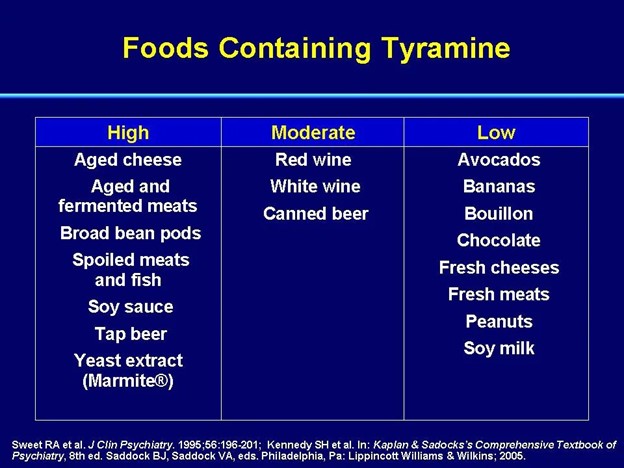
The other options listed in the question are not directly related to the use of MAOIs in Parkinson's disease:
Eating grapefruit is typically contraindicated with certain medications, but it is not specifically relevant to MAOIs or Parkinson's disease.
Maintaining a low-protein diet is not a standard recommendation for individuals taking MAOIs or Parkinson's disease unless specifically advised by the healthcare provider.
Reducing the intake of high-calorie foods is a general recommendation for overall health and weight management but is not specifically related to the use of MAOIs or Parkinson's disease.
A nurse is initiating continuous enteral feedings for a client who has a new gastrostomy tube. Which of the following actions should the nurse take?
A. Obtain the client's electrolyte levels every 4 hr.
While monitoring electrolyte levels is important, obtaining them every 4 hours is excessive for a client who is stable and just starting enteral feedings. Typically, electrolyte levels are monitored based on clinical condition and provider orders.
B. Keep the client's head elevated at 15° during feedings.
The client's head should be elevated at least 30 to 45 degrees during enteral feedings to reduce the risk of aspiration and improve gastric emptying. A position of only 15 degrees is insufficient for safety.
C. Measure the client's gastric residual every 12 hr.
Gastric residuals should be assessed more frequently, especially in the initial stages of enteral feeding. It is typically recommended to check gastric residuals every 4 to 6 hours to ensure proper gastric emptying and tolerance to the feedings.
D. Flush the client's tube with 30 mL of water every 4 hr.
Flushing the tube with water every 4 hours is a standard practice to maintain tube patency, prevent clogging, and ensure that the client receives adequate hydration.
Full Explanation
A. Obtain the client's electrolyte levels every 4 hr. While monitoring electrolyte levels is important, obtaining them every 4 hours is excessive for a client who is stable and just starting enteral feedings. Typically, electrolyte levels are monitored based on clinical condition and provider orders.
B. Keep the client's head elevated at 15° during feedings. The client's head should be elevated at least 30 to 45 degrees during enteral feedings to reduce the risk of aspiration and improve gastric emptying. A position of only 15 degrees is insufficient for safety.
C. Measure the client's gastric residual every 12 hr. Gastric residuals should be assessed more frequently, especially in the initial stages of enteral feeding. It is typically recommended to check gastric residuals every 4 to 6 hours to ensure proper gastric emptying and tolerance to the feedings.
D. Flush the client's tube with 30 mL of water every 4 hr. Flushing the tube with water every 4 hours is a standard practice to maintain tube patency, prevent clogging, and ensure that the client receives adequate hydration.
A nurse is planning dietary teaching for a client who adheres to a vegan diet. The nurse should identify that the client is at greatest risk for which of the following nutrient deficiencies?
A. Omega-3 fatty acids
Omega-3 fatty acids, specifically eicosapentaenoic acid (EPA) and docosahexaenoic acid (DHA), are mainly found in fatty fish. Since vegans avoid animal products, they may not consume adequate amounts of EPA and DHA. Plant-based sources of omega-3 fatty acids, such as flaxseeds, chia seeds, and walnuts, provide a different type of omega-3 called alpha-linolenic acid (ALA), which can be converted to EPA and DHA in the body to some extent. However, this conversion is not very efficient, and the amount of EPA and DHA obtained from plant-based sources may be insufficient to meet the body's needs. Therefore, vegan individuals are at greater risk of omega-3 fatty acid deficiency.
B. Magnesium
Magnesium, potassium, and vitamin A deficiencies are not specifically associated with a vegan diet. These nutrients can be obtained from various plant-based sources. Magnesium can be found in foods such as legumes, nuts, seeds, whole grains, and leafy green vegetables.
C. Potassium
Potassium is abundant in fruits, vegetables, legumes, and whole grains.
D. Vitamin A
Vitamin A can be obtained from plant-based sources like carrots, sweet potatoes, spinach, and other dark leafy greens. However, it is important for individuals following a vegan diet to ensure they consume a varied and balanced diet to meet their nutritional needs for these and other essential nutrients.
Full Explanation
Omega-3 fatty acids, specifically eicosapentaenoic acid (EPA) and docosahexaenoic acid (DHA), are mainly found in fatty fish. Since vegans avoid animal products, they may not consume adequate amounts of EPA and DHA. Plant-based sources of omega-3 fatty acids, such as flaxseeds, chia seeds, and walnuts, provide a different type of omega-3 called
alpha-linolenic acid (ALA), which can be converted to EPA and DHA in the body to some extent. However, this conversion is not very efficient, and the amount of EPA and DHA obtained from plant-based sources may be insufficient to meet the body's needs. Therefore, vegan individuals are at greater risk of omega-3 fatty acid deficiency.
Magnesium, potassium, and vitamin A deficiencies are not specifically associated with a vegan diet. These nutrients can be obtained from various plant-based sources. Magnesium can be found in foods such as legumes, nuts, seeds, whole grains, and leafy green vegetables.
Potassium is abundant in fruits, vegetables, legumes, and whole grains.
Vitamin A can be obtained from plant-based sources like carrots, sweet potatoes, spinach, and other dark leafy greens. However, it is important for individuals following a vegan diet to ensure they consume a varied and balanced diet to meet their nutritional needs for these and other essential nutrients.