
Nursing practice questions with comprehensive rationales
NurseDive Free Nursing Practice Question
A nurse is caring for a client who has heart failure and reports difficulty with limiting sodium in their diet. Which of the following recommendations should the nurse provide?
A. Consume more prepared frozen dinners to minimize cooking with salt.
Prepared frozen dinners are often high in sodium
B. Add salt when preparing a meal instead of at the table.
Adding salt when preparing a meal would increase sodium intake
C. Use imitation crab and lobster products for salads at home.
Imitation crab and lobster products can also be high in sodium.
D. Replace bottled salad dressing with homemade vinegar and oil dressing.
A client with heart failure should limit their sodium intake. Bottled salad dressings can be high in sodium, so replacing them with homemade vinegar and oil dressing can help reduce sodium intake
This question is an excerpt from Nurse Dive's nursing test bank - VATI PN Comprehensive Predictor 2020 Proctored Exam. Take the full exam now
Full Explanation
A client with heart failure should limit their sodium intake. Bottled salad dressings can be high in sodium, so replacing them with homemade vinegar and oil dressing can help reduce sodium intake.
The other options are not recommended for a client with heart failure who needs to limit their sodium intake.
a) Prepared frozen dinners are often high in sodium.
b) Adding salt when preparing a meal would increase sodium intake.
c) Imitation crab and lobster products (option can also be high in sodium.
Similar Questions
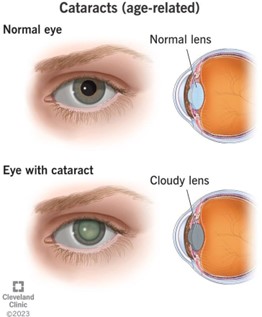
A nurse is assisting with the admission of an older adult client. Which of the following subjective findings suggests that the client may have cataracts?
A. Sudden dimmed vision
Sudden dimmed vision may be a symptom of other eye conditions.
B. Cloudy vision
Cloudy vision is a symptom of cataracts. Cataracts occur when the lens of the eye becomes cloudy, causing visual disturbances such as cloudy or blurry vision.
C. Intermitent flashes of light
Intermittent flashes of light may be a symptom of other eye conditions such as retinal detachment.
D. Pain in the eyes
Pain in the eyesis not a typical symptom of cataracts.
Full Explanation
Cloudy vision is a symptom of cataracts. Cataracts occur when the lens of the eye becomes cloudy, causing visual disturbances such as cloudy or blurry vision.The other options are not typical symptoms of cataracts.
a) Sudden dimmed vision may be a symptom of other eye conditions.
c) Intermitent flashes of light (option c) may be a symptom of other eye conditions such as retinal detachment.
d) Pain in the eyes (option d) is not a typical symptom of cataracts.
A nurse is caring for a client who has a new prescription for furosemide and asks the nurse about the purpose of the medication. The nurse states "This medication is a diuretic that removes excess fluid from your body." Which of the following ethical concepts is the nurse exhibiting?
A. Accountability
Accountability: Accountability refers to taking responsibility for one's actions and being answerable for the outcomes. While accountability is an important ethical concept for healthcare professionals, it is not directly demonstrated in this situation.
B. Autonomy
Autonomy refers to respecting an individual's right to make their own decisions and choices regarding their healthcare. While the nurse is providing information to the client, autonomy is not directly demonstrated in this situation.
C. Veracity
The nurse is exhibiting the ethical concept of veracity by providing the client with truthful and accurate information about the purpose of the medication. Veracity refers to the obligation to tell the truth and provide information in an honest and transparent manner.
D. Fidelity
Fidelity refers to being faithful and keeping promises or commitments made to clients. While fidelity is an important ethical concept, it is not directly demonstrated in this situation.
E. Justice
Justice refers to fairness and the equitable distribution of healthcare resources. While justice is an important ethical concept, it is not directly demonstrated in this situation.
Full Explanation
c. Veracity
The nurse is exhibiting the ethical concept of veracity by providing the client with truthful and accurate information about the purpose of the medication. Veracity refers to the obligation to tell the truth and provide information in an honest and transparent manner.
Explanation for the other options:
a .Accountability: Accountability refers to taking responsibility for one's actions and being answerable for the outcomes. While accountability is an important ethical concept for healthcare professionals, it is not directly demonstrated in this situation.
b. Autonomy: Autonomy refers to respecting an individual's right to make their own decisions and choices regarding their healthcare. While the nurse is providing information to the client, autonomy is not directly demonstrated in this situation.
d. Fidelity: Fidelity refers to being faithful and keeping promises or commitments made to clients. While
fidelity is an important ethical concept, it is not directly demonstrated in this situation.
e. Justice: Justice refers to fairness and the equitable distribution of healthcare resources. While justice is an important ethical concept, it is not directly demonstrated in this situation.
In this scenario, the nurse's action of providing truthful information to the client aligns with the ethical
concept of veracity.
A newly licensed nurse is having difficulty finishing client care tasks during their shift. Which of the following techniques should the nurse plan to use to assist with time management?
A. Delegate complicated tasks to an RN.
Delegating complicated tasks to an RN may not be appropriate or allowed, depending on the task and the nurse's scope of practice.
B. Document all client care at the end of the shift.
Documenting all client care at the end of the shift can lead to errors and omissions.
C. Perform quick tasks before time-consuming tasks.
Performing quick tasks before time-consuming tasks may not be the most efficient use of time, as it can lead to unfinished tasks at the end of the shift.
D. Try to complete a task before moving on to the next.
A newly licensed nurse who is having difficulty finishing client care tasks during their shift should try to complete one task before moving on to the next. This can help the nurse stay focused and organized, and prevent them from becoming overwhelmed.
Full Explanation
A newly licensed nurse who is having difficulty finishing client care tasks during their shift should try to complete one task before moving on to the next. This can help the nurse stay focused and organized, and prevent them from becoming overwhelmed.
The other options are not recommended for time management.
a) Delegating complicated tasks to an RN may not be appropriate or allowed, depending on the task and the nurse's scope of practice.
b) Documenting all client care at the end of the shift can lead to errors and omissions.
c) Performing quick tasks before time-consuming tasks may not be the most efficient use of time, as it can lead to unfinished tasks at the end of the shift.