
Nursing practice questions with comprehensive rationales
NurseDive Free Nursing Practice Question
A nurse is caring for a client who has hypertension and is to start taking Atenolol. The nurse should instruct the client to monitor which of the following findings is an adverse effect of this medication.
A. Constipation.
Choice A, Constipation, is not the correct answer because it is not a commonly reported adverse effect of atenolol.
B. Postural hypotension.
Postural hypotension is a potential adverse effect of atenolol. It can cause dizziness, faintness, or lightheadedness when getting up from a lying or sitting position suddenly12.
C. Dermatitis.
Choice C, Dermatitis, is not the correct answer because it is not a commonly reported adverse effect of atenolol.
D. Cardiac arrest.
Choice D, Cardiac arrest, is not the correct answer because it is not a commonly reported adverse effect of atenolol.
None
This question is an excerpt from Nurse Dive's nursing test bank - ATI Pharmacology Endocrine and Hematology Proctored Exam. Take the full exam now
Full Explanation
Postural hypotension is a potential adverse effect of atenolol.
It can cause dizziness, faintness, or lightheadedness when getting up from a lying or sitting position suddenly12.

Choice A, Constipation, is not the correct answer because it is not a commonly reported adverse effect of atenolol.
Choice C, Dermatitis, is not the correct answer because it is not a commonly reported adverse effect of atenolol.
Choice D, Cardiac arrest, is not the correct answer because it is not a commonly reported adverse effect of atenolol.
Similar Questions
A nurse is preparing to administer lorazepam 2 mg PO.
Available in lorazepam 1 mg tablets.
How many tablets should the nurse administer?
A. 1.
Choice A, 1 tablet, is not the correct answer because it would only provide a total dose of 1 mg.
B. 2.
The nurse should administer 2 tablets of lorazepam 1 mg to give a total dose of 2 mg. This is calculated by dividing the desired dose (2 mg) by the available dose (1 mg/tablet) to get the number of tablets needed: 2 mg / (1 mg/tablet) = 2 tablets.
C. 3.
Choice C, 3 tablets, is not the correct answer because it would provide a total dose of 3 mg.
D. 4.
Choice D, 4 tablets, is not the correct answer because it would provide a total dose of 4 mg.
Full Explanation
The nurse should administer 2 tablets of lorazepam 1 mg to give a total dose of 2 mg.
This is calculated by dividing the desired dose (2 mg) by the available dose (1 mg/tablet) to get the number of tablets needed: 2 mg / (1 mg/tablet) = 2 tablets.
Choice A, 1 tablet, is not the correct answer because it would only provide a total dose of 1 mg.
Choice C, 3 tablets, is not the correct answer because it would provide a total dose of 3 mg.
Choice D, 4 tablets, is not the correct answer because it would provide a total dose of 4 mg.
A nurse in a provider's office is collecting data from a client who has hypothyroidism.
Which of the following should the nurse expect?
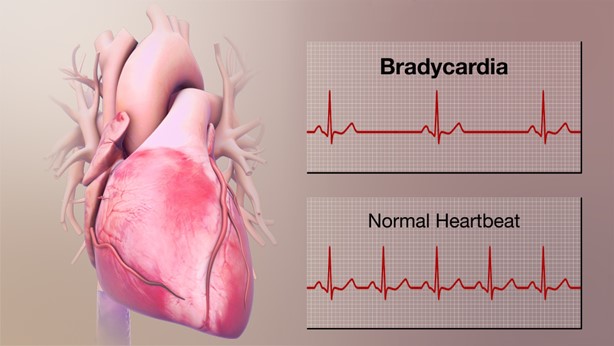
A. Bradycardia.
Hypothyroidism can cause a slowed heart rate, also called bradycardia1.
B. Moist skin.
Choice B, Moist skin, is not the correct answer because it is not a commonly reported symptom of hypothyroidism.
C. Blurred vision.
Choice C, Blurred vision, is not the correct answer because it is not a commonly reported symptom of hypothyroidism.
D. Insomnia.
Choice D, Insomnia, is not the correct answer because it is not a commonly reported symptom of hypothyroidism.
Full Explanation
Hypothyroidism can cause a slowed heart rate, also called bradycardia1.
Choice B, Moist skin, is not the correct answer because it is not a commonly reported symptom of hypothyroidism.
Choice C, Blurred vision, is not the correct answer because it is not a commonly reported symptom of hypothyroidism.
Choice D, Insomnia, is not the correct answer because it is not a commonly reported symptom of hypothyroidism.
A nurse is teaching a newly licensed nurse about insulin storage.
Which of the following statements by the newly licensed nurse indicates an understanding of the teaching?
A. "I can keep the current vial of insulin in use stored at room temperature.".
The current vial of insulin in use can be stored at room temperature for up to 28 days. Unopened vials of insulin should be stored in the refrigerator to maintain their potency until their expiration date.
B. "I should store unopened vials of insulin in the refrigerator.".
The current vial of insulin in use can be stored at room temperature for up to 28 days. Unopened vials of insulin should be stored in the refrigerator to maintain their potency until their expiration date.
C. "I should discard the current vial of insulin after six doses have been taken.".
Choice C is not the correct answer because the current vial of insulin does not need to be discarded after six doses have been taken.
D. "I should return any unused vials of insulin to the healthcare provider's office for disposal.".
Choice D is not the correct answer because unused vials of insulin do not need to be returned to the healthcare provider’s office for disposal.
Full Explanation
The current vial of insulin in use can be stored at room temperature for up to 28 days.
Unopened vials of insulin should be stored in the refrigerator to maintain their potency until their expiration date.

Choice C is not the correct answer because the current vial of insulin does not need to be discarded after six doses have been taken.
Choice D is not the correct answer because unused vials of insulin do not need to be returned to the healthcare provider’s office for disposal.