
Nursing practice questions with comprehensive rationales
NurseDive Free Nursing Practice Question
A nurse is caring for a client who has pancreatitis and has been receiving total parenteral nutrition.
Which of the following laboratory tests should the nurse monitor for overall nutritional status?
A. Lipase.
Lipase is an enzyme that is produced by the pancreas and is not used to monitor overall nutritional status.
B. C-reactive protein.
B) C-reactive protein is a marker of inflammation and is not used to monitor overall nutritional status.
C. Prealbumin.
Prealbumin is a protein that is produced by the liver and is used as a marker of nutritional status. It has a short half-life, so changes in pre albumin levels can reflect recent changes in nutritional status. Monitoring pre albumin levels can help assess the effectiveness of total parenteral nutrition.
D. Creatinine.
D) Creatinine is a waste product that is produced by muscle metabolism and is not used to monitor overall nutritional status.
This question is an excerpt from Nurse Dive's nursing test bank - ATI Adult Medical Surgical 2019 Proctored Exam. Take the full exam now
Full Explanation
Prealbumin is a protein that is produced by the liver and is used as a marker of nutritional status.
It has a short half-life, so changes in pre albumin levels can reflect recent changes in nutritional status.
Monitoring pre albumin levels can help assess the effectiveness of total parenteral nutrition.
Lipase is an enzyme that is produced by the pancreas and is not used to monitor overall nutritional status.
B) C-reactive protein is a marker of inflammation and is not used to monitor overall nutritional status.
D) Creatinine is a waste product that is produced by muscle metabolism and is not used to monitor overall nutritional status.
Similar Questions
A nurse is assessing a client following the insertion of a central venous catheter.
Which of the following findings indicates a pneumothorax?
A. Distended neck veins.
Distended neck veins are not a symptom of pneumothorax.
B. Itching over the incision.
B) Itching over the incision is not a symptom of pneumothorax.
C. Irregular heart rate.
C) Irregular heart rate is not a symptom of pneumothorax.
D. Diminished breath sounds.
A pneumothorax is a collapsed lung that occurs when air leaks into the space between the lung and the chest wall. This can cause diminished breath sounds on the affected side.
Full Explanation
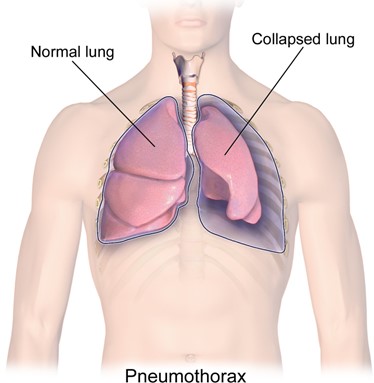
A pneumothorax is a collapsed lung that occurs when air leaks into the space between the lung and the chest wall.
This can cause diminished breath sounds on the affected side. Distended neck veins are not a symptom of pneumothorax.
B) Itching over the incision is not a symptom of pneumothorax.
C) Irregular heart rate is not a symptom of pneumothorax.
A nurse is planning to teach a client whose provider has prescribed a low-purine diet.
The nurse should plan to instruct the client that he can include which of the following foods in his diet? (Select all that apply.).
A. Sardines.
Sardines are high in purine and should be limited or avoided.
B. Apricots.
Apricots and nuts are low-purine foods that can be included in a low-purine diet.
C. Scallops.
Scallops are high in purine and should be limited or avoided.
D. Nuts.
Apricots and nuts are low-purine foods that can be included in a low-purine diet.
E. Liver.
Liver is high in purine and should be limited or avoided.
Full Explanation
Apricots and nuts are low-purine foods that can be included in a low-purine diet.
Sardines are high in purine and should be limited or avoided.
Scallops are high in purine and should be limited or avoided.
Liver is high in purine and should be limited or avoided.
A charge nurse receives a call from the house supervisor requesting room assignments for four new clients.
Based on the admission diagnoses, which of the following clients requires a private room?
A. A client who has diabetes mellitus and is presenting with acute ketoacidosis.
A client with diabetes mellitus and acute ketoacidosis does not require a private room based on their diagnosis.
B. A client who reports having fever, night sweats, and cough for 2 days.
A client reports having a fever, night sweats, and cough for 2 days. These symptoms are associated with infectious diseases such as tuberculosis. In order to prevent the spread of infection to other patients, this client would require a private room.
C. A client who has a compound fracture of the right femur.
A client with a compound fracture of the right femur does not require a private room based on their diagnosis.
D. An older adult client who was admitted with aspiration pneumonia.
An older adult client with aspiration pneumonia does not require a private room based on their diagnosis.
Full Explanation
A client reports having a fever, night sweats, and cough for 2 days.
These symptoms are associated with infectious diseases such as tuberculosis.
In order to prevent the spread of infection to other patients, this client would require a private room.
A client with diabetes mellitus and acute ketoacidosis does not require a private room based on their diagnosis.
C)A client with a compound fracture of the right femur does not require a private room based on their diagnosis.
D)An older adult client with aspiration pneumonia does not require a private room based on their diagnosis.