
Nursing practice questions with comprehensive rationales
NurseDive Free Nursing Practice Question
A nurse is caring for a client who has peptic ulcer disease and is scheduled to undergo an esophagogastroduodenoscopy.
Which of the following actions should the nurse take prior to the procedure?
A. Administer an oral contrast solution
Oral contrast solutions are typically used for imaging procedures such as CT scans or X-rays, not for esophagogastroduodenoscopy. This procedure involves the insertion of a flexible tube with a camera into the esophagus, stomach, and duodenum to visualize the upper gastrointestinal tract.
B. Ensure that the client gave informed consent
Before any invasive procedure, it is essential to ensure that the client has given informed consent. Informed consent involves providing the client with detailed information about the procedure, its risks and benefits, and alternatives. The client should have the opportunity to ask questions and fully understand the procedure before giving consent.
C. Inform the client the procedure will take 60 min
While it is important to provide the client with information about the duration of the procedure, stating a specific time frame may not be accurate or helpful. The duration of an esophagogastroduodenoscopy can vary depending on factors such as the complexity of the procedure and the client's individual circumstances.
D. Ensure that the client's bladder is full
Having a full bladder is not necessary for an esophagogastroduodenoscopy procedure. This requirement may be relevant for other procedures, such as pelvic ultrasound, but it is not applicable in this case.
This question is an excerpt from Nurse Dive's nursing test bank - ATI PN Comprehensive Predictor 2023 - Proctored Exam 1. Take the full exam now
Full Explanation
Before any invasive procedure, it is essential to ensure that the client has given informed consent. Informed consent involves providing the client with detailed information about the procedure, its risks and benefits, and alternatives. The client should have the opportunity to ask questions and fully understand the procedure before giving consent.
Oral contrast solutions are typically used for imaging procedures such as CT scans or X-rays, not for esophagogastroduodenoscopy. This procedure involves the insertion of a flexible tube with a camera into the esophagus, stomach, and duodenum to visualize the upper gastrointestinal tract.
While it is important to provide the client with information about the duration of the procedure, stating a specific time frame may not be accurate or helpful. The duration of an esophagogastroduodenoscopy can vary depending on factors such as the complexity of the procedure and the client's individual circumstances.
Having a full bladder is not necessary for an esophagogastroduodenoscopy procedure. This requirement may be relevant for other procedures, such as pelvic ultrasound, but it is not applicable in this case.

Similar Questions
A nurse is assisting in the care of a client. Nurses' Notes 2000:
Client presents to emergency department and states, "I have been assaulted." Client was immediately placed in a treatment room.
2015:
"Client states they were out with friends this evening and had "a little too much to drink." Client states that they fell asleep at their friend's house and when they woke up all of their clothes were off and their genitals were sore. The client states, "I think someone had sex with me, but I don't remember anything." Client reports history of depression. Client is a full-time college student who lives with roommates. Client admits to drinking socially but denies illicit drug use and tobacco use.
Which of the following interventions should the nurse plan to implement?
Select all that apply.
A. Contact children and youth services
Contacting children and youth services is not applicable in this scenario as the client is a full-time college student and not a child or youth.
B. Provide resources to the client for the local Alcoholics Anonymous chapter
While the client mentioned drinking, it is not explicitly stated that they have an alcohol addiction or problem. Therefore, providing resources for Alcoholics Anonymous may not be the most appropriate intervention at this time.
C. Request a consult for case management
Case management can be beneficial in situations involving assault to help coordinate and provide ongoing support and resources for the client. This intervention is appropriate in this scenario.
D. Maintain a safe and private environment for the client
Ensuring a safe and private environment is crucial to protect the client's confidentiality and provide a supportive atmosphere during this difficult time. This intervention is necessary.
E. Administer sexually transmitted infection prophylaxis
Since the client reports being assaulted and has sore genitals, it is important to consider the risk of sexually transmitted infections (STIs). Administering STI prophylaxis can help prevent potential infections.
F. Provide resources for local support services
The client may benefit from additional support services such as counseling or support groups. Providing resources for local support services can help the client access the necessary help and support they need.
Full Explanation
Case management can be beneficial in situations involving assault to help coordinate and provide ongoing support and resources for the client. This intervention is appropriate in this scenario.
Ensuring a safe and private environment is crucial to protect the client's confidentiality and provide a supportive atmosphere during this difficult time. This intervention is necessary. Since the client reports being assaulted and has sore genitals, it is important to consider the risk of sexually transmitted infections (STIs). Administering STI prophylaxis can help prevent potential infections.
The client may benefit from additional support services such as counseling or support groups. Providing resources for local support services can help the client access the necessary help and support they need.
Contacting children and youth services is not applicable in this scenario as the client is a full-time college student and not a child or youth.
While the client mentioned drinking, it is not explicitly stated that they have an alcohol addiction or problem. Therefore, providing resources for Alcoholics Anonymous may not be the most appropriate intervention at this time.
A nurse is contributing to the plan of care for a client who has leukemia and is experiencing chronic fatigue.
Which of the following interventions should the nurse plan to include?
A. Increase protein in the diet.
Protein supports tissue repair, maintains muscle mass, and provides sustained energy. Leukemia and its treatments can lead to muscle wasting and general weakness, so additional protein can help counteract these effects and improve energy levels. It is also essential for immune support as well.
B. Increase the client's fluids to 4 L per day.
Increasing fluids to 4 L per day is generally excessive and may not be appropriate for this client. Excessive fluid intake can place strain on the cardiovascular system, which could be problematic, especially if the client is receiving chemotherapy or other treatments that may impact fluid balance.
C. Encourage the client to have continual bed rest.
Continual bed rest is not recommended, as it can contribute to deconditioning, muscle atrophy, and worsening fatigue over time. While rest periods are essential for clients experiencing fatigue, it is equally important to incorporate balanced, low-intensity activity to maintain strength and circulation.
D. Encourage strength-training exercise.
Such exercises require significant energy and exertion, which might not be tolerable and could exacerbate fatigue. Instead, gentle, low-impact activities like walking or stretching are more appropriate for maintaining function without overwhelming the client’s energy reserves.
Full Explanation
A. Protein supports tissue repair, maintains muscle mass, and provides sustained energy. Leukemia and its treatments can lead to muscle wasting and general weakness, so additional protein can help counteract these effects and improve energy levels. It is also essential for immune support as well.
B. Increasing fluids to 4 L per day is generally excessive and may not be appropriate for this client. Excessive fluid intake can place strain on the cardiovascular system, which could be problematic, especially if the client is receiving chemotherapy or other treatments that may impact fluid balance.
C. Continual bed rest is not recommended, as it can contribute to deconditioning, muscle atrophy, and worsening fatigue over time. While rest periods are essential for clients experiencing fatigue, it is equally important to incorporate balanced, low-intensity activity to maintain strength and circulation.
D. Such exercises require significant energy and exertion, which might not be tolerable and could exacerbate fatigue. Instead, gentle, low-impact activities like walking or stretching are more appropriate for maintaining function without overwhelming the client’s energy reserves.
A nurse is collecting data from a client who has placenta previa. Which of the following findings should the nurse expect?
A. Bright red vaginal bleeding
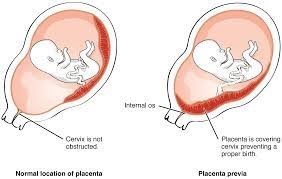
Placenta previa is a condition where the placenta partially or completely covers the cervix, leading to vaginal bleeding. The bleeding is typically painless and bright red in color. This is an important finding that should be assessed and monitored closely.
B. Rigid abdomen
A rigid abdomen is not a characteristic finding of placenta previa. It could be a sign of another condition such as placental abruption or uterine rupture, which are separate complications.
C. Increased fetal movement
Fetal movement is not directly related to placenta previa. It is a normal finding and can vary depending on the gestational age and individual fetal patterns.
D. Persistent uterine contractions
Placenta previa is not typically associated with persistent uterine contractions. However, it is important to monitor for any signs of preterm labor or other complications that could cause uterine contractions.
Full Explanation
Placenta previa is a condition where the placenta partially or completely covers the cervix, leading to vaginal bleeding. The bleeding is typically painless and bright red in color. This is an important finding that should be assessed and monitored closely.
A rigid abdomen is not a characteristic finding of placenta previa. It could be a sign of another condition such as placental abruption or uterine rupture, which are separate complications. Fetal movement is not directly related to placenta previa. It is a normal finding and can vary depending on the gestational age and individual fetal patterns.
Placenta previa is not typically associated with persistent uterine contractions. However, it is important to monitor for any signs of preterm labor or other complications that could cause uterine contractions.