
Nursing practice questions with comprehensive rationales
NurseDive Free Nursing Practice Question
A nurse is caring for a client who has poison ivy and is prescribed diphenhydramine. Which of the following instructions should the nurse give regarding the adverse effect of dry mouth associated with diphenhydramine?
A. "Administer the medication with food."
"Administer the medication with food": While taking diphenhydramine with food may help reduce the risk of stomach upset, it does not directly address the dry mouth side effect.
B. "Discontinue the medication and notify your provider.”
"Discontinue the medication and notify your provider": Discontinuing the medication without consulting the healthcare provider is not recommended unless specifically instructed to do so. Dry mouth is a common side effect of diphenhydramine and can be managed with supportive measures.
C. "Place a humidifier at your bedside every evening.”
"Place a humidifier at your bedside every evening": While using a humidifier can help add moisture to the air and potentially alleviate dryness in the environment, it is not a specific instruction for managing dry mouth caused by diphenhydramine.
D. “Chew on sugarless gum or suck on hard, sour candies."
Dry mouth is a common side effect of diphenhydramine, which is an antihistamine medication commonly used to relieve symptoms of allergies, including itching and rash. Chewing on sugarless gum or sucking on hard, sour candies can help stimulate saliva production and alleviate the discomfort of dry mouth.
This question is an excerpt from Nurse Dive's nursing test bank - ATI NUR 229 Pharmacology Test #1 OEK Proctored Exam. Take the full exam now
Full Explanation
Dry mouth is a common side effect of diphenhydramine, which is an antihistamine medication commonly used to relieve symptoms of allergies, including itching and rash. Chewing on sugarless gum or sucking on hard, sour candies can help stimulate saliva production and alleviate the discomfort of dry mouth.

A. "Administer the medication with food": While taking diphenhydramine with food may help reduce the risk of stomach upset, it does not directly address the dry mouth side effect.
B. "Discontinue the medication and notify your provider": Discontinuing the medication without consulting the healthcare provider is not recommended unless specifically instructed to do so. Dry mouth is a common side effect of diphenhydramine and can be managed with supportive measures.
C. "Place a humidifier at your bedside every evening": While using a humidifier can help add moisture to the air and potentially alleviate dryness in the environment, it is not a specific instruction for managing dry mouth caused by diphenhydramine.
Similar Questions
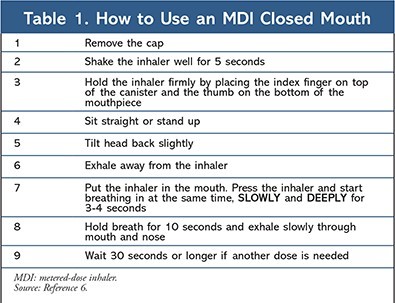
A nurse is teaching a client who has asthma about how to use an albuterol inhaler. Which of the following actions by the client indicates an understanding of the teaching?
A. The client waits 10 min between inhalations.
Waiting 10 minutes between inhalations: Albuterol inhalers are typically used as a quick-relief medication for acute symptoms, and waiting 10 minutes between inhalations may not provide immediate relief when needed. The specific instructions on the frequency of inhalations should be provided by the healthcare provider.
B. The client takes a quick inhalation while releasing the medication from the inhaler.
Taking a quick inhalation while releasing the medication from the inhaler: It is important to take a slow and deep inhalation while releasing the medication to ensure that the medication reaches the lungs effectively. Taking a quick inhalation may result in less effective delivery of the medication.
C. The client holds his breath for 10 seconds after inhaling the medication.
When using an albuterol inhaler, it is important for the client to take a slow and deep inhalation while releasing the medication from the inhaler. After inhaling the medication, holding the breath for about 10 seconds allows the medication to reach deep into the airways and maximize its effectiveness.
D. The client exhales as the medication is released from the inhaler.
Exhaling as the medication is released from the inhaler: It is important to exhale fully before using the inhaler to ensure that the medication is inhaled deeply into the lungs. Exhaling while releasing the medication can interfere with the proper inhalation technique.
Full Explanation
When using an albuterol inhaler, it is important for the client to take a slow and deep inhalation while releasing the medication from the inhaler. After inhaling the medication, holding the breath for about 10 seconds allows the medication to reach deep into the airways and maximize its effectiveness.
The other actions mentioned are not correct:
A. Waiting 10 minutes between inhalations: Albuterol inhalers are typically used as a quick-relief medication for acute symptoms, and waiting 10 minutes between inhalations may not provide immediate relief when needed. The specific instructions on the frequency of inhalations should be provided by the healthcare provider.
B. Taking a quick inhalation while releasing the medication from the inhaler: It is important to take a slow and deep inhalation while releasing the medication to ensure that the medication reaches the lungs effectively. Taking a quick inhalation may result in less effective delivery of the medication.
D. Exhaling as the medication is released from the inhaler: It is important to exhale fully before using the inhaler to ensure that the medication is inhaled deeply into the lungs. Exhaling while releasing the medication can interfere with the proper inhalation technique.
A contraindication for the use of Acetaminophen (Tylenol) in a patient is:
A. Hypertension
B. Gallbladder Disease
C. Severe hepatic impairment
Acetaminophen is generally considered safe and well-tolerated when used appropriately. However, it is primarily metabolized by the liver, and in cases of severe hepatic impairment or liver failure, the metabolism of acetaminophen can be significantly impaired. This can lead to the accumulation of toxic metabolites, which can cause further liver damage and potentially result in hepatotoxicity. Hypertension, gallbladder disease, and tachyarrhythmias are not typically considered contraindications for the use of acetaminophen. However, it is important to consider any potential interactions or precautions when using acetaminophen in patients with these conditions, and consulting with a healthcare provider is recommended to ensure the safe and appropriate use of the medication.
D. Tachyarrhythmias
Full Explanation
Acetaminophen is generally considered safe and well-tolerated when used appropriately. However, it is primarily metabolized by the liver, and in cases of severe hepatic impairment or liver failure, the metabolism of acetaminophen can be significantly impaired. This can lead to the accumulation of toxic metabolites, which can cause further liver damage and potentially result in hepatotoxicity.
Hypertension, gallbladder disease, and tachyarrhythmias are not typically considered contraindications for the use of acetaminophen. However, it is important to consider any potential interactions or precautions when using acetaminophen in patients with these conditions, and consulting with a healthcare provider is recommended to ensure the safe and appropriate use of the medication.

A nurse is caring for a client who is prescribed diphenhydramine to relieve pruritus. The client asks the nurse how he can minimize the daytime sedation he is experiencing. Which of the following responses should the nurse give?
A. "Distribute the doses evenly throughout the day!"
"Distribute the doses evenly throughout the day": This approach may lead to a consistent level of sedation throughout the day and may not effectively minimize daytime sedation.
B. "Gradually decrease the dose once tolerance to the effect is reached."
"Gradually decrease the dose once tolerance to the effect is reached": Gradually decreasing the dose of diphenhydramine is not a recommended strategy for minimizing daytime sedation. It is important to follow the prescribed dose and consult with a healthcare provider before making any changes to the medication regimen.
C. "Take the medication with meals."
"Take the medication with meals": Taking diphenhydramine with meals may help reduce the risk of stomach upset but does not directly address the issue of daytime sedation.
D. "Take most of the daily dose at bedtime."
Diphenhydramine is an antihistamine medication that can cause sedation as a side effect. Taking most of the daily dose at bedtime can help minimize daytime sedation. By taking the medication closer to bedtime, the sedative effects are more likely to occur during sleep, reducing the impact of sedation during waking hours.
Full Explanation
Diphenhydramine is an antihistamine medication that can cause sedation as a side effect. Taking most of the daily dose at bedtime can help minimize daytime sedation. By taking the medication closer to bedtime, the sedative effects are more likely to occur during sleep, reducing the impact of sedation during waking hours.
The other options mentioned are not effective strategies to minimize daytime sedation caused by diphenhydramine:
A. "Distribute the doses evenly throughout the day": This approach may lead to a consistent level of sedation throughout the day and may not effectively minimize daytime sedation.
B. "Gradually decrease the dose once tolerance to the effect is reached": Gradually decreasing the dose of diphenhydramine is not a recommended strategy for minimizing daytime sedation. It is important to follow the prescribed dose and consult with a healthcare provider before making any changes to the medication regimen.
C. "Take the medication with meals": Taking diphenhydramine with meals may help reduce the risk of stomach upset but does not directly address the issue of daytime sedation.