
Nursing practice questions with comprehensive rationales
NurseDive Free Nursing Practice Question
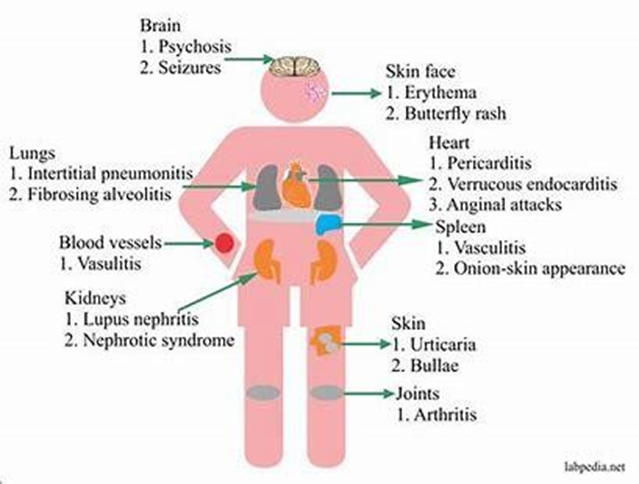
A nurse is caring for a client who has systemic lupus erythematosus. During assessment, which of the following should the nurse expect to find?
A. Joint inflammation
Joint inflammation(arthritis) is a common manifestation of systemic lupus erythematosus. SLE can cause inflammation in the joints, leading to symptoms such as pain, swelling, stiffness, and decreased range of motion. It often affects the small joints of the hands, wrists, and knees.
B. Tophi
Tophi are deposits of uric acid crystals that form under the skin in people with chronic gout.
C. Esophagitis
Esophagitis, or inflammation of the esophagus, can occur in systemic lupus erythematosus as part of gastrointestinal involvement. However, it is not one of the most common manifestations of SLE.
D. "Bull's eye" lesion
"Bull's eye" lesion, also known as erythema multiforme, is a skin manifestation seen in conditions such as Lyme disease and certain drug reactions. It is not typically associated with systemic lupus erythematosus.
This question is an excerpt from Nurse Dive's nursing test bank - Ati Rn Adult Medical Surgical 2023 Proctored Exam. Take the full exam now
Full Explanation
A. Joint inflammation(arthritis) is a common manifestation of systemic lupus erythematosus. SLE can cause inflammation in the joints, leading to symptoms such as pain, swelling, stiffness, and decreased range of motion. It often affects the small joints of the hands, wrists, and knees.
B. Tophi are deposits of uric acid crystals that form under the skin in people with chronic gout.
C. Esophagitis, or inflammation of the esophagus, can occur in systemic lupus erythematosus as part of gastrointestinal involvement. However, it is not one of the most common manifestations of SLE.
D. "Bull's eye" lesion, also known as erythema multiforme, is a skin manifestation seen in conditions such as Lyme disease and certain drug reactions. It is not typically associated with systemic lupus erythematosus.
Similar Questions
A nurse is caring for a client who has a new onset of hyperglycemic hyperosmolar state (HHS). Which of the following interventions by the nurse is the highest priority?
A. Initiate IV fluid replacement.
Initiate IV fluid replacement is the highest priority intervention. HHS is characterized by severe dehydration due to osmotic diuresis resulting from hyperglycemia. IV fluid replacement is essential to correct dehydration and restore intravascular volume, which can help improve tissue perfusion and prevent further complications.
B. Measure the client's urinary output.
Monitoring urinary output is important in assessing renal function and response to fluid replacement therapy. However, it is not the highest priority intervention.
C. Administer insulin.
While insulin therapy is an essential part of managing hyperglycemia in HHS, it is not the highest priority intervention at the immediate onset of HHS.
D. Teach the client about manifestations of HHS
Patient education about the manifestations and management of HHS is important for long-term management and prevention of recurrence. However, it is not the highest priority when the client is experiencing an acute episode of HHS.
Full Explanation
A. Initiate IV fluid replacement is the highest priority intervention. HHS is characterized by severe dehydration due to osmotic diuresis resulting from hyperglycemia. IV fluid replacement is essential to correct dehydration and restore intravascular volume, which can help improve tissue perfusion and prevent further complications.
B. Monitoring urinary output is important in assessing renal function and response to fluid replacement therapy. However, it is not the highest priority intervention.
C. While insulin therapy is an essential part of managing hyperglycemia in HHS, it is not the highest priority intervention at the immediate onset of HHS.
D. Patient education about the manifestations and management of HHS is important for long-term management and prevention of recurrence. However, it is not the highest priority when the client is experiencing an acute episode of HHS.
A nurse is admitting a client who has arthritic pain and reports taking ibuprofen several times daily for 3 years. Which of the following tests should the nurse monitor?
A. Stool for occult blood
Monitoring for occult blood in the stool is essential because long-term use of nonsteroidal anti- inflammatory drugs (NSAIDs) like ibuprofen can increase the risk of gastrointestinal bleeding and ulceration. Occult blood in the stool may indicate gastrointestinal bleeding, which can be a serious complication of chronic NSAID use.
B. Fasting blood glucose
While NSAIDs like ibuprofen can affect renal function and increase the risk of kidney damage, they are not directly associated with alterations in blood glucose levels.
C. Serum calcium
Ibuprofen use is not typically associated with alterations in serum calcium levels
D. Urine for white blood cells
While monitoring urine for white blood cells may be relevant in the context of renal injury, it is not as specific or sensitive as other tests such as urinalysis or renal function tests.
Full Explanation
A. Monitoring for occult blood in the stool is essential because long-term use of nonsteroidal anti- inflammatory drugs (NSAIDs) like ibuprofen can increase the risk of gastrointestinal bleeding and ulceration. Occult blood in the stool may indicate gastrointestinal bleeding, which can be a serious complication of chronic NSAID use.
B. While NSAIDs like ibuprofen can affect renal function and increase the risk of kidney damage, they are not directly associated with alterations in blood glucose levels.
C. Ibuprofen use is not typically associated with alterations in serum calcium levels
D. While monitoring urine for white blood cells may be relevant in the context of renal injury, it is not as specific or sensitive as other tests such as urinalysis or renal function tests.
A nurse is reviewing the health history of a client who is scheduled for exploratory surgery. Which of the following food allergies indicates a risk for an allergic reaction to latex?
A. Strawberries
Strawberries are typically associated with cross-reactivity with latex
B. Eggs
Eggs are not commonly associated with cross-reactivity with latex.
C. Peanuts
Peanuts are not typically associated with cross-reactivity with latex. Peanut allergy involves specific proteins found in peanuts and is unrelated to latex allergy.
D. Shellfish
Shellfish, particularly crustaceans such as shrimp, crab, and lobster, are known to have cross- reactivity with latex. Individuals with a latex allergy may experience allergic reactions to shellfish due to similar proteins found in both latex and shellfish.
Full Explanation
A. Strawberries are typically associated with cross-reactivity with latex
B. Eggs are not commonly associated with cross-reactivity with latex.
C. Peanuts are not typically associated with cross-reactivity with latex. Peanut allergy involves specific proteins found in peanuts and is unrelated to latex allergy.
D Shellfish is not associated with cross-sensitivity with latex