
Nursing practice questions with comprehensive rationales
NurseDive Free Nursing Practice Question
A nurse is caring for a client who is 1 day postoperative following a subtotal thyroidectomy. The client reports a tingling sensation in the hands, the soles of the feet, and around the lips. For which of the following findings should the nurse assess the client?
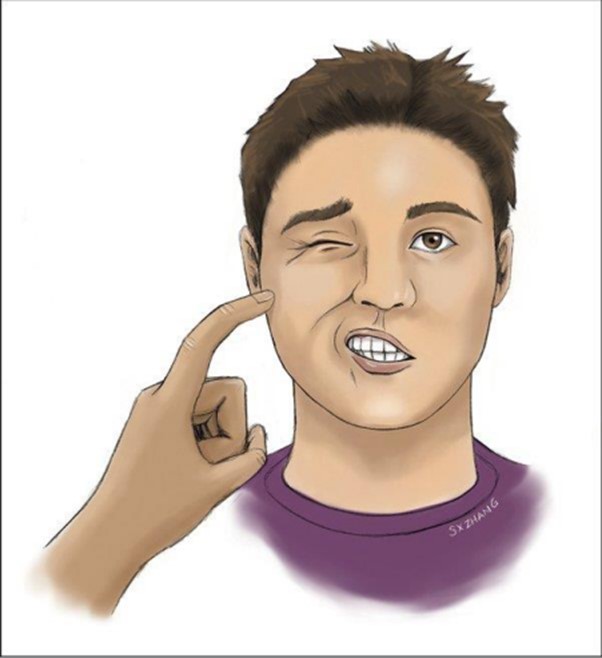
A. Chvostek's sign
Correct. Chvostek's sign is a clinical sign of hypocalcemia. It is elicited by tapping on the facial nerve, just anterior to the ear, and observing for facial twitching or spasm.
B. Kernig's sign
Incorrect. Kernig's sign is a test for assessing meningitis and involves flexing the hip and knee at 90-degree angles and then extending the knee. This test is not relevant to the client's reported symptoms.
C. Brudzinski's sign
Incorrect. Brudzinski's sign is another test for assessing meningitis. It involves flexing the neck forward and observing for involuntary flexion of the hips and knees. This test is not relevant to the client's reported symptoms.
D. Babinski's sign
Incorrect. Babinski's sign is used to assess upper motor neuron lesions. It involves stimulating the sole of the foot, and in a positive response, the big toe extends upward. This test is not relevant to the client's reported symptoms.
This question is an excerpt from Nurse Dive's nursing test bank - RN ATI Medsurg Proctored Exam. Take the full exam now
Full Explanation
A. Correct. Chvostek's sign is a clinical sign of hypocalcemia. It is elicited by tapping on the facial nerve, just anterior to the ear, and observing for facial twitching or spasm.
B. Incorrect. Kernig's sign is a test for assessing meningitis and involves flexing the hip and knee at 90-degree angles and then extending the knee. This test is not relevant to the client's reported symptoms.
C. Incorrect. Brudzinski's sign is another test for assessing meningitis. It involves flexing the neck forward and observing for involuntary flexion of the hips and knees. This test is not relevant to the client's reported symptoms.
D. Incorrect. Babinski's sign is used to assess upper motor neuron lesions. It involves stimulating the sole of the foot, and in a positive response, the big toe extends upward. This test is not relevant to the client's reported symptoms.
Similar Questions
At 8 a.m. the nurse is reviewing patient assignments and notes one of the patients has a current blood glucose of 264. Breakfast is routinely served at 8:30. The following orders are noted in the chart. What action should the nurse take? Accucheck before meals and at bedtime with sliding scale insulin aspart SQ: Glucose 0-150 Administer 0 units; 151-200 Administer 2 units; 201-250 Administer 4 units: 251-300 Administer 6 units: 301-350 Administer 8 units; 351- 400 Administer 10 units; >400 Notify physician.
A. Provide 2 units insulin aspart 50
This option corresponds to the blood glucose range of 151-200. However, the patient's current blood glucose level is 264, which falls into the range of 251-300. Therefore, administering 2 units would not be appropriate in this case.
B. Provide 6 units insulin aspart 50
The patient's current blood glucose level is 264, which falls into the range of 251-300. According to the sliding scale insulin aspart orders, for this range, 6 units should be administered. This option aligns with the patient's blood glucose level and the prescribed protocol.
C. Provide 10 units insin apart SQ
This option corresponds to the blood glucose range of 351-400. The patient's blood glucose level of 264 does not fall into this range, so administering 10 units would be excessive and potentially lead to hypoglycemia.
D. Provide 4 units insulin aspart 50
This option corresponds to the blood glucose range of 201-250. The patient's current blood glucose level is 264, which falls into the range of 251-300. Therefore, administering 4 units would not be sufficient to address the elevated blood glucose level.
Full Explanation
A. This option corresponds to the blood glucose range of 151-200. However, the patient's current blood glucose level is 264, which falls into the range of 251-300. Therefore, administering 2 units would not be appropriate in this case.
B. The patient's current blood glucose level is 264, which falls into the range of 251-300. According to the sliding scale insulin aspart orders, for this range, 6 units should be administered. This option aligns with the patient's blood glucose level and the prescribed protocol.
C. This option corresponds to the blood glucose range of 351-400. The patient's blood glucose level of 264 does not fall into this range, so administering 10 units would be excessive and potentially lead to hypoglycemia.
D. This option corresponds to the blood glucose range of 201-250. The patient's current blood glucose level is 264, which falls into the range of 251-300. Therefore, administering 4 units would not be sufficient to address the elevated blood glucose level.
When preparing to provide morning medications, the nurse would give levothyroxine (Synthroid) ordered daily in which of the following ways?
A. in the morning with breakfast
This option is not ideal for levothyroxine (Synthroid) because it should be taken on an empty stomach for optimal absorption. Taking it with food, especially a meal like breakfast, can interfere with its absorption.
B. in the morning on an empty stomach with other daily meds
This is the correct option. Levothyroxine should be taken in the morning, at least 30 minutes before breakfast or any other medications. Taking it on an empty stomach ensures the best absorption of the medication.
C. in the evening with a snack
Taking levothyroxine in the evening is not recommended. It should be taken in the morning to coincide with the body's natural circadian rhythm and to avoid potential interactions with food or other medications.
D. the morning before breakfast and without any other medications
While it's important to take levothyroxine in the morning before breakfast, it is not necessary to take it without any other medications. It can be taken alongside other daily medications as long as there are no interactions that would affect its absorption.
Full Explanation
A. This option is not ideal for levothyroxine (Synthroid) because it should be taken on an empty stomach for optimal absorption. Taking it with food, especially a meal like breakfast, can interfere with its absorption.
B. This is the correct option. Levothyroxine should be taken in the morning, at least 30 minutes before breakfast, or any other medications. Taking it on an empty stomach ensures the best absorption of the medication.
C. Taking levothyroxine in the evening is not recommended. It should be taken in the morning to coincide with the body's natural circadian rhythm and to avoid potential interactions with food or other medications.
D. While it's important to take levothyroxine in the morning before breakfast, it is not necessary to take it without any other medications. It can be taken alongside other daily medications as long as there are no interactions that would affect its absorption.
A nurse is assessing a client who has hypothyroidism. The nurse should expect which of the following findings?
A. Palpitations
Incorrect. Palpitations, which are rapid or irregular heartbeats, are more commonly associated with hyperthyroidism, where there is an excess of thyroid hormones.
B. Diaphoresis
Incorrect. Diaphoresis, or excessive sweating, is not typically associated with hypothyroidism.
C. Exophthalmos
C. Incorrect. Exophthalmos, or bulging of the eyes, is a characteristic finding in hyperthyroidism (specifically Graves' disease) and is not typically seen in hypothyroidism.
D. Weight gain
Correct. Weight gain is a common finding in hypothyroidism. The slowing down of metabolic processes due to insufficient thyroid hormones can lead to an increase in body weight.
Full Explanation
A. Incorrect. Palpitations, which are rapid or irregular heartbeats, are more commonly associated with hyperthyroidism, where there is an excess of thyroid hormones.
B. Incorrect. Diaphoresis, or excessive sweating, is not typically associated with hypothyroidism.
C. Incorrect. Exophthalmos, or bulging of the eyes, is a characteristic finding in hyperthyroidism (specifically Graves' disease) and is not typically seen in hypothyroidism.
D. Correct. Weight gain is a common finding in hypothyroidism. The slowing down of metabolic processes due to insufficient thyroid hormones can lead to an increase in body weight.