
Nursing practice questions with comprehensive rationales
NurseDive Free Nursing Practice Question
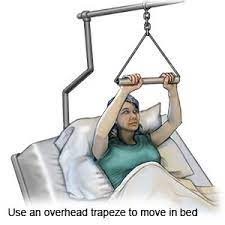
A nurse is caring for a client who is 2 days postoperative following an above-the-knee amputation. Which of the following actions should the nurse take to promote progression toward independence and mobility for the client?
A. Encourage the client to use the overbed trapeze.
A nurse caring for a client who is 2 days postoperative following an above-the-knee amputation should encourage the client to use the overbed trapeze. This will promote independence and mobility by allowing the client to reposition themselves in bed and perform upper body exercises.
B. Maintain abduction of the client's residual limb with a pillow.
Maintaining abduction of the client's residual limb with a pillow can help prevent contractures, but it does not directly promote mobility.
C. Caution the client to avoid a prone position while in bed.
Cautioning the client to avoid a prone position while in bed is appropriate to prevent pressure injuries and promote healing, but it also does not directly promote mobility.
D. Keep a loose, absorbent dressing over the client's surgical site
Keeping a loose, absorbent dressing over the client's surgical site is important for infection control but does not promote mobility.
This question is an excerpt from Nurse Dive's nursing test bank - PN Comprehensive Predictor PN 2020 Proctored Exam. Take the full exam now
Full Explanation
A nurse caring for a client who is 2 days postoperative following an above-the-knee amputation should encourage the client to use the overbed trapeze. This will promote independence and mobility by allowing the client to reposition themselves in bed and perform upper body exercises.
Maintaining abduction of the client's residual limb with a pillow can help prevent contractures, but it does not directly promote mobility.
Cautioning the client to avoid a prone position while in bed is appropriate to prevent pressure injuries and promote healing, but it also does not directly promote mobility.
Keeping a loose, absorbent dressing over the client's surgical site is important for infection control but does not promote mobility.
Similar Questions
A nurse is collecting data from a client who received oxytocin 10 units IM 30 min ago for excessive vaginal bleeding. Which of the following findings should the nurse expect?
A. Client report of burning with urination
B. Saturation of perineal pad in 15 min
C. Boggy fundus 3 fingerbreadths above the umbilicus
D. Client report of uterine cramping
Oxytocin is a medication commonly used to induce or enhance uterine contractions. Therefore, it is expected that the client may experience uterine cramping after receiving oxytocin. The medication helps to contract the uterus, which can aid in controlling excessive vaginal bleeding.
Full Explanation
Oxytocin is a medication commonly used to induce or enhance uterine contractions. Therefore, it is expected that the client may experience uterine cramping after receiving oxytocin. The medication helps to contract the uterus, which can aid in controlling excessive vaginal bleeding.
A nurse is caring for a client who was admitted for observation following a head injury. Which of the following findings by the nurse indicates the client is experiencing increased intracranial pressure?
A. Pin-point pupils
Pinpoint pupils are more commonly associated with opioid intoxication or damage to the pons rather than increased intracranial pressure (ICP). Increased ICP typically causes pupils to become dilated and sluggish or nonreactive to light.
B. Irritability
Irritability can be an early sign of increased intracranial pressure. As pressure within the skull rises, it can affect the brain's ability to function normally, leading to changes in behavior such as restlessness, agitation, or irritability.
C. Pallor
Pallor is not directly associated with increased intracranial pressure. It might indicate other issues such as anemia or poor circulation, but it is not a specific sign of increased ICP.
D. Decreased blood pressure
Increased intracranial pressure typically leads to hypertension (increased blood pressure) as part of the Cushing's triad, which includes hypertension, bradycardia, and irregular respirations. Decreased blood pressure would not be a typical finding associated with increased ICP.
Full Explanation
A. Pinpoint pupils are more commonly associated with opioid intoxication or damage to the pons rather than increased intracranial pressure (ICP). Increased ICP typically causes pupils to become dilated and sluggish or nonreactive to light
B. Irritability can be an early sign of increased intracranial pressure. As pressure within the skull rises, it can affect the brain's ability to function normally, leading to changes in behavior such as restlessness, agitation, or irritability.
C. Pallor is not directly associated with increased intracranial pressure. It might indicate other issues such as anemia or poor circulation, but it is not a specific sign of increased ICP.
D. Increased intracranial pressure typically leads to hypertension (increased blood pressure) as part of the Cushing's triad, which includes hypertension, bradycardia, and irregular respirations. Decreased blood pressure would not be a typical finding associated with increased ICP.
A nurse is caring for a client who recently gave birth to her first child. The newborn is crying and the client states, "I can't seem to do anything right. What should I do?" Which of the following responses should the nurse make?
A. "I'll take him back to the nursery, so you can get some rest."
B. "Let me show you how to swaddle and cuddle him, then you try."
This response acknowledges the client's concern and offers support and guidance. By demonstrating and encouraging the client to participate in swaddling and cuddling the newborn, the nurse promotes bonding, provides a practical solution for soothing the baby, and empowers the client to actively engage in caring for her child.
C. "Babies need to cry soon after they are born to develop their lungs.
D. "If I turn him on his side, maybe he'll go back to sleep."
Full Explanation
This response acknowledges the client's concern and offers support and guidance. By demonstrating and encouraging the client to participate in swaddling and cuddling the newborn, the nurse promotes bonding, provides a practical solution for soothing the baby, and empowers the client to actively engage in caring for her child.