
Nursing practice questions with comprehensive rationales
NurseDive Free Nursing Practice Question
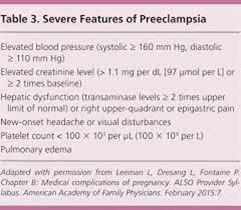
A nurse is caring for a client who is at 32 weeks gestation and has a history of hypertension. Which of the following statements by the client should the nurse report to the provider?
A. "My ankles get swollen after standing at work."
Ankle swelling can be a common symptom of pregnancy and is not necessarily indicative of a complication.
B. "My gums bleed when I brush my teeth."
Gums can become more sensitive during pregnancy, leading to bleeding while brushing teeth. This finding is common and not necessarily indicative of a complication.
C. "I have constant pain in the middle of my upper abdomen."
Constant pain in the middle of the upper abdomen can be a sign of preeclampsia, a serious pregnancy complication that requires prompt medical attention.
D. "I feel dizzy when I lay flat on my back.
Feeling dizzy when lying flat on the back (supine hypotension) can be a common discomfort during pregnancy due to pressure on the vena cava. However, it does not necessarily indicate a complication in this context.
This question is an excerpt from Nurse Dive's nursing test bank - RN ati Concept-based assessment level proctored exam. Take the full exam now
Full Explanation
Choice A rationale:
Ankle swelling can be a common symptom of pregnancy and is not necessarily indicative of a complication.
Choice B rationale:
Gums can become more sensitive during pregnancy, leading to bleeding while brushing teeth. This finding is common and not necessarily indicative of a complication.
Choice C rationale:
Constant pain in the middle of the upper abdomen can be a sign of preeclampsia, a serious pregnancy complication that requires prompt medical attention.
Choice D rationale:
Feeling dizzy when lying flat on the back (supine hypotension) can be a common discomfort during pregnancy due to pressure on the vena cava. However, it does not necessarily indicate a complication in this context.
Similar Questions
A nurse is providing teaching to a client who has a new diagnosis of amyotrophic lateral sclerosis (ALS). Which of the following client statements indicates an understanding of the teaching?
A. "I need to make sure other members of my family get immunized against the disease."
Other family members or close contacts may consider immunization, but it is not directly related to the client's ALS diagnosis.
B. "Since I will stay in the hospital, I should begin the process of selling my home."
Since the client has a new diagnosis of ALS, the immediate focus should not be on selling their home, but rather on understanding and managing the disease.
C. "I will need to begin hospice care immediately."
Requiring hospice care immediately is not a standard recommendation for a client with ALS. The client's disease progression and needs will be assessed to determine the appropriate level of care.
D. "I would like to talk to someone about creating a living will."
Creating a living will is important for clients with a terminal illness like ALS, as it allows them to express their wishes for medical treatment and care preferences in advance.
Full Explanation
Choice A rationale:
Other family members or close contacts may consider immunization, but it is not directly related to the client's ALS diagnosis.
Choice B rationale:
Since the client has a new diagnosis of ALS, the immediate focus should not be on selling their home, but rather on understanding and managing the disease.
Choice C rationale:
Requiring hospice care immediately is not a standard recommendation for a client with ALS. The client's disease progression and needs will be assessed to determine the appropriate level of care.
Choice D rationale:
Creating a living will is important for clients with a terminal illness like ALS, as it allows them to express their wishes for medical treatment and care preferences in advance.
A nurse is assessing a client who is 1 week postpartum. Which of the following locations should the nurse palpate to assess the client's fundus? (You will find hot spots to select in the artwork below. Select only the hot spot that corresponds to your answer.)
A. A
This is incorrect because at about one hour after child birth the fundus should be around the belly button (where it was at 20 weeks of gestation).
B. B
This is incorrect because at about one hour after child birth the fundus should be around the belly button (where it was at 20 weeks of gestation). It then decreases steadily at approximately 1 cm every 24 hours.
C. C
One-week post-partum, the fundal height should be about 7 cm below the umbilicus (belly button). This means that the uterus is still larger than normal, but it is contracting and healing. The fundal height may vary depending on factors such as the size and position of the baby, the amount of amniotic fluid, and the mother's body type.
Full Explanation
Choice A rationale: This is incorrect because at about one hour after child birth the fundus should be around the belly button (where it was at 20 weeks of gestation).
Choice B rationale: This is incorrect because at about one hour after child birth the fundus should be around the belly button (where it was at 20 weeks of gestation). It then decreases steadily at approximately 1 cm every 24 hours.
Choice C rationale: One-week post-partum, the fundal height should be about 7 cm below the umbilicus (belly button). This means that the uterus is still larger than normal, but it is contracting and healing. The fundal height may vary depending on factors such as the size and position of the baby, the amount of amniotic fluid, and the mother's body type.
A nurse at a clinic is counseling a client who has a positive pregnancy test. The first day of the client's last menstrual period was November 9. Use Nägele's rule to calculate the estimated date of delivery.
(Use the MMDD format with four numerals and no spaces or punctuation.)
Full Explanation
To calculate the estimated date of delivery using Nägele's rule, follow these steps:
-Add 7 days to the first day of the last menstrual period. In this case, November 9 + 7 days = November 16.
- Subtract 3 months from the month of the last menstrual period. In this case, November - 3 months = August.
The estimated date of delivery is August 16
The rationale for this rule assumes that the average menstrual cycle is 28 days long and that ovulation occurs on day 14 of the cycle. Therefore, adding 7 days to the first day of the last menstrual period approximates the date of conception. Subtracting 3 months from the month of the last menstrual period adjusts for the difference between the lunar calendar (13 months) and the Gregorian calendar (12 months).