
Nursing practice questions with comprehensive rationales
NurseDive Free Nursing Practice Question
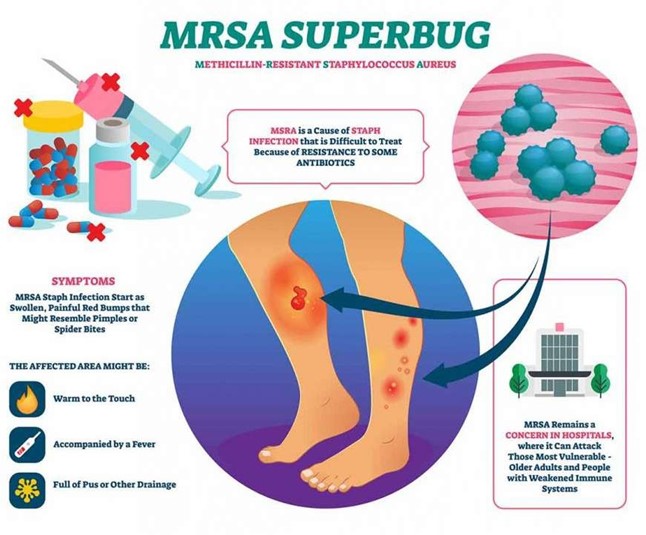
A nurse is caring for a client who is at 36 weeks of gestation and has methicillin- resistant Staphylococcus aureus.
Which of the following types of isolation precautions should the nurse initiate?
A. Droplet.
Choice A is incorrect because Droplet Precautions are not necessary for MRSA.
B. Protective environment.
Choice B is incorrect because a Protective Environment is not necessary for MRSA.
C. Contact.
A nurse caring for a client who is at 36 weeks of gestation and has methicillin- resistant Staphylococcus aureus (MRSA) should initiate Contact Precautions.
D. Airborne.
Choice D is incorrect because Airborne Precautions are not necessary for MRSA.
This question is an excerpt from Nurse Dive's nursing test bank - ATI RN Maternal Newborn 2019 with NGN Proctored Exam. Take the full exam now
Full Explanation
A nurse caring for a client who is at 36 weeks of gestation and has methicillin- resistant Staphylococcus aureus (MRSA) should initiate Contact Precautions.
Choice A is incorrect because Droplet Precautions are not necessary for MRSA.
Choice B is incorrect because a Protective Environment is not necessary for MRSA.
Choice D is incorrect because Airborne Precautions are not necessary for MRSA.
Similar Questions
A nurse is caring for a newborn who has exstrophy of the bladder.
Which of the following actions should the nurse take prior to the beginning of surgical correction?
A. Restrict the newborn's fluid intake.
Choice A is incorrect because it is not necessary to restrict the newborn’s fluid intake.
B. Keep the newborn in a side-lying position.
Choice B is incorrect because it is not necessary to keep the newborn in a side- lying position.
C. Cover the newborn's bladder with a sterile, non-adherent dressing.
A nurse caring for a newborn who has exstrophy of the bladder should cover the newborn’s bladder with a sterile, non-adherent dressing prior to the beginning of surgical correction.
D. Exert gentle pressure on the newborn's bladder with sterile gauze.
Choice D is incorrect because it is not appropriate to exert gentle pressure on the newborn’s bladder with sterile gauze.
E. Exert gentle pressure on the newborn's bladder with sterile gauze.
Full Explanation
A nurse caring for a newborn who has exstrophy of the bladder should cover the newborn’s bladder with a sterile, non-adherent dressing prior to the beginning of surgical correction.
Choice A is incorrect because it is not necessary to restrict the newborn’s fluid intake.
Choice B is incorrect because it is not necessary to keep the newborn in a side- lying position.
Choice D is incorrect because it is not appropriate to exert gentle pressure on
the newborn’s bladder with sterile gauze.
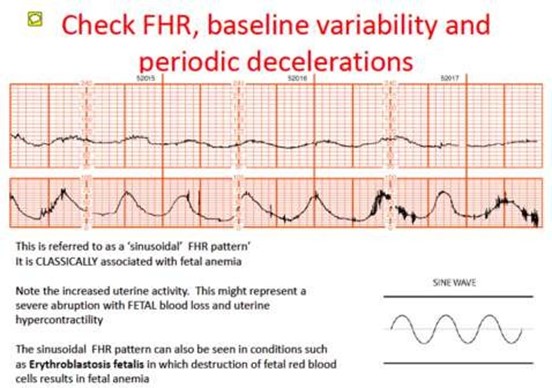
A nurse is assessing the results of a nonstress test for an antepartal client at 35 weeks of gestation.
Which of the following findings should indicate to the nurse the need for further diagnostic testing?
A. An increase in fetal heart rate to 150/min above the baseline of 140/min lasting 10 seconds in response to fetal movement within a 40-min testing period.
Choice A is incorrect because an increase in fetal heart rate to 150/min above the baseline of 140/min lasting 10 seconds in response to fetal movement within a 40-min testing period is a normal result.
B. No late decelerations noted with three uterine contractions of 60 seconds in
Choice B is incorrect because irregular contractions of 10 to 20 seconds in duration that are not felt by the client do not indicate the need for further diagnostic testing.
C. duration within a 10-min testing period.
A nurse assessing the results of a nonstress test for an antepartal client at 35 weeks of gestation should indicate the need for further diagnostic testing if there are no late decelerations noted with three uterine contractions of 60 seconds in duration within a 10-min testing period.
D. Irregular contractions of 10 to 20 seconds in duration that are not felt by the
Choice D is incorrect because three fetal movements perceived by the client in a 20-min testing period do not indicate the need for further diagnostic testing.
E. client.
Full Explanation
A nurse assessing the results of a nonstress test for an antepartal client at 35 weeks of gestation should indicate the need for further diagnostic testing if there are no late decelerations noted with three uterine contractions of 60 seconds in duration within a 10-min testing period.
Choice A is incorrect because an increase in fetal heart rate to 150/min above the baseline of 140/min lasting 10 seconds in response to fetal movement within a 40-min testing period is a normal result.
Choice B is incorrect because irregular contractions of 10 to 20 seconds in duration that are not felt by the client do not indicate the need for further diagnostic testing.
Choice D is incorrect because three fetal movements perceived by the client in a 20-min testing period do not indicate the need for further diagnostic testing.
A nurse is observing an adolescent client who is offering her newborn a bottle while he is lying in the bassinet.
When the nurse offers to pick the newborn up and place him in the client's arms, the mother states, "No, the baby is too tired to be held." Which of the following actions should the nurse take?
A. Insist that the mother pick up the newborn to feed him.
Choice A is not the best answer because insisting that the mother pick up the newborn to feed him may make her feel uncomfortable or pressured.
B. Demonstrate how to hold the newborn and allow the client to practice.
The nurse should demonstrate how to hold the newborn and allow the client to practice. This will help the mother learn how to properly hold her baby and feel more confident in her ability to care for her newborn.
C. Persuade the client to breastfeed the newborn to promote bonding.
Choice C is not the best answer because persuading the client to breastfeed the newborn to promote bonding may not be appropriate if the mother has chosen to botle-feed her baby.
D. Offer to take the newborn to the nursery to finish his feeding.
Choice D is not the best answer because offering to take the newborn to the nursery to finish his feeding may not address the mother’s concerns about holding her baby.
E. Offer to take the newborn to the nursery to finish his feeding.
Full Explanation
The nurse should demonstrate how to hold the newborn and allow the client to
practice.
This will help the mother learn how to properly hold her baby and feel more confident in her ability to care for her newborn.

Choice A is not the best answer because insisting that the mother pick up the
newborn to feed him may make her feel uncomfortable or pressured.
Choice C is not the best answer because persuading the client to breastfeed the newborn to promote bonding may not be appropriate if the mother has chosen to botle-feed her baby.
Choice D is not the best answer because offering to take the newborn to the nursery to finish his feeding may not address the mother’s concerns about holding her baby.