
Nursing practice questions with comprehensive rationales
NurseDive Free Nursing Practice Question
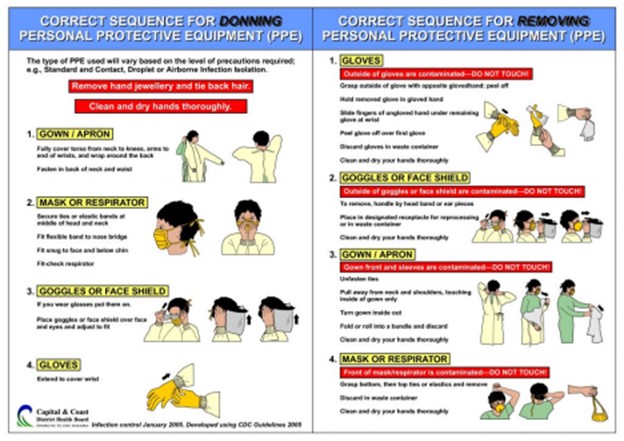
A nurse is caring for a client who is in contact isolation. When exiting the client's room, in what order should the nurse take the following steps when removing her personal protective equipment? (Move the nursing actions into the box on the right, placing them in the selected order of performance. All steps must be used.)
A. Remove gloves.
B. Remove protective eyewear.
C. Remove gown.
D. Remove mask
E. Perform hand hygiene.
This question is an excerpt from Nurse Dive's nursing test bank - Gastro Urinary Systems Medication Proctored Exam. Take the full exam now
Full Explanation
When removing personal protective equipment (PPE) after caring for a client in contact isolation, the nurse should follow the steps in the following order:
1. Remove gloves.
2. Remove protective eyewear.
3. Remove gown.
4. Remove mask.
5. Perform hand hygiene.
By following this sequence, the nurse ensures that the removal of PPE is done in a way that minimizes the risk of contamination. Removing gloves first helps prevent the spread of potential contaminants on the hands. Removing protective eyewear next avoids any potential contact with the face or eyes during the removal process. Removing the gown comes next, followed by the mask. Lastly, performing hand hygiene after removing all PPE helps ensure the hands are thoroughly cleaned.
Similar Questions
A nurse is caring for a client who is taking cimetidine. Which of the following client statements indicates to the nurse that the cimetidine treatment has been effective? (Select all that apply.)
A. "I don't have as much heartburn after I eat anymore."
B. "I noticed that I have had less urge to smoke lately."
C. "I occasionally have stomach pain and dark stools.
D. "I can sleep while lying flat again.
E. "I have not been as dizzy as I was before."
Full Explanation
From the given statements, the nurse can identify the following statements as indicating the effectiveness of cimetidine treatment:
"I don't have as much heartburn after I eat anymore.": Cimetidine is a histamine-2 receptor antagonist commonly used to reduce stomach acid production. Decreased heartburn after eating suggests that the medication has been effective in reducing excessive acid production and relieving heartburn symptoms.
"I can sleep while lying flat again.": Cimetidine can help alleviate symptoms of gastroesophageal reflux disease (GERD) by reducing stomach acid. Improved ability to sleep while lying flat suggests that the medication has successfully reduced acid reflux and related symptoms.
The following statements do not directly indicate the effectiveness of cimetidine treatment: ● "I noticed that I have had less urge to smoke lately."
● "I occasionally have stomach pain and dark stools."
● "I have not been as dizzy as I was before."
These statements may be unrelated to the effects of cimetidine or may require further assessment to determine their significance. It's important for the nurse to address any concerns or symptoms mentioned by the client and evaluate their overall response to the medication
A nurse is reinforcing teaching with a client who has a duodenal ulcer and a new prescription for cimetidine. Which of the following instructions should the nurse include?
A. "Drinking grapefruit juice while taking cimetidine can lead to toxicity."
B. "Avoid taking the medication at bedtime."
C. “Take an antacid 30 min prior to taking cimetidine to minimize stomach upset."
D. “You will need to continue taking this medication for up to 6 weeks."
Full Explanation
When reinforcing teaching with a client who has a duodenal ulcer and a new prescription for cimetidine, the nurse should include the following instructions:
"Avoid taking the medication at bedtime.": Cimetidine is most effective when taken during waking hours to help control gastric acid secretion. Taking it at bedtime may not provide optimal therapeutic benefits.
"You will need to continue taking this medication for up to 6 weeks.": Cimetidine is often prescribed for the treatment of duodenal ulcers and may require several weeks of continuous use to promote healing. It is important for the client to understand the duration of treatment and the need for adherence to the prescribed regimen.
The following statements are incorrect or not applicable:
"Drinking grapefruit juice while taking cimetidine can lead to toxicity.": Cimetidine does not have a known interaction with grapefruit juice. However, it is always important to consult the healthcare provider or pharmacist about potential drug interactions, including those related to specific foods or beverages.
"Take an antacid 30 minutes prior to taking cimetidine to minimize stomach upset.": Cimetidine is an H2 receptor antagonist that works by reducing stomach acid production. It is not necessary to take an antacid prior to taking cimetidine to minimize stomach upset. However, if the client experiences stomach upset or discomfort, they should consult their healthcare provider for further guidance on managing these symptoms.
A nurse is checking the client's bowel sounds. At which time should the nurse auscultate the client's abdomen?
Full Explanation
The nurse typically auscultates the abdomen for bowel sounds before meals or at least 1-2 hours after meals. This timing allows for the assessment of both the presence and character of bowel sounds. It is important to note that bowel sounds can vary depending on factors such as the client's activity level, diet, and any underlying gastrointestinal conditions. Therefore, a comprehensive assessment of bowel sounds should be conducted at different times to obtain an accurate representation of the client's bowel function.