
Nursing practice questions with comprehensive rationales
NurseDive Free Nursing Practice Question
A nurse is caring for a client who is postoperative following a total hip arthroplasty. Which of the following actions by the nurse demonstrates cost-effective care?
A. Flexes the client's affected hip to 120
B. Adducts the client's affected leg
C. Checks the neurovascular status of the client's lower extremities every 6 hr
D. Applies a sequential compression device to the client's lower extremities
Applying a sequential compression device to the client's lower extremities demonstrates cost-effective care. This intervention helps prevent venous thromboembolism (VTE) and is a cost-effective method compared to other measures like administering prophylactic anticoagulation medications or performing Doppler studies. Flexing the client's affected hip to 120 (option a) and adducting the affected leg (option b) are specific positioning techniques for a total hip arthroplasty but do not directly address cost- effectiveness. Checking the neurovascular status every 6 hours (option c) is important for postoperative monitoring but does not specifically demonstrate cost-effective care in this context.
This question is an excerpt from Nurse Dive's nursing test bank - VATI PN Comprehensive Predictor 2020 Proctored Exam. Take the full exam now
Similar Questions
A nurse is preparing to administer medication to a child through an enteral tube. Which of the following actions should the nurse take after administering the medication?
A. Flush the tubing.
After administering medication through an enteral tube, the nurse should flush the tubing to ensure that the medication is fully delivered and to prevent any residual medication from clogging the tube. Flushing the tubing with an appropriate amount of water helps ensure that the medication reaches the desired location and prevents any potential blockages. Clamping the tubing (option b) is not necessary after medication administration and may interfere with the flow of fluids or other medications. Checking patency of the tubing (option c) may be done before medication administration but is not specifically related to actions after medication administration. Aspirating the tubing (option d) is not required unless specifically indicated for certain medications or circumstances.
B. Clamp the tubing
C. Check patency of the tubing
D. Aspirate the tubing
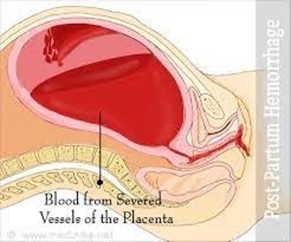
A nurse is assisting in the care of a client who is experiencing a postpartum hemorrhage.
Which of the following medications should the nurse plan to administer?
A. Terbutaline
Is a medication used for the management of preterm labor by relaxing the uterine smooth muscles. It is not indicated for postpartum hemorrhage.
B. Methylergonovine
Postpartum hemorrhage is a significant complication that can occur after childbirth. Methylergonovine is a medication commonly used to manage postpartum hemorrhage. It is an ergot alkaloid that helps to contract the uterus, reducing bleeding. It is typically administered either intramuscularly or orally. It's important to note that the specific management of postpartum hemorrhage may vary depending on the underlying cause, severity of bleeding, and individual patient factors. The healthcare provider will determine the most appropriate interventions and medications for each case.
C. Magnesium sulfate
Is a medication used for the prevention and treatment of seizures in patients with preeclampsia or eclampsia. It is not specifically indicated for postpartum hemorrhage.
D. Nifedipine
Is a calcium channel blocker commonly used to manage hypertension. It is not indicated for postpartum hemorrhage.
Full Explanation
b. Methylergonovine.
Explanation:
Postpartum hemorrhage is a significant complication that can occur after childbirth. Methylergonovine is a medication commonly used to manage postpartum hemorrhage. It is an ergot alkaloid that helps to contract the uterus, reducing bleeding. It is typically administered either intramuscularly or orally.
Option a, Terbutaline, is a medication used for the management of preterm labor by relaxing the uterine smooth muscles. It is not indicated for postpartum hemorrhage.
Option c, Magnesium sulfate, is a medication used for the prevention and treatment of seizures in patients with preeclampsia or eclampsia. It is not specifically indicated for postpartum hemorrhage.
Option d, Nifedipine, is a calcium channel blocker commonly used to manage hypertension. It is not indicated for postpartum hemorrhage.
It's important to note that the specific management of postpartum hemorrhage may vary depending on the underlying cause, severity of bleeding, and individual patient factors. The healthcare provider will determine the most appropriate interventions and medications for each case.
A nurse on a maternal newborn unit is assisting with the preparation of an in-service presentation about infection control. Which of the following information should the nurse recommend to include?
A. Infant bassinets should be positioned 24 in (2 feet) apart
B. Staff should avoid using alcohol-based hand rubs to perform hand hygiene
C. Visitors who have an upper respiratory infection should wear a mask
The nurse should recommend including the information that visitors who have an upper respiratory infection should wear a mask. This is an important infection control measure to prevent the spread of respiratory infections to vulnerable newborns and their mothers. Positioning infant bassinets 24 inches (2 feet) apart (option a) may be a recommendation for spacing, but it is not directly related to infection control. Staff should actually be encouraged to use alcohol-based hand rubs for hand hygiene as they are effective in killing germs (option b). Pumped breastmilk can be left at room temperature for 4 hours, not 6 hours, so this information is inaccurate (option d).
D. Pumped breastmilk can be left at room temperature for 6 hr