
Nursing practice questions with comprehensive rationales
NurseDive Free Nursing Practice Question
A nurse is caring for a client who is receiving prenatal care and is at her 24-week appointment.
Which of the following laboratory tests should the nurse plan to conduct?
A. Group B strep culture.
Choice A, Group B strep culture, is not an answer because it is a test usually done between 35-37 weeks of pregnancy to check for the presence of Group B streptococcus bacteria.
B. Rubella titer.
Choice B, Rubella titer, is not an answer because it is a blood test usually done early in pregnancy to check for immunity to rubella.
C. Blood type and Rh.
Choice C, Blood type and Rh, is not an answer because it is a blood test usually done early in pregnancy to determine the mother’s blood type and Rh factor.
D. One-hour glucose tolerance test.
A nurse caring for a client who is receiving prenatal care and is at her 24-week appointment should plan to conduct a one-hour glucose tolerance test. This test is done to screen for gestational diabetes that can develop during pregnancy.
This question is an excerpt from Nurse Dive's nursing test bank - ATI RN Maternal Newborn 2019 with NGN Proctored Exam. Take the full exam now
Full Explanation
A nurse caring for a client who is receiving prenatal care and is at her 24-week appointment should plan to conduct a one-hour glucose tolerance test.
This test is done to screen for gestational diabetes that can develop during pregnancy.
Choice A, Group B strep culture, is not an answer because it is a test usually done between 35-37 weeks of pregnancy to check for the presence of Group B streptococcus bacteria.
Choice B, Rubella titer, is not an answer because it is a blood test usually done early in pregnancy to check for immunity to rubella.
Choice C, Blood type and Rh, is not an answer because it is a blood test usually done early in pregnancy to determine the mother’s blood type and Rh factor.
Similar Questions
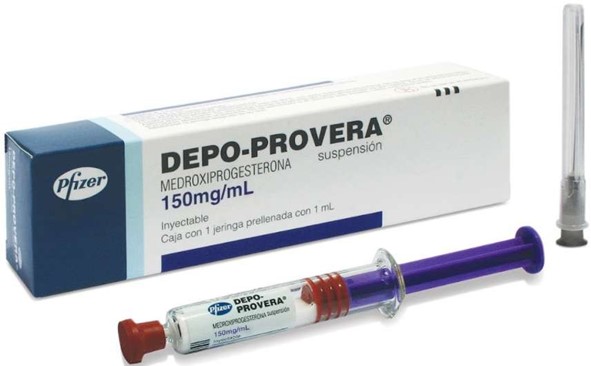
A nurse is providing teaching to a client who is receiving medroxyprogesterone IM for contraception.
Which of the following statements by the client indicates an understanding of the teaching?
A. "I should increase my calcium intake while taking this medication.”
“I should increase my calcium intake while taking this medication.” A client who is receiving medroxyprogesterone IM for contraception should increase their calcium intake while taking this medication. Medroxyprogesterone can cause loss of bone mineral density which can increase the risk of osteoporosis. Increasing calcium intake can help maintain bone health.
B. "I should discontinue this medication if I experience spotting.”
Choice B, “I should discontinue this medication if I experience spotting,” is not an answer because spotting is a common side effect of medroxyprogesterone and does not require discontinuation of the medication.
C. "I will need to return to the clinic in 8 weeks for my next injection.”
Choice C, “I will need to return to the clinic in 8 weeks for my next injection,” is not an answer because medroxyprogesterone IM is given every 3 months, not every 8 weeks.
D. "I will get two shots each time I receive this medication.”
Choice D, “I will get two shots each time I receive this medication,” is not an answer because only one injection is given at a time.
E. "I will get two shots each time I receive this medication.”
Full Explanation
“I should increase my calcium intake while taking this medication.” A client who is receiving medroxyprogesterone IM for contraception should increase their calcium intake while taking this medication .
Medroxyprogesterone can cause loss of bone mineral density which can increase the risk of osteoporosis. Increasing calcium intake can help maintain bone health.
Choice B, “I should discontinue this medication if I experience spotting,” is not an answer because spotting is a common side effect of medroxyprogesterone and does not require discontinuation of the medication.
Choice C, “I will need to return to the clinic in 8 weeks for my next injection,” is not an answer because medroxyprogesterone IM is given every 3 months, not every 8 weeks.
Choice D, “I will get two shots each time I receive this medication,” is not an answer because only one injection is given at a time.
A nurse is caring for a newborn.
Which of the following assessment findings should indicate to the nurse that suctioning of the nasopharynx is needed?
A. The newborn's respiratory rate is 32/min.
Choice A, “The newborn’s respiratory rate is 32/min,” is not an answer because a respiratory rate of 32/min is within the normal range for a newborn.
B. The newborn's respiratory rate is irregular.
Choice B, “The newborn’s respiratory rate is irregular,” is not an answer because irregular breathing paterns are common in newborns.
C. The newborn is beginning to cough.
Choice C, “The newborn is beginning to cough,” is not an answer because coughing is a normal reflex that helps clear the airway.
D. The newborn's pulse oximetry is 91.
Choice D, “The newborn’s pulse oximetry is 91,” is not an answer because pulse oximetry measures oxygen saturation and does not indicate the need for nasopharyngeal suctioning.
E. None of the above
None of the choices provided indicate that suctioning of the nasopharynx is needed for a newborn. Nasopharyngeal suctioning is performed to remove mucus or saliva from the back of the throat when a newborn is unable to cough or swallow. It is commonly used in infants with bronchiolitis.
Full Explanation
None of the choices provided indicate that suctioning of the nasopharynx is needed for a newborn.
Nasopharyngeal suctioning is performed to remove mucus or saliva from the back of the throat when a newborn is unable to cough or swallow. It is commonly used in infants with bronchiolitis.
Choice A, “The newborn’s respiratory rate is 32/min,” is not an answer because a respiratory rate of 32/min is within the normal range for a newborn.
Choice B, “The newborn’s respiratory rate is irregular,” is not an answer because irregular breathing paterns are common in newborns.
Choice C, “The newborn is beginning to cough,” is not an answer because coughing is a normal reflex that helps clear the airway.
Choice D, “The newborn’s pulse oximetry is 91,” is not an answer because pulse oximetry measures oxygen saturation and does not indicate the need for nasopharyngeal suctioning.
A nurse is assessing a client during her first prenatal visit. The client reports March 20 as her last menstrual period.
Use Naegele's rule to calculate the estimated date of delivery.
(Use the MMDD format with four numerals and no spaces or punctuation: MMDD.)
Full Explanation
Naegele’s rule is a method for estimating the due date of a baby based on the woman’s last menstrual period (LMP).
It involves adding seven days and subtracting three months from the first day of the LMP.
It assumes a 28-day menstrual cycle and a 280-day gestation period, which may vary for different women 1.
Using this rule, if the client’s last menstrual period was March 20, then adding seven days would give March 27.
Subtracting three months would give December 27 of the previous year.
Adding one year would give December 27 of the current year, which is the estimated date of delivery in MMDD format: 1227.