
Nursing practice questions with comprehensive rationales
NurseDive Free Nursing Practice Question
A nurse is caring for a client who is taking furosemide. For which of the following adverse effects should the nurse monitor?
A. Hypervolemia
B. Hypertension
C. Hypoglycemia
D. Hypokalemia
Furosemide is a loop diuretic that helps the body get rid of excess fluid by increasing urine output. However, it also promotes the loss of potassium in the urine, leading to a potential decrease in the body's potassium levels.
This question is an excerpt from Nurse Dive's nursing test bank - Gastro Urinary Systems Medication Proctored Exam. Take the full exam now
Full Explanation
Furosemide is a loop diuretic that helps the body get rid of excess fluid by increasing urine output. However, it also promotes the loss of potassium in the urine, leading to a potential decrease in the body's potassium levels.

Similar Questions
A nurse caring for a client who has a new prescription for atenolol. For which of the following adverse effects should the nurse monitor the clients
A. Hypokalemia
B. Bradycardia
Atenolol is a beta-blocker medication commonly used to treat conditions such as hypertension (high blood pressure) and certain heart rhythm disorders. One of the intended effects of atenolol is to lower the heart rate by blocking the action of adrenaline on beta receptors in the heart. However, this can sometimes result in bradycardia, which refers to a heart rate that is slower than the normal range. Hypokalemia, or low potassium levels, is not directly caused by atenolol but can be an indirect effect. Beta-blockers like atenolol can potentially interfere with the normal release of insulin and contribute to increased urinary excretion of potassium. Therefore, it's important to monitor potassium levels in clients taking atenolol, as low potassium levels can have adverse effects on various body systems. Anemia and neutropenia are not typically associated with the use of atenolol. Anemia refers to a decrease in the number of red blood cells or a decrease in the amount of hemoglobin, which carries oxygen to the body tissues. Neutropenia refers to a decrease in the number of neutrophils, which are a type of white blood cell involved in fighting infection.
C. Anemia
D. Neutropenia
Full Explanation
Atenolol is a beta-blocker medication commonly used to treat conditions such as hypertension (high blood pressure) and certain heart rhythm disorders. One of the intended effects of atenolol is to lower the heart rate by blocking the action of adrenaline on beta receptors in the heart. However, this can sometimes result in bradycardia, which refers to a heart rate that is slower than the normal range.

Hypokalemia, or low potassium levels, is not directly caused by atenolol but can be an indirect effect. Beta-blockers like atenolol can potentially interfere with the normal release of insulin and contribute to increased urinary excretion of potassium. Therefore, it's important to monitor potassium levels in clients taking atenolol, as low potassium levels can have adverse effects on various body systems.
Anemia and neutropenia are not typically associated with the use of atenolol. Anemia refers to a decrease in the number of red blood cells or a decrease in the amount of hemoglobin, which carries oxygen to the body tissues. Neutropenia refers to a decrease in the number of neutrophils, which are a type of white blood cell involved in fighting infection.
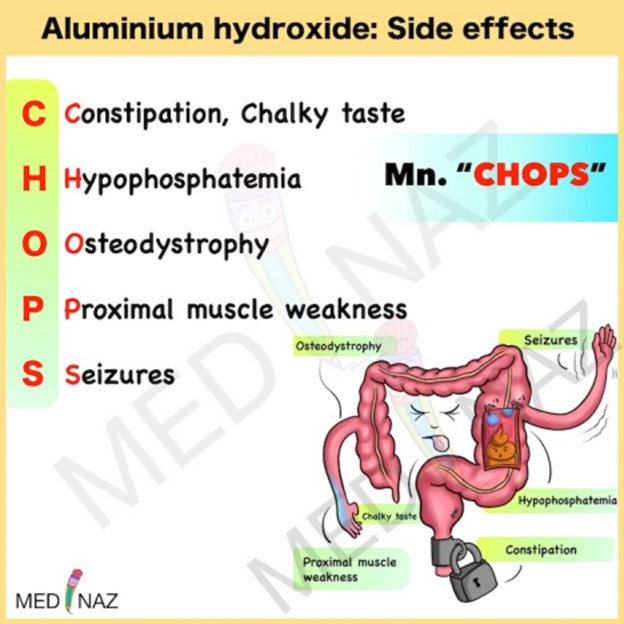
A nurse is reinforcing teaching with a client who has a new prescription for aluminum hydroxide to treat heartburn. Which of the following adverse effects of the medication should the nurse include in the teaching?
A. Constipation
When reinforcing teaching with a client who has a new prescription for aluminum hydroxide to treat heartburn, the nurse should include constipation as an adverse effect of the medication. Aluminum hydroxide is an antacid commonly used to neutralize stomach acid and provide relief from heartburn and indigestion. However, one of its potential side effects is constipation. Aluminum hydroxide can slow down intestinal motility, leading to infrequent or difficult bowel movements. Hypertension: Aluminum hydroxide is not known to cause hypertension (high blood pressure). However, clients with pre-existing hypertension should be cautious when using antacids containing sodium bicarbonate, as the sodium content may impact blood pressure levels. Flatulence: Flatulence (excessive gas) is not a common adverse effect of aluminum hydroxide. It primarily works by neutralizing stomach acid and does not typically cause increased gas production. Headache: Headache is not commonly reported as an adverse effect of aluminum hydroxide. It is more likely to be associated with other factors such as the underlying condition causing heartburn or individual factors.
B. Hypertension
C. Flatulence
D. Headache
Full Explanation
When reinforcing teaching with a client who has a new prescription for aluminum hydroxide to treat heartburn, the nurse should include constipation as an adverse effect of the medication. Aluminum hydroxide is an antacid commonly used to neutralize stomach acid and provide relief from heartburn and indigestion. However, one of its potential side effects is constipation. Aluminum hydroxide can slow down intestinal motility, leading to infrequent or difficult bowel movements.
Hypertension: Aluminum hydroxide is not known to cause hypertension (high blood pressure). However, clients with pre-existing hypertension should be cautious when using antacids containing sodium bicarbonate, as the sodium content may impact blood pressure levels.
Flatulence: Flatulence (excessive gas) is not a common adverse effect of aluminum hydroxide. It primarily works by neutralizing stomach acid and does not typically cause increased gas production.
Headache: Headache is not commonly reported as an adverse effect of aluminum hydroxide. It is more likely to be associated with other factors such as the underlying condition causing heartburn or individual factors.
A nurse is preparing to administer a bolus enteral feeding to a client who has a gastrostomy tube. Which of the following actions should the nurse take first?
A. Elevate the head of the bed.
Elevating the head of the bed to a semi-Fowler's or high Fowler's position helps prevent aspiration during the feeding. This position facilitates proper digestion and reduces the risk of regurgitation or reflux. It allows gravity to assist in keeping the feeding in the stomach and reduces the likelihood of complications. The other actions mentioned are also important steps in the process but should be performed after elevating the head of the bed: Measure stomach contents: This step is usually done before administering any enteral feeding to check for the presence of residual gastric contents. It helps determine if the client is tolerating previous feedings and guides adjustments in the feeding volume or rate if needed. Return gastric content into the gastrostomy tube: If there is a significant amount of gastric residual, it is recommended to return the contents into the stomach before administering the feeding. This helps ensure that the client receives the full prescribed amount of the enteral feeding. Flush the tube with water: Flushing the gastrostomy tube with water before and after the feeding helps maintain tube patency, clears any residual feeding or medication, and prevents clogging.
B. Measure stomach contents.
C. Return gastric content into the gastrostomy tube.
D. Flush the tube with water
Full Explanation
Elevating the head of the bed to a semi-Fowler's or high Fowler's position helps prevent aspiration during the feeding. This position facilitates proper digestion and reduces the risk of
regurgitation or reflux. It allows gravity to assist in keeping the feeding in the stomach and reduces the likelihood of complications.

The other actions mentioned are also important steps in the process but should be performed after elevating the head of the bed:
Measure stomach contents: This step is usually done before administering any enteral feeding to check for the presence of residual gastric contents. It helps determine if the client is tolerating previous feedings and guides adjustments in the feeding volume or rate if needed.
Return gastric content into the gastrostomy tube: If there is a significant amount of gastric residual, it is recommended to return the contents into the stomach before administering the feeding. This helps ensure that the client receives the full prescribed amount of the enteral feeding.
Flush the tube with water: Flushing the gastrostomy tube with water before and after the feeding helps maintain tube patency, clears any residual feeding or medication, and prevents clogging.