
Nursing practice questions with comprehensive rationales
NurseDive Free Nursing Practice Question
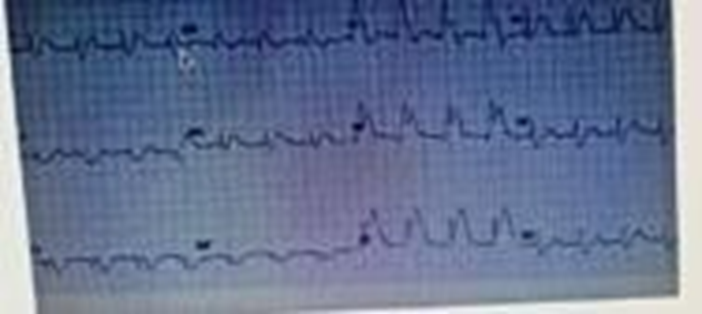
A nurse is caring for a client with sudden onset of chest pain, the nurse completes the electrocardiogram (ECG). The nurse understands that this client is having what type of acute coronary syndrome?
A. NSTEMI
This is wrong because the ECG leads show ST segment elevation.
B. Stable Angina
Stable angina may present with ST segment depression in an ECG unlike in the strip shown above which depicts an ST segment elevation.
C. STEMI
This is correct because of the ST segment elevation.
D. Unstable Angina
Unstable angina may have hyperacute T wave, flattening of the T waves, inverted T waves or an ST depression unlike in the above ECG strip.
This question is an excerpt from Nurse Dive's nursing test bank - Ati Rn Nsg 232 Proctored Exam Med Surg. Take the full exam now
Full Explanation
Rationale:
A. This is wrong because the ECG leads show ST segment elevation.
B. Stable angina may present with ST segment depression in an ECG unlike in the strip shown above which depicts an ST segment elevation.
C. This is correct because of the ST segment elevation.
D. Unstable angina may have hyperacute T wave, flattening of the T waves, inverted T waves or an ST depression unlike in the above ECG strip.
Similar Questions
A nurse is caring for a client post cardiac catheterization via the right groin site. The nurse is aware that which of the following findings needs to be reported to the interventional cardiologist as soon as it is identified.
A. Swelling at the insertion site and cool extremity
Swelling at the insertion site and cool extremity may indicate bleeding or hematoma formation at the site.
B. Oozing blood from the insertions site
Oozing blood from the insertion site is expected immediately after a cardiac catheterization.
C. The client has not voided since returning to recovery.
The client has not voided since returning to recovery is not related to the cardiac catheterization.
D. Blood pressure reading of 110/70 and heart rate of 90
Blood pressure reading of 110/70 and heart rate of 90 are within normal limits.
Full Explanation
Rationale:
A. Swelling at the insertion site and cool extremity may indicate bleeding or hematoma formation at the site.
B. Oozing blood from the insertion site is expected immediately after a cardiac catheterization.
C. The client has not voided since returning to recovery is not related to the cardiac catheterization.
D. Blood pressure reading of 110/70 and heart rate of 90 are within normal limits.
A nurse is teaching a client who has a new diagnosis of atrial fibrillation. The nurse should include which of the following in the education?
A. Check your skin for increased bruising
This is important because AFib can lead to blood clots, which may cause bruising or other skin changes.
B. Missing 1 dose of medication is not a risk
Missing doses of medication can increase the risk of complications in atrial fibrillation.
C. The client may develop hypothyroidism.
Hypothyroidism is not directly related to AFib. Therefore, this information is not relevant for AFib education.
D. Hypertension is not a risk factor
Hypertension is a risk factor for atrial fibrillation.
Full Explanation
Rationale:
A. This is important because AFib can lead to blood clots, which may cause bruising or other skin changes.
B. Missing doses of medication can increase the risk of complications in atrial fibrillation.
C. Hypothyroidism is not directly related to AFib. Therefore, this information is not relevant for AFib education.
D. Hypertension is a risk factor for atrial fibrillation.
A nurse is caring for a client with right sided heart failure. Which of the following symptoms should the nurse include in teaching the client about signs of worsening heart failure? (SELECT ALL THAT APPLY)
A. Unable to lie flat
Unable to lie flat due to orthopnea is a sign of worsening heart failure.
B. Feeling fatigued
Feeling fatigued is a general symptom of heart failure but can worsen as heart failure progresses.
C. Distended neck veins
Distended neck veins indicate increased central venous pressure, which is a sign of worsening right-sided heart failure.
D. Increased appetite
Increased appetite is not typically associated with worsening heart failure.
E. Weight gain 2 in 24hours
Weight gain of 2 pounds in 24 hours indicates fluid retention and worsening heart failure.
F. Worsening Lower extremity edema
Worsening lower extremity edema is a sign of worsening heart failure.
Full Explanation
Rationale:
A. Unable to lie flat due to orthopnea is a sign of worsening heart failure.
B. Feeling fatigued is a general symptom of heart failure but can worsen as heart failure progresses.
C. Distended neck veins indicate increased central venous pressure, which is a sign of worsening right-sided heart failure.
D. Increased appetite is not typically associated with worsening heart failure.
E. Weight gain of 2 pounds in 24 hours indicates fluid retention and worsening heart failure.
F. Worsening lower extremity edema is a sign of worsening heart failure.