
Nursing practice questions with comprehensive rationales
NurseDive Free Nursing Practice Question
A nurse is caring for a preschooler who is postoperative following a tonsillectomy. The child is now ready to resume oral intake.
Which of the following dietary choices should the nurse offer the child?
A. Chocolate milk.
Choice Ais wrong because dairy products like chocolate milk can increase mucus production and make stomach upset worse.
B. Vanilla ice cream.
Choice Bis wrong because dairy products like vanilla ice cream can increase mucus production and make stomach upset worse.
C. Sugar-free cherry gelatin.
Sugar-free cherry gelatin is a soft and cooling food that can make the child more comfortable during recovery and help them heal faster.
D. Lime-flavored ice pop.
Choice D is wrong because acidic foods like lime-flavored ice pops may cause discomfort.
This question is an excerpt from Nurse Dive's nursing test bank - ATI RN Nursing Care of Children 2019 Proctored Exam. Take the full exam now
Full Explanation
Sugar-free cherry gelatin is a soft and cooling food that can make the child more comfortable during recovery and help them heal faster.
Choice A is wrong because dairy products like chocolate milk can increase mucus production and make stomach upset worse.
Choice B is wrong because dairy products like vanilla ice cream can increase mucus production and make stomach upset worse.
Choice D is wrong because acidic foods like lime-flavored ice pops may cause discomfort.
Similar Questions
A nurse is preparing to initiate IV antibiotic therapy for a newly admitted 12- month-old infant.
Which of the following actions should the nurse plan to take?
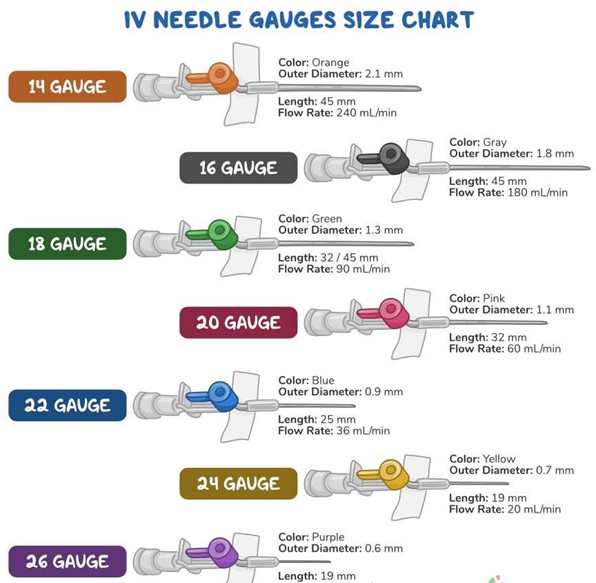
A. Use a 24-gauge catheter to start the IV.
A 24-gauge catheter is the smallest-gauge catheter and is appropriate for administering IV fluids and medications to an infant.
B. Cover the insertion site with an opaque dressing.
Choice B is wrong because an opaque dressing would prevent the nurse from visualizing the insertion site.
C. Start the IV in the infant's foot.
Choice C is wrong because starting an IV in an infant’s foot can be painful and difficult to secure.
D. Change the IV site every 3 days.
Choice D is wrong because IV sites should be changed every 72-96 hours or according to facility policy.
Full Explanation
A 24-gauge catheter is the smallest-gauge catheter and is appropriate for administering IV fluids and medications to an infant.
Choice B is wrong because an opaque dressing would prevent the nurse from visualizing the insertion site.
Choice C is wrong because starting an IV in an infant’s foot can be painful and difficult to secure.
Choice D is wrong because IV sites should be changed every 72-96 hours or according to facility policy.
A nurse in the emergency department is assessing a toddler who has hyperpyrexia, severe dyspnea, and is drooling.
Which of the following actions should the nurse take first?
A. Administer an antibiotic to the toddler.
Choice A is wrong because administering an antibiotic is not the priority intervention for a toddler with airway obstruction.
B. Obtain a blood culture from the toddler.
Choice B is wrong because obtaining a blood culture is not the priority intervention for a toddler with airway obstruction.
C. Insert an IV catheter for the toddler.
Choice C is wrong because inserting an IV catheter is not the priority intervention for a toddler with airway obstruction.
D. Prepare the toddler for nasotracheal intubation.
The nurse should prepare the toddler for nasotracheal intubation first because the toddler is experiencing severe dyspnea and drooling, which are signs of airway obstruction. Nasotracheal intubation will help to secure the toddler’s airway and improve their breathing.
Full Explanation
The nurse should prepare the toddler for nasotracheal intubation first because the toddler is experiencing severe dyspnea and drooling, which are signs of airway obstruction.
Nasotracheal intubation will help to secure the toddler’s airway and improve their breathing.
Choice A is wrong because administering an antibiotic is not the priority intervention for a toddler with airway obstruction.
Choice B is wrong because obtaining a blood culture is not the priority intervention for a toddler with airway obstruction.
Choice C is wrong because inserting an IV catheter is not the priority intervention for a toddler with airway obstruction.
A nurse is preparing to administer an enteral feeding to an adolescent who has an NG tube.
Which of the following actions should the nurse take first?
A. Flush the tube with water.
Choice A is wrong because flushing the tube with water should be done after confirming the placement of the NG tube.
B. Attach the feeding bag tubing to the end of the NG tube.
Choice B is wrong because attaching the feeding bag tubing to the end of the NG tube should be done after confirming the placement of the NG tube.
C. Check the pH of the gastric secretions.
The nurse should first check the pH of the gastric secretions to confirm the placement of the NG tube before administering the enteral feeding.
D. Set the administration rate on the feeding pump.
Choice D is wrong because setting the administration rate on the feeding pump should be done after confirming the placement of the NG tube.
Full Explanation
The nurse should first check the pH of the gastric secretions to confirm the placement of the NG tube before administering the enteral feeding.
Choice A is wrong because flushing the tube with water should be done after confirming the placement of the NG tube.
Choice B is wrong because attaching the feeding bag tubing to the end of the NG tube should be done after confirming the placement of the NG tube.
Choice D is wrong because setting the administration rate on the feeding pump should be done after confirming the placement of the NG tube.