
Nursing practice questions with comprehensive rationales
NurseDive Free Nursing Practice Question
A nurse is caring for a toddler who has a fractured right femur and is in Bryant traction.
When determining that the traction is appropriately assembled, the nurse should observe which of the following?
A. A padded sling is under the knee of the affected leg.
Choice A is incorrect because a padded sling is not used under the knee of the affected leg in Bryant traction.
B. Skin straps maintain the leg in an extended position.
Choice B is incorrect because skin straps are not used to maintain the leg in an extended position in Bryant traction.
C. Weights are attached to a pin that is inserted into the femur.
Choice C is incorrect because weights are not attached to a pin that is inserted into the femur in Bryant traction.
D. The buttocks are elevated slightly off of the bed.
When determining that Bryant's traction is appropriately assembled, the nurse should observe that the buttocks is elevated slightly off of the bed. In Bryant traction, both of the patient’s limbs are suspended in the air vertically at a ninety-degree angle from the hips and knees slightly flexed.
This question is an excerpt from Nurse Dive's nursing test bank - ATI Custom SP23 N23 N240 Proctored Exam 3 Ch 11 24 32 43 44. Take the full exam now
Full Explanation
When determining that Bryant's traction is appropriately assembled, the nurse should observe that the buttocks is elevated slightly off of the bed.
In Bryant traction, both of the patient’s limbs are suspended in the air vertically at a ninety-degree angle from the hips and knees slightly flexed.
Choice A is incorrect because a padded sling is not used under the knee of the affected leg in Bryant traction.
Choice B is incorrect because skin straps are not used to maintain the leg in an
extended position in Bryant traction.
Choice C is incorrect because weights are not attached to a pin that is inserted into the femur in Bryant traction.
Similar Questions
A school nurse conducting a screening for pediculosis capitis identifies several children who require treatment.
Which of the following instructions should the nurse give the children's parents?
A. Inspect any dogs or cats at home for lice.
Choice A is incorrect because lice are specific to humans and do not infest dogs or cats.
B. Soak all combs and hairbrushes in alcohol.
Choice B is incorrect because soaking combs and hairbrushes in alcohol is not necessary. Instead, they can be soaked in hot water (at least 130°F) for 5-10 minutes.
C. Spray countertops and sinks with insecticide.
Choice C is incorrect because spraying countertops and sinks with insecticide is not necessary and could be harmful.
D. Seal nonwashable items in airtight plastic bags.
The nurse should instruct the children’s parents to seal nonwashable items in airtight plastic bags for at least 72 hours to kill any lice or nits that may be on those items.
Full Explanation
The nurse should instruct the children’s parents to seal nonwashable items in airtight plastic bags for at least 72 hours to kill any lice or nits that may be on those items.
Choice A is incorrect because lice are specific to humans and do not infest dogs
or cats.
Choice B is incorrect because soaking combs and hairbrushes in alcohol is not necessary.
Instead, they can be soaked in hot water (at least 130°F) for 5-10 minutes.
Choice C is incorrect because spraying countertops and sinks with insecticide is not necessary and could be harmful.
A nurse is caring for a school-age child who has a systemic disorder and is
receiving antibiotics, immunosuppressants, and corticosteroids. Both of the child's parents have a smoking history.
The child reports soreness in his mouth and refuses to eat.
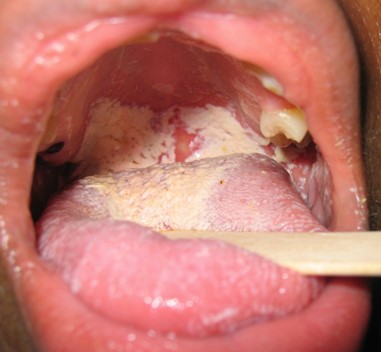
Inspection of his mouth reveals a white, milky plaque that does not come off with
rubbing.
The nurse should suspect which of the following conditions?
A. Dermatitis
Choice A is incorrect because dermatitis is an inflammation of the skin and would not present as a white plaque in the mouth.
B. Candidiasis
The nurse should suspect candidiasis, also known as oral thrush. Candidiasis is a fungal infection that can occur in the mouth and is characterized by the presence of a white, milky plaque that does not come off with rubbing. The child’s use of antibiotics, immunosuppressants, and corticosteroids can increase the risk of developing candidiasis.
C. Herpes simplex
Choice C is incorrect because herpes simplex typically presents as painful blisters or sores in the mouth.
D. Squamous cell carcinoma.
Choice D is incorrect because squamous cell carcinoma typically presents as a firm, painless growth, or ulcer in the mouth.
Full Explanation
The nurse should suspect candidiasis, also known as oral thrush.
Candidiasis is a fungal infection that can occur in the mouth and is characterized by the presence of a white, milky plaque that does not come off with rubbing.
The child’s use of antibiotics, immunosuppressants, and corticosteroids can increase the risk of developing candidiasis.
Choice A is incorrect because dermatitis is an inflammation of the skin and
would not present as a white plaque in the mouth.
Choice C is incorrect because herpes simplex typically presents as painful blisters or sores in the mouth.
Choice D is incorrect because squamous cell carcinoma typically presents as a firm, painless growth, or ulcer in the mouth.
A nurse participating in lead screening at a community center.
The nurse should instruct parents to bring their children back for rescreening in a year for which of the following laboratory values?
A. 10 mcg/dL
A lead level of 10 mcg/dL is above the CDC’s reference value of 3.5 mcg/dL and would require more immediate follow-up and intervention, not just rescreening in one year.
B. 18 mcg/dL
A lead level of 18 mcg/dL is significantly elevated and would necessitate immediate medical intervention and frequent monitoring, rather than waiting a year for rescreening.
C. 4 mcg/dL
A lead level of 4 mcg/dL is slightly above the CDC’s reference value of 3.5 mcg/dL. While it is concerning, it may be appropriate to rescreen in one year if no other risk factors are present.
D. 44 mcg/dL.
A lead level of 44 mcg/dL is dangerously high and requires urgent medical treatment and frequent follow-up, not just rescreening in one year.
Full Explanation
The correct answer is choice C.
Choice A rationale:
A lead level of 10 mcg/dL is above the CDC’s reference value of 3.5 mcg/dL and would require more immediate follow-up and intervention, not just rescreening in one year.
Choice B rationale:
A lead level of 18 mcg/dL is significantly elevated and would necessitate immediate medical intervention and frequent monitoring, rather than waiting a year for rescreening.
Choice C rationale:
A lead level of 4 mcg/dL is slightly above the CDC’s reference value of 3.5 mcg/dL. While it is concerning, it may be appropriate to rescreen in one year if no other risk factors are present.
Choice D rationale:
A lead level of 44 mcg/dL is dangerously high and requires urgent medical treatment and frequent follow-up, not just rescreening in one year.