
Nursing practice questions with comprehensive rationales
NurseDive Free Nursing Practice Question
A nurse is collecting data from a client who is experiencing alcohol withdrawal. Which of the following is an expected finding?
A. Stuporous level of consciousness
B. Seizure activity
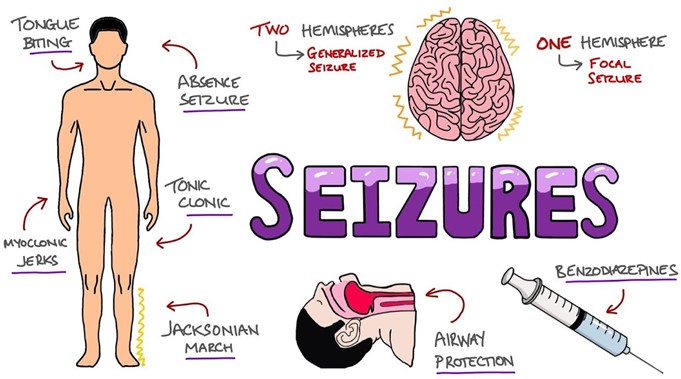
When a client is experiencing alcohol withdrawal, seizures are a common finding. Benzodiazepines are the preferred medications for alcohol withdrawal, and they are used to prevent seizures and treat symptoms of anxiety, agitation, and autonomic hyperactivity.
C. Pathological change on CT scan
D. Bradycardia
This question is an excerpt from Nurse Dive's nursing test bank - PNU Adult Health II Spring 2023 Proctored Exam 2. Take the full exam now
Full Explanation
When a client is experiencing alcohol withdrawal, seizures are a common finding. Benzodiazepines are the preferred medications for alcohol withdrawal, and they are used to prevent seizures and treat symptoms of anxiety, agitation, and autonomic hyperactivity. Stuporous level of consciousness (Choice A), pathological changes on a CT scan (Choice C), and bradycardia (Choice D) are unlikely findings in a client experiencing alcohol withdrawal. Stuporous level of consciousness is more indicative of acute brain dysfunction or coma. CT scan findings may indicate structural brain injury, such as a brain tumor or stroke. Bradycardia is not a common finding in alcohol withdrawal but may occur in severe cases. However, tachycardia is a more common finding.
Similar Questions
A nurse is caring for a client who has anorexia nervosa and insists on exercising three times each day. Which of the following actions should the nurse take?
A. Remind the client that if her weight decreases, she will lose a privilege.
B. Allow the client to exercise once per day for a set amount of time.
Allow the client to exercise once per day for a set amount of time. It is important to set limits and boundaries for a client with anorexia nervosa to ensure their safety, but also to respect their autonomy. Reminding the client of weight loss consequences (choice A) can be counterproductive, asking why they exercise frequently (choice C) is important, but not sufficient without setting boundaries, and allowing the client to exercise as long as they eat 50% of their meals (choice D) can be dangerous.
C. Ask the client why she feels the need to exercise so often.
D. Allow the client to exercise when she wants as long as she eats 50% of all meals.
Full Explanation
Allow the client to exercise once per day for a set amount of time. It is important to set limits and boundaries for a client with anorexia nervosa to ensure their safety, but also to respect their autonomy.
Reminding the client of weight loss consequences (choice A) can be counterproductive, asking why they exercise frequently (choice C) is important, but not sufficient without setting boundaries, and allowing the client to exercise as long as they eat 50% of their meals (choice D) can be dangerous.
The mortality rate for burns is highest in the elderly population. What factors put the very elderly at a high risk? (Select all that apply.)
A. Elderly tend to heal more slowly.
B. The elderly person has a greater proportion of body surface area per amount of body mass.
C. The elderly person has less physiological reserves.
D. Elderly patients have thicker skin.
E. Elderly patients have comorbidities.
Full Explanation
The elderly tend to heal more slowly which can delay wound healing and increase the risk of infection. The elderly person has a greater proportion of body surface area per amount of body mass which increases the amount of skin available for injury, and thus the severity of the burn. The elderly person has less physiological reserves which makes it more difficult for the body to respond to injury and stress. Elderly patients have comorbidities such as diabetes, cardiovascular disease, and respiratory disease that can impair the body's ability to heal and increase the risk of complications. Elderly patients do not typically have thicker skin as it thins with age.
A patient without health insurance comes into the Emergency department limping and dripping blood from a head wound. Which of the following should be done first for this patient?
A. Determine triage level and examine and stabilize as needed.
The nurse should determine the patient's triage level and examine and stabilize the patient as needed when caring for a patient without health insurance who is limping and dripping blood from a head wound in the Emergency department. This intervention is the priority because the patient could be at risk of life-threatening complications if their condition is left untreated.
B. Give the patient information about facilities that specialize in treating people without health insurance.
C. Ask the patient to sign in and provide method of payment for services.
D. Transfer the patient to a hospital that specializes in traumatic brain injuries.
Full Explanation
The nurse should determine the patient's triage level and examine and stabilize the patient as needed when caring for a patient without health insurance who is limping and dripping blood from a head wound in the Emergency department. This intervention is the priority because the patient could be at risk of life-threatening complications if their condition is left untreated. Giving the patient information about facilities that specialize in treating people without health insurance, choice B, and asking the patient to sign in and provide method of payment for services, choice C, may be necessary but are not the priority at this time. Transferring the patient to a hospital that specializes in traumatic brain injuries, choice D, may be necessary after stabilizing the patient, but it is not the priority at this time.