
Nursing practice questions with comprehensive rationales
NurseDive Free Nursing Practice Question
A nurse is completing discharge teaching with a client who has a new diagnosis of AIDS.
Which of the following statements by the client indicates an understanding of the teaching?
A. "I will increase the amount of fresh fruits and vegetables I consume.".
Choice A is wrong because while increasing the amount of fresh fruits and vegetables consumed is a healthy dietary choice, it does not demonstrate an understanding of the discharge teaching for a client with AIDS.
B. "I will wipe up areas soiled with body fluids with alcohol and immediately dispose of the trash.".
Choice B is wrong because while cleaning up areas soiled with body fluids is important, using alcohol and immediately disposing of the trash is not necessary.
C. "I will be sure to wear gloves and wash my hands when I change my cat's litter box.".
This statement indicates an understanding of the teaching because it shows that the client is aware of the importance of reducing their risk of infection by taking precautions when handling pet waste.
D. "I will need to take my clothes to the dry cleaners to sterilize them.".
Choice D is wrong because taking clothes to the dry cleaners to sterilize them is not necessary for a client with AIDS.
This question is an excerpt from Nurse Dive's nursing test bank - ATI Adult Medical Surgical 2019 Proctored Exam. Take the full exam now
Full Explanation
This statement indicates an understanding of the teaching because it shows that the client is aware of the importance of reducing their risk of infection by taking precautions when handling pet waste.

Choice A is wrong because while increasing the amount of fresh fruits and vegetables consumed is a healthy dietary choice, it does not demonstrate an understanding of the discharge teaching for a client with AIDS.
Choice B is wrong because while cleaning up areas soiled with body fluids is important, using alcohol and immediately disposing of the trash is not necessary.
Choice D is wrong because taking clothes to the dry cleaners to sterilize them is not necessary for a client with AIDS.
Similar Questions
A nurse is providing discharge teaching about blood glucose monitoring for a client who has a new diagnosis of type 2 diabetes mellitus.
The nurse should instruct the client to obtain which of the following supplies?
A. Sterile lancets.
The nurse should instruct the client to obtain sterile lancets for blood glucose monitoring. Lancets are small needles used to prick the skin to obtain a blood sample for testing blood glucose levels.
B. Compression stockings.
Choice B is wrong because compression stockings are not necessary for blood glucose monitoring.
C. Toenail clippers.
Choice C is wrong because toenail clippers are not necessary for blood glucose monitoring.
D. Hand mirror.
Choice D is wrong because a hand mirror is not necessary for blood glucose monitoring.
Full Explanation

The nurse should instruct the client to obtain sterile lancets for blood glucose monitoring.
Lancets are small needles used to prick the skin to obtain a blood sample for testing blood glucose levels.
Choice B is wrong because compression stockings are not necessary for blood glucose monitoring.
Choice C is wrong because toenail clippers are not necessary for blood glucose monitoring.
Choice D is wrong because a hand mirror is not necessary for blood glucose monitoring.
A nurse is caring for a client who has just undergone a total laryngectomy.
Which of the following findings is the nurse's priority for immediate intervention?
A. Fever.
Choice A is wrong because while a fever may indicate an infection, it is not the priority for immediate intervention.
B. Blood-tinged secretions.
Choice B is wrong because while blood-tinged secretions may indicate bleeding, it is not the priority for immediate intervention.
C. Tachypnea.
The nurse’s priority for immediate intervention is tachypnea, which is rapid breathing. Tachypnea can be a sign of respiratory distress and requires immediate intervention.
D. IV infiltration.
Choice D is wrong because while IV infiltration may cause discomfort and require attention, it is not the priority for immediate intervention.
Full Explanation
The nurse’s priority for immediate intervention is tachypnea, which is rapid breathing.
Tachypnea can be a sign of respiratory distress and requires immediate intervention.
Choice A is wrong because while a fever may indicate an infection, it is not the priority for immediate intervention.
Choice B is wrong because while blood-tinged secretions may indicate bleeding, it is not the priority for immediate intervention.
Choice D is wrong because while IV infiltration may cause discomfort and require attention, it is not the priority for immediate intervention.
A nurse is preparing to administer 2 units of packed RBCs to a client.
Which of the following actions should the nurse take?
A. Transfuse each unit of blood over 5 hr.
Transfusing each unit of blood over 5 hours (choice A) is not recommended as it may increase the risk of bacterial growth. Packed RBCs should be transfused over 2 to 3 hours.
B. Change the IV tubing after each unit of blood is transfused.
Changing the IV tubing after each unit of blood is transfused (choice B) is not necessary.
C. Prime the tubing with 0.9% sodium chloride.
When administering packed RBCs, the tubing should be primed with 0.9% sodium chloride.
D. Administer the blood through a 22-gauge intravenous catheter.
Administering the blood through a 22-gauge intravenous catheter (choice D) may not be appropriate as a larger gauge catheter is typically used for blood transfusions.
Full Explanation
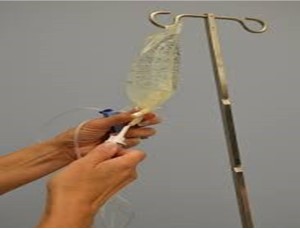
When administering packed RBCs, the tubing should be primed with 0.9% sodium chloride.
Transfusing each unit of blood over 5 hours (choice A) is not recommended as it may increase the risk of bacterial growth.
Packed RBCs should be transfused over 2 to 3 hours.
Changing the IV tubing after each unit of blood is transfused (choice B) is not necessary.
Administering the blood through a 22-gauge intravenous catheter (choice D) may not be appropriate as a larger gauge catheter is typically used for blood transfusions.