
Nursing practice questions with comprehensive rationales
NurseDive Free Nursing Practice Question
A nurse is discharging a child who has sickle cell anemia after an acute crisis episode. Which of the following instructions should the nurse include in the teaching?
A. "Offer fluids to your child multiple times every day.
Children with sickle cell anemia are prone to dehydration, which can worsen the sickling of red blood cells and trigger a sickle cell crisis. Therefore, it is essential to maintain good hydration to prevent crises. Offering fluids to the child multiple times every day helps to keep them well-hydrated.
B. "Restrict outdoor play activity to 1 hour per day.
Option B is not necessary unless there is a specific medical reason to restrict outdoor play. Regular play is essential for a child's physical and emotional development.
C. "Monitor your child's temperature daily."
Option C is important, but it is not specific to discharge teaching after an acute crisis episode. Monitoring the child's temperature daily is essential to detect early signs of infection, which can be a trigger for sickle cell crises.
D. "Apply cold compresses when your child expresses pain
Option D is not recommended because applying cold compresses can cause vasoconstriction and may worsen pain in children with sickle cell anemia. Heat therapy, warm compresses, or a warm bath are more appropriate for pain relief during a sickle cell crisis. However, pain management should be discussed with the healthcare provider to ensure the most appropriate approach for the individual child's needs.
This question is an excerpt from Nurse Dive's nursing test bank - SIMMONS U BSN PEDIATRICS PROCTORED EXAM. Take the full exam now
Full Explanation
Children with sickle cell anemia are prone to dehydration, which can worsen the sickling of red blood cells and trigger a sickle cell crisis. Therefore, it is essential to maintain good hydration to prevent crises. Offering fluids to the child multiple times every day helps to keep them well-hydrated.
Option B is not necessary unless there is a specific medical reason to restrict outdoor play. Regular play is essential for a child's physical and emotional development.
Option C is important, but it is not specific to discharge teaching after an acute crisis episode. Monitoring the child's temperature daily is essential to detect early signs of infection, which can be a trigger for sickle cell crises.
Option D is not recommended because applying cold compresses can cause vasoconstriction and may worsen pain in children with sickle cell anemia. Heat therapy, warm compresses, or a warm bath are more appropriate for pain relief during a sickle cell crisis. However, pain management should be discussed with the healthcare provider to ensure the most appropriate approach for the individual child's needs.
Similar Questions
A nurse is preparing to measure an infant's vital signs. The nurse should use which of the following sites to assess a heart rate?
A. Apex of the heart
The apex of the heart is the preferred site for measuring an infant's heart rate. It is located at the 4th or 5th intercostal space, just medial to the midclavicular line, allowing for accurate auscultation of the heartbeat.
B. Carotid artery
While the carotid artery can be used to assess heart rate in older children and adults, it is not ideal for infants due to the risk of compromising circulation to the brain if pressure is applied too forcefully.
C. Brachial artery
The brachial artery is often used to assess pulse in infants, especially in cases of CPR, but it is not the preferred site for routine heart rate measurement. It may be used when assessing circulation or checking for pulses, but auscultation at the apex is more accurate for heart rate.
D. Radial artery
The radial artery can be difficult to palpate in infants due to their small size and is generally not used for heart rate assessment in this age group. The apex is a more reliable location.
Full Explanation
A. Apex of the heart: The apex of the heart is the preferred site for measuring an infant's heart rate. It is located at the 4th or 5th intercostal space, just medial to the midclavicular line, allowing for accurate auscultation of the heartbeat.
B. Carotid artery: While the carotid artery can be used to assess heart rate in older children and adults, it is not ideal for infants due to the risk of compromising circulation to the brain if pressure is applied too forcefully.
C. Brachial artery: The brachial artery is often used to assess pulse in infants, especially in cases of CPR, but it is not the preferred site for routine heart rate measurement. It may be used when assessing circulation or checking for pulses, but auscultation at the apex is more accurate for heart rate.
D. Radial artery: The radial artery can be difficult to palpate in infants due to their small size and is generally not used for heart rate assessment in this age group. The apex is a more reliable location.
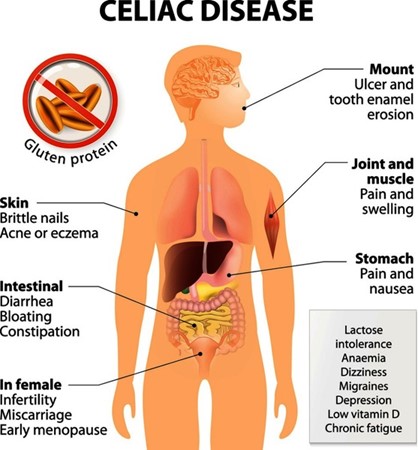
A nurse is providing teaching to a parent of a child who has celiac disease. The nurse should include which of the following food choices for this child?
A. Barley
Barley: Barley contains gluten, which is harmful to individuals with celiac disease. It should be avoided in the child's diet.
B. Rice
When providing teaching to a parent of a child with celiac disease, the nurse should recommend food choices that are gluten-free. Celiac disease is an autoimmune disorder triggered by the ingestion of gluten, which is a protein found in wheat, barley, rye, and their derivatives. Gluten damages the small intestine lining in individuals with celiac disease, leading to various gastrointestinal and nutritional issues. The correct food choice for a child with celiac disease is B. Rice. Rice is naturally gluten-free and can be a safe and nutritious option for individuals with celiac disease. Other gluten-free options include corn, quinoa, oats (certified gluten-free oats), potatoes, and many fruits and vegetables.
C. Rye
Rye: Rye also contains gluten and should be avoided in the child's diet. It can cause damage to the small intestine in individuals with celiac disease.
D. wheat
Wheat: Wheat is a primary source of gluten and is strictly off-limits for individuals with celiac disease. It is essential to avoid all wheat-containing products, including bread, pasta, and baked goods.
Full Explanation
When providing teaching to a parent of a child with celiac disease, the nurse should recommend food choices that are gluten-free. Celiac disease is an autoimmune disorder triggered by the ingestion of gluten, which is a protein found in wheat, barley, rye, and their derivatives. Gluten damages the small intestine lining in individuals with celiac disease, leading to various gastrointestinal and nutritional issues.
The correct food choice for a child with celiac disease is B. Rice. Rice is naturally gluten-free and can be a safe and nutritious option for individuals with celiac disease. Other gluten-free options include corn, quinoa, oats (certified gluten-free oats), potatoes, and many fruits and vegetables.
A. Barley: Barley contains gluten, which is harmful to individuals with celiac disease. It should be avoided in the child's diet.
C. Rye: Rye also contains gluten and should be avoided in the child's diet. It can cause damage to the small intestine in individuals with celiac disease.
D. Wheat: Wheat is a primary source of gluten and is strictly off-limits for individuals with celiac disease. It is essential to avoid all wheat-containing products, including bread, pasta, and baked goods.
Calculate the daily fluid requirements for a child weighing 33 pounds in ml. Note: Do not use a label and round to a whole number.
Full Explanation
To calculate the daily fluid requirements for a child, you typically use the Holliday-Segar method, which provides guidelines based on the child's weight:
- For the first 10 kg of body weight, you give 100 ml per kg.
- For the second 10 kg of body weight, you give 50 ml per kg.
- For any weight above 20 kg, you give 20 ml per kg.
First, convert the child's weight from pounds to kilograms. To do this, divide the weight in pounds by 2.2.
For a child weighing 33 pounds:
- The weight in kilograms is approximately 15 kg (33 divided by 2.2).
Now, calculate the fluid requirement:
- For the first 10 kg of the child's weight, you need 1000 ml (10 kg multiplied by 100 ml).
- For the remaining 5 kg, you need 250 ml (5 kg multiplied by 50 ml).
Adding these together, the total daily fluid requirement is 1250 ml.
So, the daily fluid requirement for a child weighing 33 pounds is 1250 ml.