
Nursing practice questions with comprehensive rationales
NurseDive Free Nursing Practice Question
A nurse is helping a client relieve stress through cognitive reframing. Which of the following actions by the client demonstrates effective use of cognitive reframing?
A. The client imagines being in a quiet, relaxing environment.
"The client imagines being in a quiet, relaxing environment," is not an example of cognitive reframing, but rather an example of visualization, which can also be useful in reducing stress.
B. The client trains his mind to relax by using deep inner resources.
"The client trains his mind to relax by using deep inner resources," is not an example of cognitive reframing, but rather an example of relaxation training.
C. The client learns to change negative thoughts into positive statements.
"The client learns to change negative thoughts into positive statements." This demonstrates the effective use of cognitive reframing, which involves changing negative thoughts into positive self-talk. This strategy can help to reduce stress and improve coping skills.
D. The client learns the source of his stress by writing down daily events.
"The client learns the source of his stress by writing down daily events," is not an example of cognitive reframing, but rather an example of stress management through self-reflection.
This question is an excerpt from Nurse Dive's nursing test bank - PNU Adult Health II Spring 2023 Proctored Exam 2. Take the full exam now
Full Explanation
"The client learns to change negative thoughts into positive statements." This demonstrates the effective use of cognitive reframing, which involves changing negative thoughts into positive self-talk. This strategy can help to reduce stress and improve coping skills.
Choice A, "The client imagines being in a quiet, relaxing environment," is not an example of cognitive reframing, but rather an example of visualization, which can also be useful in reducing stress.
Choice B, "The client trains his mind to relax by using deep inner resources," is not an example of cognitive reframing, but rather an example of relaxation training.
Choice D, "The client learns the source of his stress by writing down daily events," is not an example of cognitive reframing, but rather an example of stress management through self-reflection.
Similar Questions
A nurse on an inpatient unit is caring for a newly-admitted client who has anorexia nervosa. Which of the following actions should the nurse take? (Select all that apply.)
A. Stay with the client during meals and for 1 hr afterward.
"Stay with the client during meals and for 1 hr afterward," This is an important intervention for clients with anorexia nervosa, as they can help to prevent complications such as dehydration and electrolyte imbalances.
B. Give the client a weight gain goal of 4 to 5 lb per week.
"Give the client a weight gain goal of 4 to 5 lb per week," is not an appropriate intervention, as it can be overwhelming and may promote unhealthy weight gain.
C. Monitor the client's weight daily after first voiding.
"Monitor the client's weight daily after first voiding." This is animportant intervention for clients with anorexia nervosa, as it can help to prevent complications such as dehydration and electrolyte imbalances.
D. Encourage the client to keep a diary of daily food intake.
Encourage the client to keep a diary of daily food intake: Keeping a food diary is an effective way to help clients with anorexia nervosa become more aware of their eating patterns and nutritional intake. It can provide useful insights for both the client and the healthcare team and can be part of therapy to address distorted thinking around food.
E. Offer specific privileges for sustained weight gain.
Offer specific privileges for sustained weight gain: Offering privileges for weight gain can be part of a structured approach to motivate the client. Rewards or privileges for meeting weight gain milestones can be an incentive, though this should be done cautiously and in conjunction with other therapeutic approaches. It is important to avoid using food-related privileges that could reinforce disordered eating behaviors.
Full Explanation
"Stay with the client during meals and for 1 hr afterward," and "Monitor the client's weight daily after first voiding." These are important interventions for clients with anorexia nervosa, as they can help to prevent complications such as dehydration and electrolyte imbalances.
Choice B, "Give the client a weight gain goal of 4 to 5 lb per week," is not an appropriate intervention, as it can be overwhelming and may promote unhealthy weight gain.
Choice D, "Encourage the client to keep a diary of daily food intake," may be helpful for some clients, but is not a priority intervention.
Choice E, "Offer specific privileges for sustained weight gain," is not an appropriate intervention.
A nurse is discussing comorbidities associated with eating disorders with a newly licensed nurse.
Which of the following comorbidities should the nurse include in the discussion? (Select all that apply.)
A. Depression
A nurse discussing comorbidities associated with eating disorders with a newly licensed nurse should include depression, anxiety, and obsessive-compulsive disorder (OCD) in the discussion. Clients who have eating disorders often have comorbid psychiatric conditions. Depression and anxiety are two common conditions among clients with eating disorders. OCD is another condition that is often associated with eating disorders. Clients with OCD may have obsessive thoughts about food intake, weight, and body image. These clients may also engage in compulsive behaviors related to eating, such as calorie counting or food restriction.
B. Anxiety
A nurse discussing comorbidities associated with eating disorders with a newly licensed nurse should include depression, anxiety, and obsessive-compulsive disorder (OCD) in the discussion. Clients who have eating disorders often have comorbid psychiatric conditions. Depression and anxiety are two common conditions among clients with eating disorders. OCD is another condition that is often associated with eating disorders. Clients with OCD may have obsessive thoughts about food intake, weight, and body image. These clients may also engage in compulsive behaviors related to eating, such as calorie counting or food restriction.
C. Breathing-related sleep disorder
This is incorrect because breathing-related sleep disorders and schizophrenia are not typically associated with eating disorders.
D. Obsessive-compulsive disorder
A nurse discussing comorbidities associated with eating disorders with a newly licensed nurse should include depression, anxiety, and obsessive-compulsive disorder (OCD) in the discussion. Clients who have eating disorders often have comorbid psychiatric conditions. Depression and anxiety are two common conditions among clients with eating disorders. OCD is another condition that is often associated with eating disorders. Clients with OCD may have obsessive thoughts about food intake, weight, and body image. These clients may also engage in compulsive behaviors related to eating, such as calorie counting or food restriction.
E. Schizophrenia
This is incorrect because breathing-related sleep disorders and schizophrenia are not typically associated with eating disorders.
Full Explanation
A nurse discussing comorbidities associated with eating disorders with a newly licensed nurse should include depression, anxiety, and obsessive-compulsive disorder (OCD) in the discussion. Clients who have eating disorders often have comorbid psychiatric conditions.
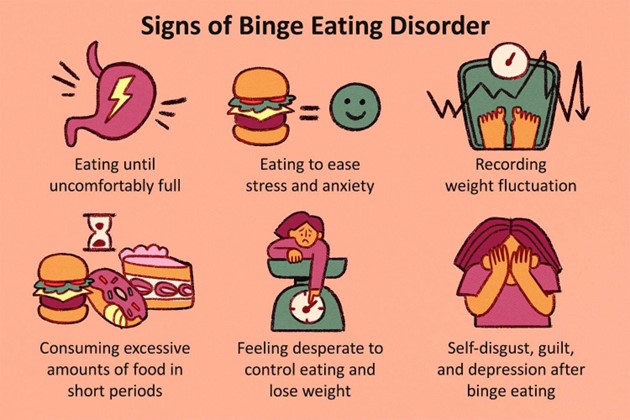
Depression and anxiety are two common conditions among clients with eating disorders. OCD is another condition that is often associated with eating disorders. Clients with OCD may have obsessive thoughts about food intake, weight, and body image. These clients may also engage in compulsive behaviors related to eating, such as calorie counting or food restriction. Options C and E are incorrect because breathing-related sleep disorders and schizophrenia are not typically associated with eating disorders.
An assistive personnel (AP) says to the nurse, "This client is incontinent of stool three or four times a day. I get angry because I think that the client might be doing it just to get attention." Which of the following responses by the nurse is therapeutic?
A. "You are probably right. Soiling the bed is a way of getting attention from the nursing staff."
Option A is confrontational
B. "Tell me what makes you feel the client is doing this on purpose?"
When an assistive personnel expresses concerns or vents about client behaviors, a therapeutic response is necessary. Asking the AP to explain or to further describe his or her thoughts, feelings, or concerns will allow the AP to reflect on these issues and help clarify any misconceptions or misunderstandings. The nurse's response should be nonjudgmental, noncritical, and focused on the AP's perceptions and feelings.
C. "Why don't you spend more time with the client if you think that she is trying to get attention?"
This is inappropriate because it suggests that the AP is not spending enough time with the client.
D. "Next time this happens, tell me and I'll talk to the client about his behavior."
shifts responsibility for managing the client's behavior to the nurse instead of helping the AP reflect on his or her perception of the situation.
Full Explanation
When an assistive personnel expresses concerns or vents about client behaviors, a therapeutic response is necessary. Asking the AP to explain or to further describe his or her thoughts, feelings, or concerns will allow the AP to reflect on these issues and help clarify any misconceptions or misunderstandings. The nurse's response should be nonjudgmental, noncritical, and focused on the AP's perceptions and feelings.
Option A is confrontational and Option C is inappropriate because it suggests that the AP is not spending enough time with the client.
Option D shifts responsibility for managing the client's behavior to the nurse instead of helping the AP reflect on his or her perception of the situation.